
The Latest Culling: Leeds Loses The Imaginarium and Canned Heat
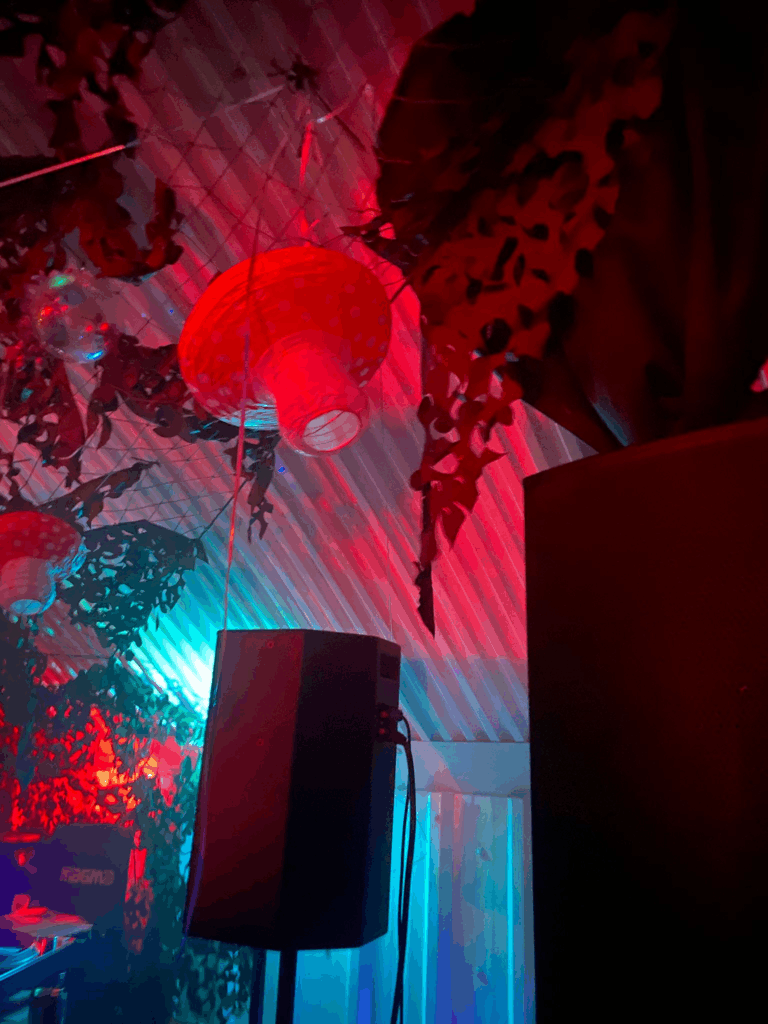
Image Credit: Rosie Nowosielski
As July closed, so did The Imaginarium and Canned Heat, continuing the downward spiral of Leeds’ nightlife, initiated in October 2023 with the surrender of the beloved Sheaf St Events, followed by Wire and the Old Red Bus Station in June 2024 and January 2025, respectively.
Announcing on Instagram on the 22nd July, The Imaginarium stated, “Unfortunately, The Imaginarium in its present location is going to have to cease to operate as a venue”. Their events Producers’ Collective and Gaffer Tapes and their shop will continue to operate, “either at Church Walk or in other locations”, but their last late night event was on Saturday 26th July. “The reason this has happened is that the planning department of the council have asked us to cease as a venue. It is not even anything to do with licensing, noise, or any of that, which is the most frustrating thing”, the announcement continued.
“Basically, a long while ago, somebody anonymously reported us for a planning breach”, even though The Imaginarium attests that the landlord received a detailed description of what the building would be used for and that they have a licence that allows the building to be used as a nightclub venue. Following this, The Imaginarium management changed the terms of usage for the building, “a very costly process”, and were “given reassurance” from the landlords and Leeds City Council that they were “fine to continue”.
However, in mid-July, The Imaginarium says they were sent “a letter from the person in the council planning department who had originally contacted us starting the whole thing again”. “We were given 14 days to either cease operating or restart the process we went through last year”, the announcement states, adding, “if we were to continue, we would have to begin the process of trying to fight this, and it will be at huge cost to ourselves, and we are unlikely to come out of it with the result we want”.
DJ Ralph Lawson commented, “Really gutted to hear Imaginarium is having to close. It has been such a positive force to kick start the scene in the city and yet another woeful story in lack of support for nightlife in Leeds from LCC [Leeds City Council]”.
Iain French, another DJ, said, “My favourite Leeds venue and as much of a hub as a club- so important that Leeds has these kind[s] of spaces”.
In response, a crowdfunder has been set up to raise funds to cover the cost of a legal battle and to establish a new space for the venue. It has a target of £5000 and as of the beginning of August it has raised just over £4000.
A spokesperson for Leeds City Council told the Yorkshire Evening Post that a “retrospective planning application for the use of the site was refused earlier this year”. They said that the council “continues to receive noise complaints associated with the premises which are being investigated”.
On the 16th May, Canned Heat, a drinks store, bar, and events space in Chapeltown, posted an announcement on Instagram, stating, “Liquid Sessions will not be going ahead this weekend. There is a strong possibility that, without sustained community action, Canned Heat may need to close permanently”. Liquid Sessions was their free entry day to night drum and bass event.
Canned Heat claims that “businesses and residents in Chapeltown are being unfairly and unjustifiabl[y] discriminated against by Leeds City Council”. They “regard Leeds City Council’s actions as discriminatory and are currently engaged in complicated discussions with their leaders”.
TROPHY, a local producer, commented, “The council only seems to be interest[ed] in serving the interest of student accom. Expensive short term rents. And the only reason they can do this so much is by marketing the cultural capital of the city. Selling it off, which is then destroying & depriving independent small businesses for the sake of a quick ROI [return on investment]. I am consistently seeing the council talk and celebrate Leeds culture but behind closed doors, seek to restrain and control it”.
Loker, DJ and radio host, posted, “When are @leedscouncil going to start showing any support towards our city’s independent venues and underground music culture?!”.
A spokesperson for Leeds City Council told The Gryphon, ““Following the receipt of a Temporary Event Notice for an event on Chapeltown Road on May 17, an objection was received from the Environmental Protection Team. This was due to a number of noise complaints from local residents concerning loud music during previous similar events at a nearby premises”.
“Discussions took place with the business involved, and the council always endeavours to work with local traders to ensure planned events can take place with minimal adverse impact on the local community.”
On the 11th July, Canned Heat announced their permanent closure on Facebook: “We’ve made the difficult decision to close Canned Heat”. Canned Heat marked their stock as clearance and closed their doors for good on the 26th July.
“Shame on you, Leeds City Council” is what was written on the windows of the Old Red Bus Station after its closure on the 18th January 2025 after ten years in operation. In its announcement, it cited “fighting the cost of living crisis”, “rising utilities”, “uncompromising landlords”, “a local council and government that has little interest in preserving […] its culture”, and “no option to secure a long-term lease” as its causes. The announcement went on to “implore every council across the country to realise the vital importance of such venues, and the need to work alongside them, not against them”. Testbed, a venue in Hunslet, commented, “We’re losing culture – plain and simple. And Leeds is losing it faster than most”.
Nearly identical reasons were given by Sheaf St Events nearly two years ago when it shut its doors for good – low attendance, rising costs and utilities, reduced spend per head, pandemic losses. But they also blamed the Aire Park development project on the South Bank as a major factor: “the Aire Park development, which completely surrounds us, has had a devastating impact on our trade. The cafe has been forced to close since January [2023], losing a vital stream of regular income with no compensation for the disruption”. Aire Park is a project by real estate company Vastint aiming for 1,400 private rental apartments, 800,000 square foot office space, and 54,000 retail space. Construction began in 2022, causing road closures which isolated Sheaf Street. To close their statement, Sheaf St Events said, “we believe Leeds as a city doesn’t fully recognise the important assets that it has”.
Leeds City Council’s Culture Strategy for Leeds 2017-2030 aims “to ensure that culture is celebrated and inextricably linked to who we are and what we do”, “to value and respect artists and creativity considering both are vital to the growth and prosperity of Leeds and ensuring that they are promoted”, and “to value and prioritise cultural activity, utilising it as a means of improving the quality of life experienced by every person and every community in Leeds”.
I don’t believe that the Council is not trying to fulfill these pledges, given the support it gives Leeds International Film Festival and the £6 million it invested into Leeds 2023, for example. The real issue is that governments and councils do not value dance and electronic music and spaces as much as “traditional” arts venues, creators, and events, explaining its blasé attitude towards protecting them against noise complaints and property development projects.
A report by the Night Time Industries Association written in 2022 states that “the pandemic has shown that the government does not recognise the importance of the sector, and has limited knowledge of its value, particularly its value outside of simple economics”. NTIA claimed that the Night Time Culture Economy accounts for 1.6% of GDP and 425,000 jobs in the UK. The report continued, “nightlife’s contribution to the UK economy far exceeds the revenue it generates, and is significantly underestimated by the UK Government in its lack of consideration and direct support”. However, “clubs are being forced out of business at an alarming rate”, due to “public and political opposition, gentrification and escalating business rates”. “Since 2005 the number of UK nightclubs has fallen from just over 3000 to just 960”. In June 2024, this was reported to be 787, according to figures by NIQ and AlixPartners.
The NTIA argued that clubs play a key role in their local communities. They are “a case study in community building”. “The opportunity to make friends is a major driver for participation in nightlife”, the report added, “this real-world bonding experience leads individuals to feel a strong sense of unity and belonging”. “In a loneliness epidemic, nightclubs have filled an important void; providing opportunities for social intimacy in an increasingly divided and atomised world”. The NTIA believes clubs promote tolerance and acceptance, “providing safe spaces for LGBTQI, Black, and Asian communities in Britain”. NTIA’s CEO Michael Kill said, “electronic dance music [reaches] people from all walks of life, [crosses] cultural boundaries and [creates] pathways for expression”.
Yousef, DJ, stated, “nothing in musical history has been as easily accessible to so many people”.
On the whole, NTIA claimed that “clubs play an important role in their city’s creative scene” giving “de facto creative apprenticeships” for photographers, musicians, directors, and writers “who will go on to shape the next generation of mainstream culture”.
Their report closed with a plea, “clubs should be celebrated, not just for their impact on commerce, but for their impact on communities and culture as well”. As Jawad of Canned Heat wrote, “music is our shared cultural understanding and our lifeblood. This must be protected vehemently”.
The Imaginarium and Old Red were Leeds’ electronic music hubs. Old Red operated a residency programme alongside their open deck evenings, showcasing and giving opportunity to local talent. The Imaginarium’s Producers’ Collective gives musicians the opportunity to play and receive feedback from their peers in the industry. Canned Heat was a pillar in the Leeds dance scene and Chapeltown community, not only as a provider of unusual beers but as a venue that hosted an array of events, inclusive of its diverse environment: female and non-binary open decks, folk nights, garden parties, and an annual carnival weekender during Chapeltown West Indian Carnival, the oldest of its kind in Europe.
Leeds’ future feels bleak. Both decades-old cornerstones of Leeds’ nightlife and new ventures just finding their feet are forced to close. While shop fronts on Briggate stand empty and homeless people make beds in their doorways, deals are struck with real estate companies to build thousands of high-rise apartments and student accommodation with retail opportunity on the ground floor, causing independent cafes, bars, and venues to suffer. The Sunday Times named Leeds ‘the Best Place to Live in the North and North East’ in 2024, but it’s the best place to live for whom exactly? Certainly not the thousands of students and young professionals they expect to populate the new housing who will have nowhere to go on Saturday night. Besides, town’s fourteen Caffè Neros are all shut by 8.
The Gryphon reached out to The Imaginarium, Canned Heat, and Dance More (The Old Red Bus Station) for comment but received no response.
Words by Rosie Nowosielski