
Ay Kash: Afghan Women’s Voices Break Through Silence at Leeds Playhouse
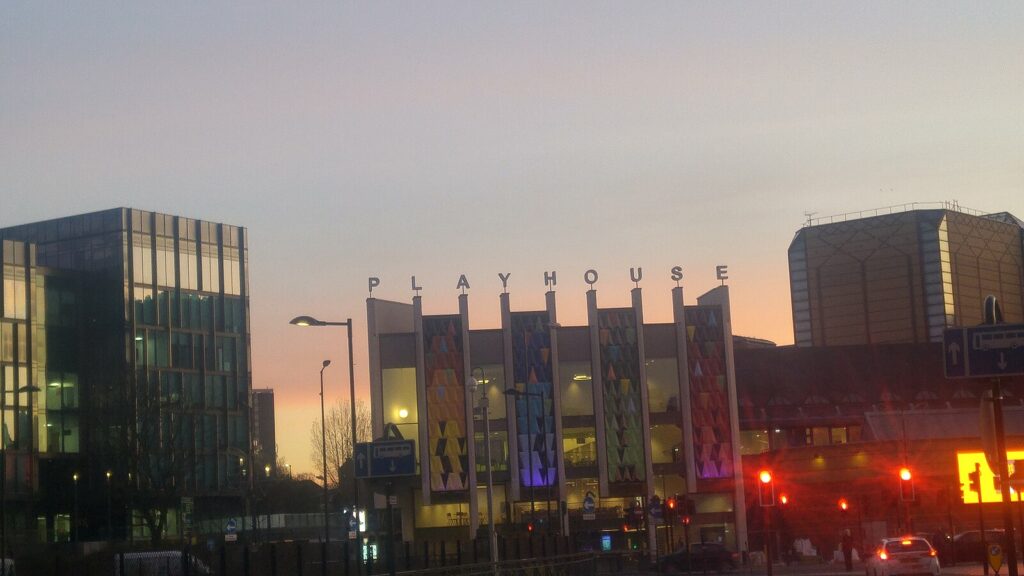
Ila Stephenson reflects on watching the Ay Kash /ای کاش / If Only production at Leeds Playhouse.

Warning: this article will discuss mature themes such as domestic violence, gender-based violence and suicide.
A few months ago, I saw Lana Del Rey perform in Liverpool. A month ago, I watched The Conjuring at the cinema. Last week, I went to the bookstore, and on Saturday night, I went to the theatre. Afghan women cannot even dream of attending events like these. At the weekend, Leeds Playhouse gave me the privilege of watching the UK debut of ‘Ay Kash’ (‘If Only’), an emotive and poignant piece that told the stories of eleven women in Afghanistan living under the Taliban.
Although I wish I could credit the creators of this breathtakingly eye-opening piece, it was not possible for their identities to be revealed for their personal safety. This in itself is an insight into the severity of the political climate in which these women exist. We may look up at the same stars as these women, but their brutally oppressive existence is something that we will never be able to comprehend.
Viewing experience
From the moment the lights dimmed in the theatre, the minimalism of the stage’s set made it evident that ‘Ay Kash’ would refuse spectacle. A small television and a projection screen portrayed the creator’s work, minimal music pulsed behind the dialogue that vaguely reminded me of a heartbeat, and the fragility of a life that could be taken away at any second.
The opening line of the performance, “This is not the first fight nor the last”, captured how common these stories truly are. Each of these women’s lives – ranging from an ambitious girl nearly forced to marry her own cousin at the age of ten, to a painter whose work was torn apart by the Taliban before her eyes – represents countless others forced into anonymity.
Refusing to sensationalise suffering, this performance found its power in gesture and images of restraint, such as of a woman drawing a cross over her lips with the coral-red lipstick she cannot wear outside her home. A mannequin that stood freely at the beginning of the performance became trapped underneath a miniature cage, echoing the confinement of the female mind and body. One particularly poignant image showed the silhouette of a girl hanging her wrist in a noose when under threat of being forced into marriage, symbolising the loss of autonomy.
Current reality
One woman chose to recount the story of the 10th century Persian poet Rabia Balkhi, who was forced to commit suicide after her brother discovered that she had fallen in love with his servant. Her last poem was written in her own blood on her bathroom wall, because as one voice states, “In Afghanistan, there is no such thing as love”. For women, marriage is simply “forgetting” everything one is truly passionate about.
One would think – and hope – that this tale was only relevant to its time, but in 2005 the Afghan poet Nadia Anjuman was murdered by her husband at the age of 25, simply for disagreeing with him. Throughout this piece, statistics are woven into the dialogue with a specific focus on the prohibition of discussions around mental illness in Afghanistan. According to a study carried out by the WHO, a shocking 74% of Afghan women show signs of depression, and in 2022 the HRC found that two of these women commit suicide every day.
Reflecting on the production
It has been twenty-three years since the Taliban’s first fall, and three since their return on the 15th of August 2021, when they captured Kabul. These women recounted how emerging out the other side of the first Taliban rule into a radically different era where feminism had won was confusing and taxing. To be plunged back into another dictatorship, witnessing the second death of female autonomy is a tragedy so great we cannot pretend to even comprehend it. I found this play was particularly striking because it didn’t seek pity or guilt from its audience, simply understanding. ‘Ay Kash’ is not an easy watch, and nor should it be. Although a political statement, it is primarily human.
Leaving the theatre, and as I am writing this article, I keep reflecting on the privilege to write an article spreading awareness in the first place. Further, I keep reflecting on the line from the performance: “Your life is not the same as mine.” This could not be truer, yet through art like this, the distance feels a little smaller.
Words by Ila Stephenson