
Experimentalism: Art’s Big Problem
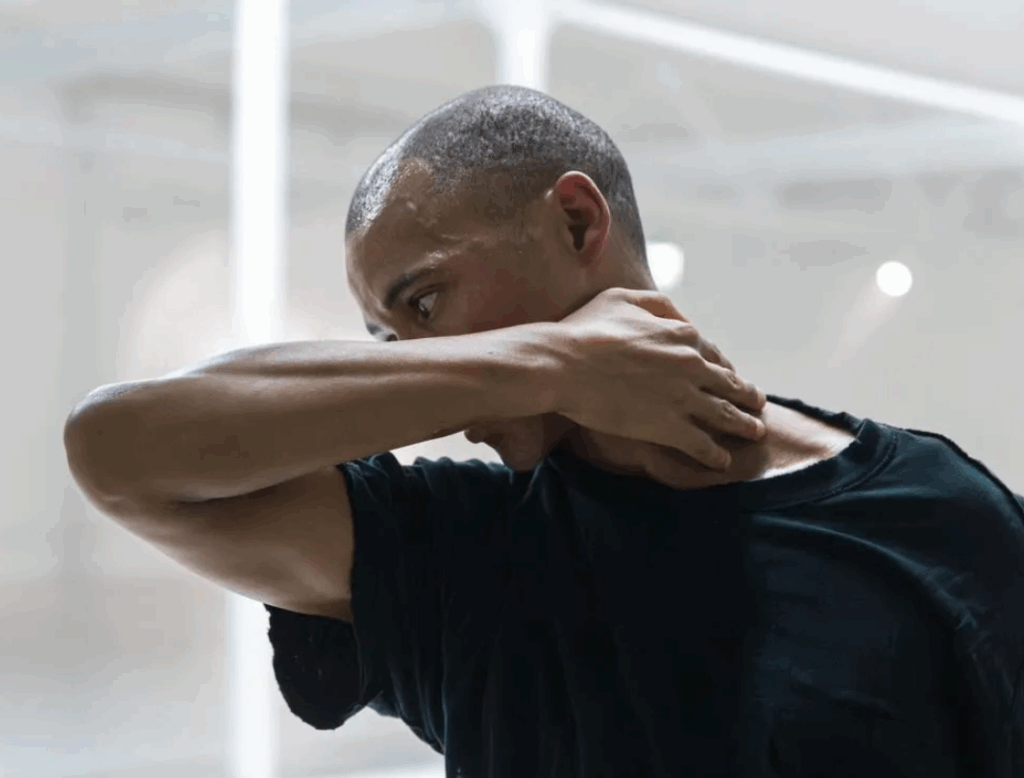
Image credit: Laila Kaletta, Transform Festival
Caitlin Wolfheimer reviews Transform Festival’s blackmilk and offers her wider thoughts on experimental performances.
Transform Festival, known for bringing experimental and radical performances to Leeds, opened on Tuesday night. One of its acts was the solo performance blackmilk, performed by Tiran Willemse, a South African-born artist, based in Zurich and Berlin. His piece promised an exploration of ‘black male melancholia’ and an examination of ‘limiting stereotypes and shifting identities’. Hesitant as this made me, not always being a fan of experimental work, there was something intriguing about the goal of exploring race and identity.
A pitch black stage. That’s how the performance started. While effectively blinded, an ominous sound crept up, faded, like wind or rain, before a storm. A single spotlight slowly illuminated Willemse as he walked on stage and started speaking into a microphone. If I hadn’t before, I knew now more than ever that this would not be a conventional dance performance. Willemse spoke, and yet, what he said was lost, covered by the loud music. It took some later digging to find out he was quoting the lyrics to “Moonriver” by Henry Mancini and Johnny Mercer, a motif which he repeated throughout the performance.
As the music started to build into a louder, eerier, more mysterious sound, Willemse began to move; punching the air, clapping, swinging his arms. This movement, inspired by the “Trompoppies” (a famous South African drum majorette troupe), felt so raw and spontaneous that I questioned throughout whether it was improvised or simply tightly choreographed. In either case Willemse expressed a palpable pain in his movements. His expressions, laughing and smiling, felt manic, like the masking of a grimace. Considering these sporadic movements accompanied the ever more unsettling music, the effect proved to be rather frightening. It felt as though Willemse’s body was possessed by the sound and movement, not to mention he started speaking to himself, which gave the whole performance a tribal, ritualistic feeling. The description of the performance mentioned “melodramatic movements of white femme starlets”, or in other words, movements that mimic over-the-top, emotional, old-Hollywood actresses. I believe Willemse’s laughter and swooning, or big “feminine” gestures, were meant to convey this, although they did not do so in a particularly obvious or clear manner.
Then, out of nowhere, came a bizarre switch in tone, about halfway into the performance; the music seamlessly transitioned into the iconic piano notes of Kanye West’s ‘Runaway’. Willemse’s movements started to change, becoming more aggressive; he started making strange, unintelligible sounds and screaming. Scurrying around, picking up socks and shoes, hidden in the wings of the stage. He frantically put them on, sometimes even placing them in his mouth. He began to run circles around the stage, taking off his shirt and becoming more frantic and out of breath. This carried on for at least 3 or 4 minutes, until the slow, sorrowful, end of ‘Runaway’.
Finally, the performance ended with Frank Ocean’s song ‘Siegfried’. The stage was once again bathed in darkness, with the exception of a large white square projected onto the back curtain, while Frank Ocean’s melodious voice sang the words: “I’d do anything for you, in the dark”. Willemse’s movements slowed once more. He then went back to his microphone stand in the front corner of the stage and spoke the words: “Now you see me”, then he walked into the audience, into the dark and spoke: “Now you don’t”. He repeated this, hiding in different locations, before finally walking into the white light at the back of the stage, repeating “now you don’t,” and exiting through the audience.
The performance, especially its final section, left me confused. I struggled to understand what Willemse was trying to convey with this unique version of hide-and-seek. This, in my opinion, highlights a central challenge of such experimental work. Willemse must have had an intricate story in his mind that he was trying to convey, but there is only so much that can be conveyed with movement alone. Even the quoted lyrics, which were inaudible, were just as ambiguous as the choreography.
For a performance about “black male melancholia”, were the song choices too obvious? Using the most famous songs from two of the world’s most famous black artists turned an otherwise very unique piece into a slightly more generic one. I grasped the performance’s message that a black man doesn’t have to be just “African” or “American”, or purely masculine or feminine, but only after reading more about the performance. During the performance itself, the raw emotion was disconnected from a clear message, leaving me with a powerful sense of nothing.
In a compelling and memorable performance, Willemse proves himself to be a captivating artist that you can’t keep your eyes off of. Yet, there is merit in saying that, in a world where everyone yearns to be the most experimental yet, Willemse showed that raw talent and undeniable passion in performance isn’t enough to suppress the mess.
Words by Caitlin Wolfheimer