
Behind The Scenes at The Warehouse Project: In Conversation with Niamh Ingram
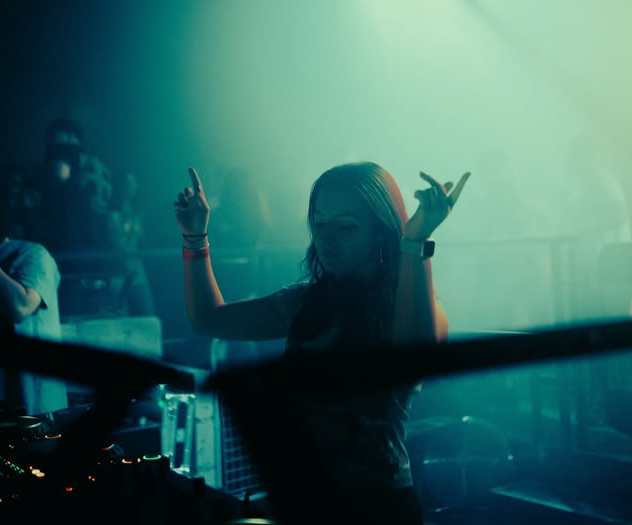
Image Credit: @sophiajcarey on Instagram
Music Editor Millie Cain chatted to Niamh Ingram, an incredibly talented University of Leeds Alumni hailing from the North East who works in the marketing team at The Warehouse Project as well as DJing, about how her career has developed in the North and what cultural changes she sees within her role.
Northern club culture’s roots flickered in the skeletons of hollowed out warehouses and echoed off the walls of deindustrialisation. Now, The Warehouse Project (WHP) stands as an institution circling back to the earlier acid house movement and is home to the biggest events across Manchester. Whilst some older folk may moan at the transformation of rave culture becoming more commercial, the truth is, The Warehouse Project has only developed and built upon the community and respect of initial parties. This opportunity to break the decades old centralisation of male artists and audiences in this scene has been carried out by building up a platform to champion DJs, producers, sound technicians, and all of the people who work tirelessly to make these nights possible.
The creative licence of marketing is, of course, part of its appeal, and when tied in with the instantly recognisable and effortlessly cool branding of The Warehouse Project, it’s an opportunity for greater stimulation, Niamh described “Being able to think as creatively / outside of the box as you can in order to connect with audiences is the best thing about marketing! Quite simply, WHP encourages that because the environment I work in, and the people I work with, encourage that creativity.”
Niamh’s experiences at the University of Leeds, like many of our writers and readers, helped to shape her moving into music events marketing. In terms of skills and opportunities Niamh gained, she detailed “So many! From your more straightforward skills that you really hone when getting a degree – the one that comes to mind the most is critical thinking and constant critical assessment of your own work and others’ – to your more hard degree skills. In my case, this is assessing and monitoring algorithms, coding, recognising what ‘works’ branding wise in campaigns…”
Unsurprisingly, social media has had a complete spin on not just marketing as a whole concept, but club culture. In Leeds we are already seeing normalised movements towards phone-free dancefloors in venues such as Hope House and Wharf Chambers. For Niamh, we asked about how she sees this happening in real time and how this is going to look on the dancefloor moving forwards…
“It’s clear that phones aren’t going anywhere – they’re arguably a pivotal part of life for many people and have certainly become important in a marketing sense. For example, if someone posts a video of an artist having an amazing show, and that goes viral, it exposes the artist to a whole host of potential new fans. These days, it feels like the world and their mam want to go viral, which is fine, but it does also mean that you often see a LOT of phones on the dancefloor!
For better or worse, club culture has evolved alongside society and technology has become a fundamental part of that. It feels unfair to ban it completely – after all, there’s nothing better than having a little clip to look back on with your pals after a night out – but there’s also no harm in a gentle nudge to audiences, particularly kids experiencing nightlife for the first time, that you don’t have to live the full thing through a screen, and living in the moment is actually really fun (who’d have thought!). There’s a lot of club spaces which now introduce no phone policies to varying degrees, whether for certain events, certain rooms, or all together… and they all have their reasons, which is great. Personally, I love the introduction of no phone spaces / policies / events. It’s always fun to try different things and different approaches, right? You can dance safely in the knowledge that you’re not going to end up in the back of someone’s TikTok.”
Part of University of Leeds’ culture is recognised as its pull as a party city on the ‘Northern Rave Belt’ (Liverpool, Manchester, and Leeds). For better or worse, this is a huge draw for many students hailing from down South to move up, which can feel polarising for Northern students to feel outnumbered in their home town party scenes. However, reflecting on her own experiences Niamh explained “I’m a massive introvert but was brought up on a firm North East saying by my parents that Shy Bairns Get Nowt, and in an environment which as you say, definitely was dominated by a particular demographic, I felt that I had no choice but to just put myself out there. It’s scary, but the more you push yourself into uncomfortable situations, you never know what the outcome could be!”
Part of Leeds’ party culture is identifiable by the notorious basement ‘boiler room’ rave parties that rattle the foundations of Hyde Park’s streets. Graffiti-covered rooms grow hot over winter as hundreds of students pile below the pavements wearing their best charity shop y2k chic, leaving a trail of scraped clean tarmac behind the dregs of their baggy jeans. They flock around the stone altar of usually white men in Arcteryx beanies, but we’re starting to see a turning tide as more girls are getting involved behind the decks and transforming these ‘boiler rooms’ into cooler, welcoming parties.
“I definitely experienced a culture of lads lads lads, crowds only being open to one sound, and nobody batting an eyelid towards you if you waltzed into a space where you weren’t in the clique (and yes, that unfortunately was your basement parties and the likes). What I will caveat that with, though, on the other hand, is the amount of spaces which were significantly more open to non-male DJs, sounds and beyond, and still are. I have absolutely noticed an increase in student-led promoters who are really putting effort in to ensure lineups are diverse and representative of the huge array of talent on show in the city. I don’t think that issue is a Leeds only problem, though, and that rather it’s an issue throughout the scene, but I will say that it’s one where a LOT of good people are working hard to ensure lineups are diverse and inclusive – particularly in your larger venues. On a local scale, I would say to the girlies who want to dive into the world of DJing: do it! It’s scary, yes, it can be uncomfortable, but take up that space. It’s something I wished I had confidence to do earlier. We deserve to be in nightlife spaces just as much as anyone. Show ‘em how good you are.”
As Niamh described, the rising number of passionate, creative promoters who tirelessly work to put on insane events really helps to platform up and coming DJs, and Niamh explained how this can help amplify and transform the Northern scene in comparison to London’s techno culture.
“I think every place has its own specialties, and London in itself is very special, but I do think that in the north – particularly places outside your larger creative hubs in the north at that – due to lesser resource (or lesser access to resource), there’s a lot of peer to peer support and everyone goes out of their way to big one another up so much. I don’t think that’s isolated to just techno, or even dance music, but more so in the creative industries in general. Geographically, particularly where I grew up, it’s a slog to get down to places such as London, even to Manchester, to access creative opportunities, so it’s about doing all you can to create such a buzz in and around where you are at that moment in time. “
The Warehouse Project, while commandeering a fleet of international charm, still sticks solidly to its Northern roots, and this is reflected in its design. “Ultimately, WHP is definitely northern, specifically Manc, through and through. It employs so many people from the city and beyond, and has such a beautiful community at its heart.”
They’ve got plenty of huge events coming up in the city, with Niamh detailing what she’s looking forward to “So many! Gotta shout out Repercussion though, an iconic festival held at Depot Mayfield which unites global talent with local gems. This year, Underworld are performing live, alongside a whole heap more international names, and then there’s a real celebration of Manchester talent across other spaces in the venue which extends beyond music; I’m talking record stores, pop ups, music, the lot…”
Niamh spotlighted a couple of venues up North she loves, ones we’ll definitely be keeping an eye out for, especially those ran independently “I’ll always be a Leeds girlie through and through after spending so long in the city, and I must say, my absolute favourite small venue had to be Wire. I’m still so heartbroken it closed down. I also loved Sheaf Street (another RIP!) but gotta say that Assembly House is a cute little spot. Shoutout to World Headquarters up in Newcastle, too, that place is mega. Still exploring Manchester’s small venues as I only moved here recently, so brb on that one, but so far I am loving Stage & Radio and the DBA.”
Moving forwards, The Warehouse Project has some huge lineups on the cards, some of which Niamh has DJed on! She chatted about a few more female, Northern DJ’s we should be looking at “So many I could write you lists and lists!! Boo, Alousea, Becky Woodcock, Sophia are just a few that come to the top of my head…”, make sure to check out all of these artists and especially Niamh (@n_iamh) on socials for all of their upcoming events, and to head down to The Warehouse Project this winter for some of the biggest events of the year hitting the North such as the Homobloc and Hacienda parties.
Words by Millie Cain.