
Privatisation has led fares off the rails: freezing prices will not do enough
James Kendrick criticises Keir Starmer’s plan to freeze train fares as a solution to privatisation, seeking for a permanent resolution instead.
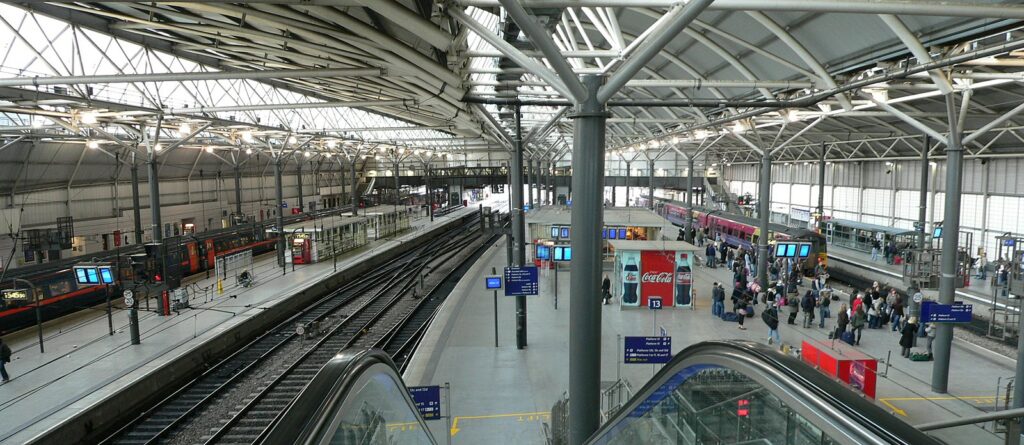
Image Credit: Wikimedia Commons
As someone who has been fortunate enough to travel to much of Europe, I have been able to experience the joys and pleasures of publicly-owned rail travel, from Catalonia to Croatia to Czechia, a right which, in this country, was stripped from us in the 1990s.
Systems that were intended for – and continue to serve – workers, tourists, and travellers in each country are run cleanly, quickly, and cheaply, often with direct connections to local transport systems, such as buses or trams. However, ironically, in the motherland of the railway, public transport seems far less… public.
The Starmer government has recently announced rail fares, including season tickets and off-peak returns, are set to have their prices frozen for the first time in 30 years, starting next year. Whilst this is undoubtedly a profound step in the right direction, preventing the frequent price hikes from reaching oblivion, it simply will not do enough to cure the plague that privatisation has set on our rail industry. To me, it feels like putting a plaster on a burst dam.
I will not deny that it will be hard work in planning and understanding how to make changes to the rail system for it to be on par with some of our European neighbours. However, it does feel like the UK does itself a massive disservice when Leeds is regarded as the largest city in Western Europe without a mass transit system, and when train fares from here to London are more expensive than flying – even with a stopover in Fuerteventura!
The high prices we pay for the privilege to travel on assets previously owned by the public are not for our benefit either! According to LBC, over 1 in 25 trains in the past year in the UK had been flat-out cancelled, not just delayed.
Additionally, because of the privatisation of the network, the efficiency of rail travel has been eroded significantly. It is no longer cost-effective for train operating companies to invest in updating the ancient architecture, because when they do, this financial burden is passed onto the passenger.
Similarly, as a natural economic consequence of privatisation, ever finer profit margins must now be found and extracted to satisfy shareholders, again, at the expense of the passenger’s pockets.
These profits are magnified even further when train companies that are run face no competition. This is fundamentally unsustainable when simultaneously wages are prevented from rising at the same rate, and workers depend on the rail system to get to and from work.
Consequently, less people in the UK are taking trains than they were in the previous decade. While COVID had a significant impact on the amount of people utilising rail services, passengers in 2024 still travelled fewer than six billion kilometres than they did in 2019. The lower income for the train operating companies restricts their ability to reinvest in their rapidly deteriorating infrastructure without further punishing travellers, causing an even greater crisis for the railroads in this country.
The transformation of our once great railways into a broken, complex and expensive privatised mess could very well be viewed as a microcosm for the British economy as a whole. But the restoration of function, innovation and, most importantly, pride, in our national railway system could very well spark a positive change in mindset towards the state of the UK that is so desperately needed. The piecemeal reforms to price hikes that the new budget proposes will not do this. The economic experiment in the privatisation of public transport has been an unmitigated disaster.
We as Brits deserve far better. It is high time to demand a return to the public ownership of the railways – one where it is run by the people and for the people.
Words by James Kendrick