
The resident doctors’ strikes are not just unjust: they are downright dangerous
James Childs writes about the resident doctor strikes before Christmas 2025 and the belief of danger surrounding it.
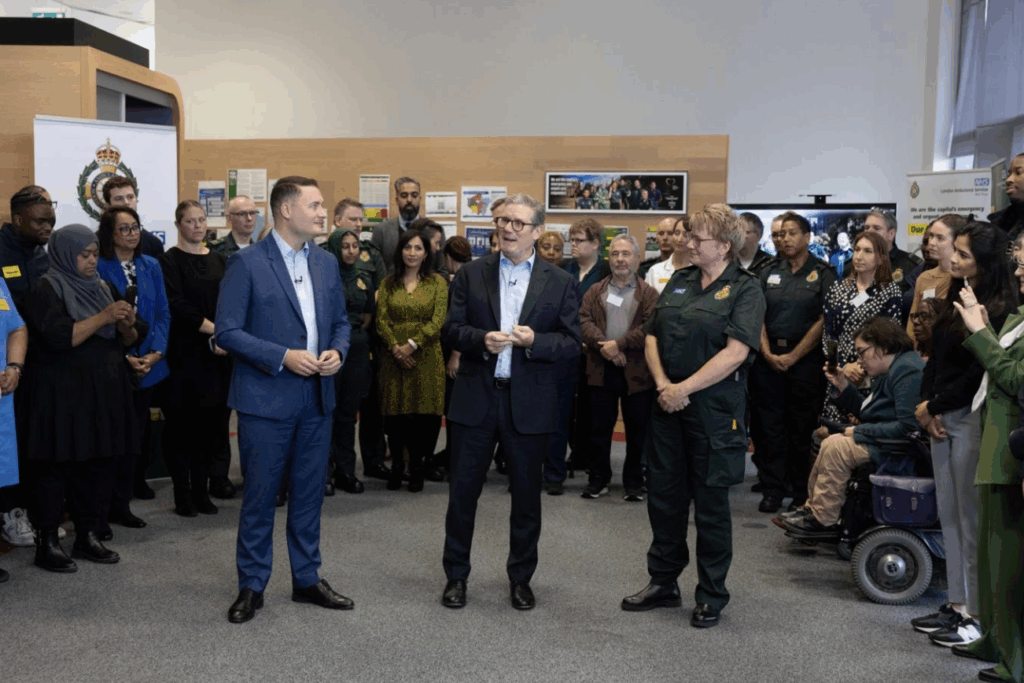
Image Credit: Simon Dawson/No.10 Downing Street
As the NHS came under pressure last week, amid a nasty influx of flu cases into hospitals, resident doctors once again voted to take strike action in the days leading up to Christmas.
Despite a 28.9% pay rise awarded to them in 2024 by the Health Secretary, Wes Streeting, 83% of resident doctors decided on Monday to take industrial action.
Whilst I am certain no one would doubt the enormous contribution which resident doctors, and indeed all staff members of the NHS, make to the health service, the most recent strikes are tantamount to selfishness.
Having received the highest pay rise amongst the public sector and being offered a generous deal to prevent this round of strikes, resident doctors have chosen to actively inflict harm on patients and the health service which they claim to protect.
Wes Streeting has correctly attempted in good faith to address issues such as: competition from foreign doctors, extortionate exam fees, and training places, all of which the British Medical Association (BMA) have refused to properly put to their members over the past few weeks.
The BMA should be honest with the public and say that this is purely about pay. They often raise the issue that pay for resident doctors has not kept up with inflation since the financial crisis and so has effectively been eroded away since 2008.
Whilst this is entirely true, it is not in any way unique. You would be hard pushed to find anyone in the country, public or private sector, who has seen their pay rise in line with inflation since 2008.
The ask for a 26% pay rise this year, in addition to the 29% received last year, is not only unrealistic but it is entirely unjust. Over 1.5 million people work in various roles across the health service, all of whom have seen a small pay rise against inflation.
Of course we would love to pay doctors more, as well as anyone else who works in the public sector, but Wes Streeting is right to say we must be realistic about what the country can afford.
Resident doctors should also be cautious not to erode all the good faith which they have built up with the public so far. Many, originally supportive of the resident doctors, now find their vindictive pre-Christmas strikes as repulsive.
A YouGov poll last week showed over 58% of the public opposed doctors choosing to take strike action for the 14th time since 2023.
The harsh reality is that choices taken by the BMA this week and their members will result in lives lost. A national health service facing a flu epidemic, days before Christmas simply cannot hold five days of strike action at this stage.
The Government is right to call this behaviour out and even more so to resist calls for extra pay commitments to resident doctors. On a principle of fairness, to both other public sector workers and the taxpayer, the Health Secretary must not capitulate to the militant demands of the union.
Resident doctors should accept the deal on the table from Wes Streeting and feel fortunate that they have received the largest pay increase across the public sector.
Words by James Childs