
“We know that we have to deliver more with less money” The Gryphon interviews Shearer West
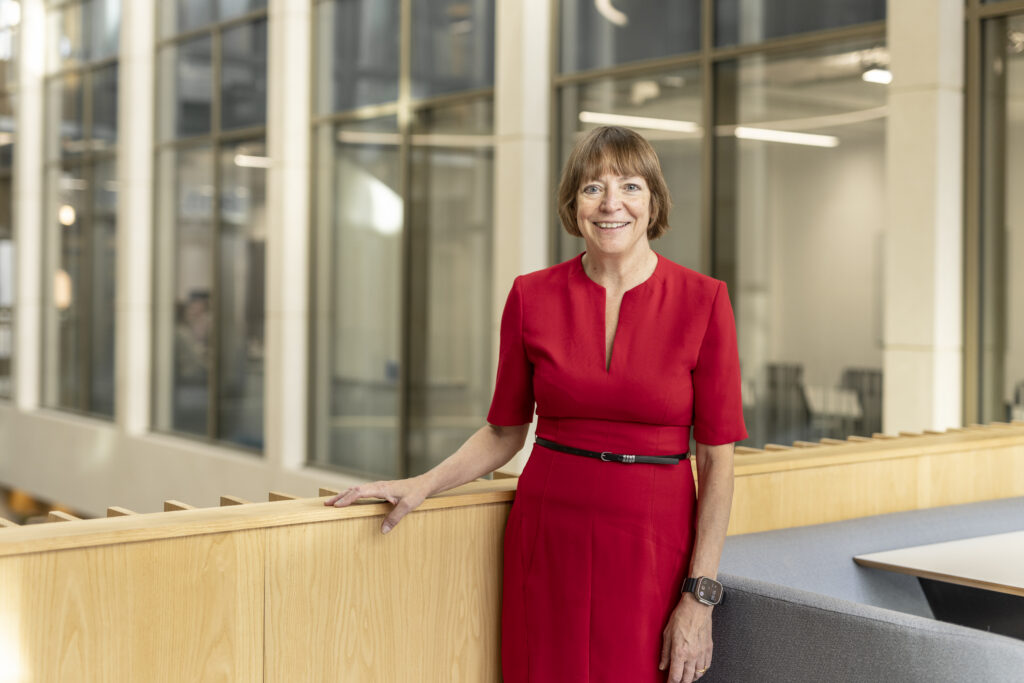

The Gryphon sits down with the University of Leeds’ Vice Chancellor Shearer West to discuss student finances, the state of the university, protests and more.
Like many of you, I’ve always been curious about who runs the University, and knowing nothing about them was an issue for me. I decided to solve that issue by sitting down with the Vice Chancellor of the University of Leeds Shearer West.
West resides on the 13th floor of the Ziff Building, a personal favourite of mine to study in during my student days. Coming in to, and entering the lobby prior to the interview, you got the sense that this was where decisions were made.
Whether it was the coffee machine, the green chairs or my own mind playing tricks on me, you could almost feel the authority that the 13th floor exudes, in truth, it’s enough to make you nervous. I’d gone from the pavement of campus to the place that decisions were made.
Luckily for me, Shearer West dispelled any of the lingering nerves that I may have had, sitting down in the office, the interview began…
It’s been a challenging time for universities across the country with budgets tightening and tuition fees being raised. How do you navigate this whilst ensuring the best for both students and staff?
SW: It is a very tricky time. I do have to say that I think at the University of Leeds we have managed our financial situation very well in constrained times because we know that we have to deliver more with less money in future years. And so I think we’re trying to concentrate on quality in everything we do, efficiency and impact. So I think, in the current climate, we need to constantly work on our NSS scores to improve them. So our students are happy and they enjoy being here and they enjoy the course they’re doing. And we have to consider a tight graduate employment market. Leeds was fourth in The (High Fliers) Graduate Market for employers. We need to keep that up because we know that our students are going into a tough job market, and we are one of the great universities that employers look at. So we have to continue to keep up the excellence, but we also have to tighten our belts at the same time. It’s really tough.
What are your ideas for the university? Have you got any particular bold new strategies you’d like to share?
SW: So we’ve done a midterm strategy refresh and we titled it One Leeds. Because what I want us all to think about is that we’re all here at Leeds. That’s what makes us. That gives us our common denominator, as it were. And as part of that, I think we’re not just looking at what we share, but the values behind the university. We have four values in our strategy: compassion, inclusivity, integrity and collaboration. And we want to be more of a student centred university. So we have great collaboration with LUU, but we really do want to consider ourselves in partnership with our students. And finally, I would just say that I’m really keen that we improve our civic engagement and I have really strong ambitions. We do a lot of great things in the city and in the region, but I have a really big ambition for us to be seen as the sort of go to partner for businesses, City Council, for the Combined Authority and community charities, cultural institutions that they think of us as. As the partner of choice.
You also led the University of Nottingham before this. What would you say are the differences and similarities between the two universities
SW I feel privileged to have done both of them. They’re both great universities, they’re both large research intensive Russell Group Universities, but they are different. They both have strong reputations in terms of their geography and their culture and the feel. So Nottingham, the main campus is almost in a big park. It feels like you’re in a country house area. There’s a feel about that that’s very different from the urban, very close community here at Leeds. And I find Leeds a very incredibly vibrant university. Bit edgy sometimes, maybe a bit edgier than Nottingham. But I think in a good way. Those are some of the differences I see. But they’re both great universities in very different ways.
Last year, protesters calling for the university to divest from arms companies were arrested. What were your opinions on this?
SW: We do have a legal duty in the university to allow freedom of expression and peaceful protest. Protestors forced their way into a Careers Fair (21 October, The Edge) without showing ID. They were asked to leave and initially declined, before they did eventually leave. I have no issue with peaceful protest, but this was a protest which was disruptive and risked disadvantaging our students. Any arrest is an operational matter for the Police.
You were the first person in your family to attend university. Do you think that it speaks to what university can do for people that you were able to achieve such a high ranking role despite the potential barriers that may have been facing you?
SW:I absolutely do. I grew up in a really small town in Virginia. Most of the people I went to high school with went into farming. They didn’t go to university at all. And education and all the opportunities I had through education just really pulled me out of it, gave me every chance I had. So I’m hugely keen on the work we do at Leeds on widening access in any given year. We spend up to £30 million on bursaries, scholarships, summer schools, ways of helping people who might otherwise find it difficult to get into university. And I’m a very keen believer that it gives life chances to people who may have come from very difficult backgrounds.
On that, being a university student now more than ever, is very financially draining. Do you think that there needs to be more schemes for students, maybe from the government or something for students from a lower socioeconomic background to support them. And what do you think the university could do? More than it is already currently doing?
SW: Yeah,as I mentioned we have about £30 million worth of scholarships, bursaries, et cetera, and we need to keep doing that. Also, we do a lot in terms of support for students who are struggling financially, both in terms of advice and support. And if people get into emergency situations, you know, we can do loans and things like that. The government is supposedly reintroducing maintenance grants instead of loans, but of course this is on the back of an international fee levy, which I think is a very bad way of getting the money. And, I’ve said that in public before, but I also feel that when you look at the fact that the government is going to constrain the subject areas, that maintenance grants are going to be used for, I think that isn’t going to help all sorts of students who are not wanting to do particular subjects of strategic importance. So there’s always more we can do. And I really do see just how tough it is for students now that most students are working in their spare time. Well they don’t have spare time. They’re working and they’re feeling under pressure, financially. And I think we’re all very aware that this is a really difficult time for students.
Are there any initiatives within the university that you think deserve to be highlighted?
SW: There are quite a lot in terms of our various partnerships. We have some great cultural partnerships with the Leeds International Piano Competition, with Opera North. We are going to be partners in the Leeds in the National Poetry Centre, which is going to be based in Leeds. We are doing a massive amount with health tech. Leeds is the third largest health tech hub in the world, apparently. Yes. Internationally. And we work, you know, our researchers work with local companies. We are also very heavily involved in the Leeds Climate Commission. So our Priestley Centre for Climate Futures, which is world renown, is working with the region on sustainability efforts throughout. So those are some of the really big things we’re doing in partnership.
Well, thank you so much for chatting!
SW: Thank you, Gabe, thank you very much!