
Three years of chaos in the Middle East
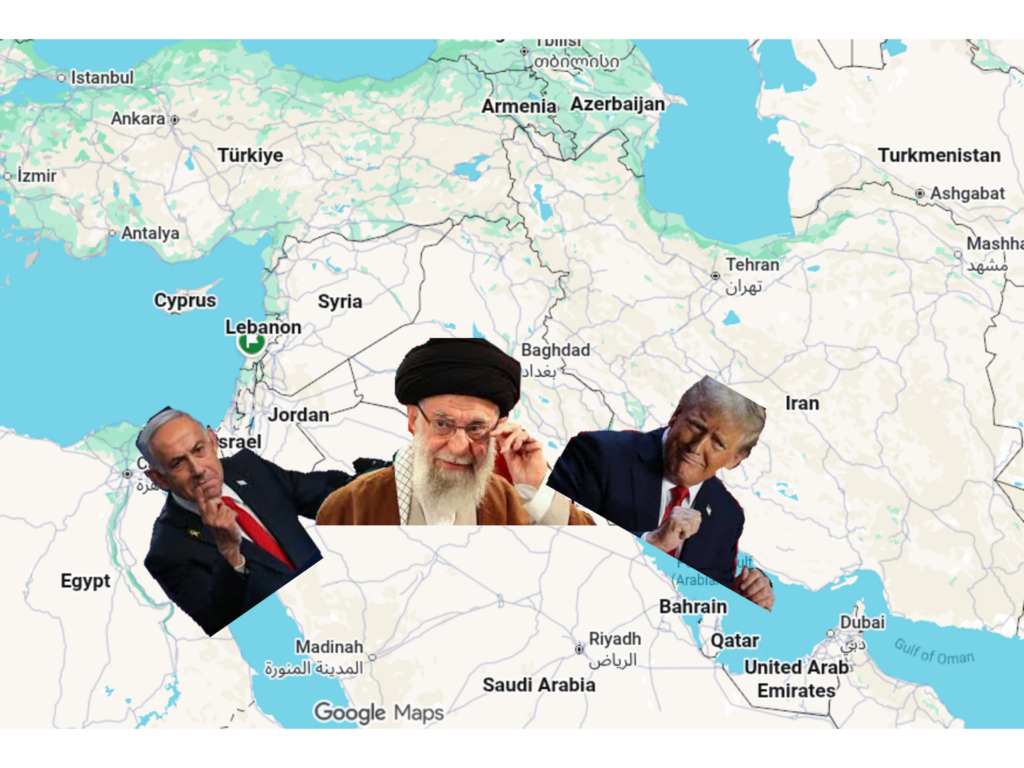
Image Credit: Archie Sykes
When I started my degree in Middle Eastern Studies, the region seemed to be relatively calm, the 2010s had been a decade of unpredictability and chaos, but it appeared that the anarchy spawned from the Arab Spring had subsided. Everyone believed that the Syrian civil war was slowly grinding towards an Assad victory, ISIS had been defeated and there were new attempts under Biden to bring back the Iran nuclear deal.
Three years on, reality seems radically different.
Over the last three years, the region has seen events that would be defining moments in regional history had they not occurred in these three years.
It urges us to recall a famous quote about the pace of politically and historically significant events: “There are decades where nothing happens; and there are weeks where decades happen.”
So, what has happened?
7th of October
The Middle East started its undergraduate period of anarchy, less than a month into my degree, with the 7th of October attacks by Hamas on Israel.
It was clear from the moment these attacks occurred that they were a big deal. Hamas’ invasion of Israel from Gaza led to the killing of around 1,200 Israelis, mostly civilians, and the taking of around 250 hostages. It was the deadliest day in Jewish history since the holocaust.
These attacks shook the very nature of the state of Israel, a state that was meant to guarantee the safety of the Jewish people. Public ire was brought onto the Netanyahu government, which was accused of failing in its main job, security. Most importantly, these attacks led to the devastating three year long war between Hamas and Israel.
Israel’s offensive into Gaza has brought the small strip of land to its knees. An estimated 75,000 people have been killed, Israel’s image on the international stage has been tarnished and it has been accused of genocide.
This offensive also brought Hamas to its knees. Much of the group’s leadership has been killed by Israel and the group, at present, does not appear to pose much of a threat.
These attacks, and the war, alone would have likely earned a place in history alongside the intifadas. But, since the 7th of October attacks, so much more chaos has spread.
The collapse of the Iran proxy network
The first of Iran’s proxies to collapse was Hezbollah, who joined the war on Israel following the 7th of October Attacks. Israel’s response was the ruthless deconstruction of the group.
Following Hezbollah attacks in the north of Israel, Israel responded with airstrikes targeting key Hezbollah officials, including killing the leader Hassan Nasrallah, a ground invasion designed to disarm Hezbollah and the now famous Pager Attacks.
The last of these was a 10 year in the making operation which saw Mossad secretly sell Hezbollah pagers and walkie-talkies that had been made by an Israeli front and fitted with explosives.
Whilst Hezbollah has, in name, survived and remains present in Lebanon’s parliament and government, the group as a military force has been substantially weakened. They have agreed to disarm and the Lebanese government has begun this process. And Israel has proven happy to intervene to encourage this.
Time will tell whether Lebanon is able to now rein in its most powerful and unruly militia.
Closely linked to the fall of Hezbollah was the fall of the Assad government. Following more than 14 years of civil war, it looked like it was looking up for Assad. He was being allowed back into the Arab League and he was slowly grinding down his enemies.
However, in December 2024, this flipped on its head. With Hezbollah severely weakened and tied up in a war with Israel, it became very quickly clear that Asad was a paper tiger. Rebel forces led by Ahmed al-Sharaa swiftly broke through the Syrian army and, within the space of a few weeks, had gone from a small enclave in Iblib province to governing Syria.
This changed regional dynamics. Iran and Russia had lost an important regional ally and in its place, a new government eager to make friends with Saudi Arabia and the US emerged. What lies ahead for Syria is unclear; the new government has a lot on its plate, from rebuilding a war-torn country to creating peace in a country full of battle hardened fighters from across the political and sectarian spectrum.
Either of these events would have been defining moments in their era. Hezbollah has been the linchpin in Iran’s proxy network; Syria was a military dictatorship, a type of government that has proven hard to dislodge and often only through coups.
Iran
The Islamic Republic of Iran has been a key player in the Middle East for decades, but 2025 and 2026 have seen the position and future of the Islamic Republic thrown into question.
June 2025 started this chaos off. Whilst Iran had links to much of the chaos that had been occurring, it only came home to nest in June 2025 with the 12 Day War. During this Israel, and US, were able to launch large scale airstrikes across Iran, destroying its air defences and, supposedly, destroying its nuclear facilities.
Iran’s response was relatively calm (especially with what was about to happen), with limited missile strikes, pre-warned, against US targets in the Gulf and waves of attacks against Israel.
By the end of the fighting, Trump was celebrating the success of the maximum pressure campaign and new negotiations were underway on the issue of nuclear weapons.
In January, whilst negotiations were still going on, mass protests ripped through Iran.
Starting as protests against the collapse of the Rial, they soon expanded to be focused on calls for regime change with chants from protesters including ‘death to the dictator’ and ‘javid shah’ (Long Live the king).
Trump promised ‘help is on its way’, protests expanded and the Iranian government brutally cracked down, killing around 30,000 people (although some estimates put it far higher). Throughout January and most of February, help did not appear and the protests were brutally put to an end.
However, by the end of February, the US and Israel launched a new wave of strikes. Early on in these strikes, Israel was able to assassinate Ayatollah Ali Khamenei and throughout them, the US and Israel have been able to operate with complete freedom over Iran.
The response has been an anarchic firing of missiles and drones at almost all the countries near Iran (regardless of their role in these strikes), with little differentiation between civilian and military targets.
The future of this new military intervention is unclear. The Trump government changes its mind as to why it is launching these attacks on an hourly basis and they seem hard to square with his promises of ‘no new foreign wars’. Israel seems clearer. Regime change and no Iranian nukes.
Concluding thoughts
Middle Eastern politics has been reshaped over the last 3 years. The region’s future has been thrown into the air by a set of seismic events that could reshape the fabric of regional politics.
What happens in Iran, what happens with the new Syrian government and Hezbollah and what are the outcomes of the Israel-Hamas war are open questions whose answers will leave deep marks on the future. And they are questions whose answers will be found as these three years of chaos continue.
Honourable mentions
With only limited space, the years of chaos in the Middle East can’t be fully covered, but events that, in any other period, would have warranted far more attention include:
- A Kurdish- Turkish reconciliation peace treaty
- A worsening of Saudi-UAE relations and their backing of different factions in civil wars
- The Sudanese civil war
Words by Archie Sykes