
Tête de Woe: The lamentable decline in critical eating
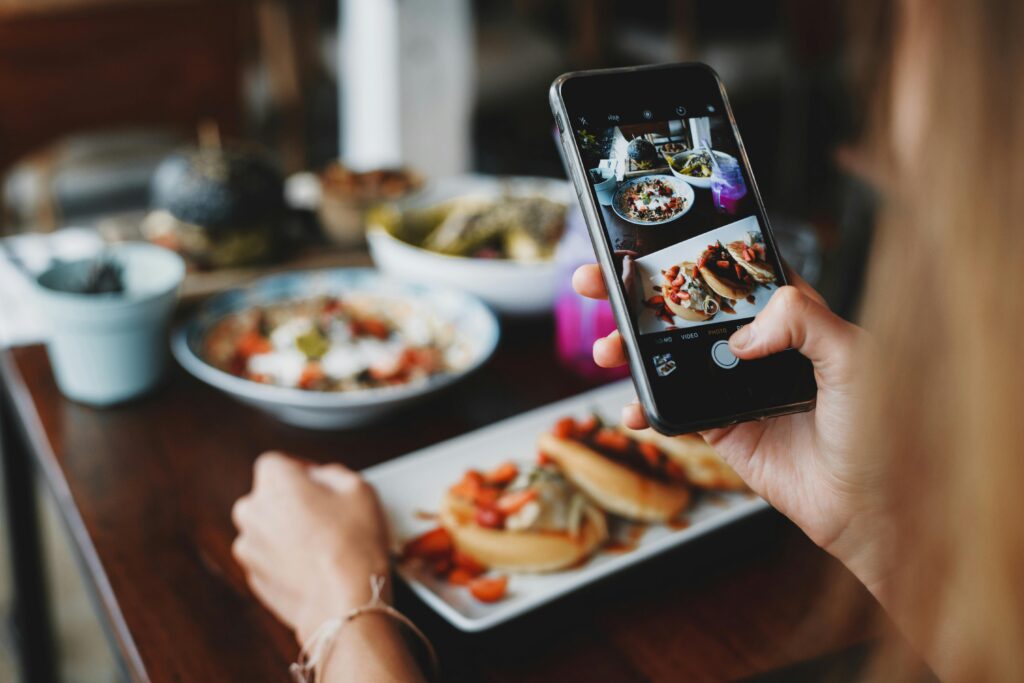
Image Credit: Pexels - Roman Odintsov
‘Foodie-culture’ is everywhere. In the digital age anyone with a phone can self-profess their admission to the ‘influencer’ club, glibly polluting our feeds with flimsy, meaningless commentary on aggressively generic, mediocre food. Take for example the inescapable ‘Eating with Tod.’ Now, I mean not to launch a Daily Mail-esque hate campaign against the man, I merely want to use him to illustrate the bizarre vernacular of nothingness that accompanies the visual content of many influencers’ videos. To me, this encapsulates our current approach to food: uncritical, overdependent on others and mindlessly visual. I could turn this into a (rightfully) angry tirade about the greater decline in critical thinking, reflected by our inattention to what we consume more widely, notably with regard to meat (and supposedly sustainable alternatives). However, I must keep my sights disciplined for now. My aim is to first demonstrate where we fall short, and then highlight what we can do to wrangle back critical eating from the jaws of ‘foodie culture’ (from here on a derogatory term).
Let’s take a quick look through Tod’s page. At the time of writing, the most recent insight was a description of a fluorescent green piece of Bengali battered fish from a restaurant popularised by their TikTok presence. Our bearded friend rigorously notes that as one consumes the ‘flaky’ fish, one finds themselves ‘just hit with mouthfuls of spices.’ Not exactly the most nuanced description of a deeply complex cuisine that, unbeknownst to me before writing, commonly relies on a distinct five-spice blend, Panch Phoron. A quick scroll through his account for a minute reveals an overabundance of superlatives: ‘oldest,’ ‘rarest,’ ‘craziest,’ ‘most viral,’ ‘most unique.’ Commentary should not depend on such rhetorical tools for user engagement, yet sadly it has become a common business model supported by algorithms and facilitated by our ‘doomscrolling’. By avoiding critical engagement with the dishes, such as describing the way in which x offsets y and complements z, digital foodie culture, despite its overt pretention, is actually just perpetuating the sloppy standards of the internet.
One may look to defend their acoustic inattention by claiming that the highly stimulating images mean our simplistic, simian brains cannot process the content of speech in such videos as they often change their focal point in rapid succession. I’m not wholly convinced by this line of argument. Videos of a 30-year-old man with gravy in his beard, milking any liquid out of his food in rhythmic fits of oral hedonism is not, for me, the most visually engaging material – but that’s just my humble opinion.
That is not to say that there is not good content out there. I happen to be of the persuasion that the best content is written, rather than visual, and therefore it is that we should look to for inspiration. It’s far easier to point a camera at a plate, cough up a generic phrase and then consume the fruits of your labour (after all, that paid promotion must be hungry work!), than it is to orate the symphony of a collective of favours. Take Andy Hayler’s noble 20-point rating system. He refuses to proclaim each meal he eats to be ‘the best I’ve ever had’ or ‘insane,’ but instead engages seriously with that which he consumes. Like many other serious food critics, he refuses to praise Michelin starred restaurants in virtue of them being Michelin starred restaurants (he once gave a popular London one star restaurant 13), but rather reviews each dish in detail, basing his rating off this, as well as the service, wine list and even the coffee.
Though it is true that we cannot, and should not, all become critics, as eloquent in prose as Grace Dent or Jay Rayner, I believe it true that we can all learn to eat critically. When I began writing this article, my intentions were self-motivated. I was hungry and set myself the challenge of accurately portraying the merits of a good shawarma (the sexier elder sibling of the döner). However, I realised that this was just my way of expressing an attempt to better my critical engagement with that which I eat. Thus, I decided that this article would be of far greater use if I were to not vainly attempt to describe one of my most frequently consumed meals but instead encourage others to embark on a quest of critical eating.
So ultimately, I suggest this – next time you’re sharing a portion of chips with a friend, take a second to ponder over the crispness, oiliness, saltiness and fluffiness. Think about why one adds parsley to enhance their salad – what does it really add to the experience? At what point in the mouthful is it distinctly recognisable and how does it interact with other elements of the dish, whether it may be complementing or overpowering them. Here, I reach my peroration and suggest that instead of blaming individuals like Tod, we should focus on ourselves and improve our own ability to consume food, so that we need not depend on reviewers like him. In fact, hopefully if we better understand what counts as good food, we’d feel more comfortable sending inadequate dishes back to the kitchen, something that younger generations feel incapable of doing. However, until that day comes, we edge closer to granting the likes of our Tod a full monopoly over our palates. Though my moralising guidance ends here, I hope you take away from this at least one thing, whether that be Tod’s innocence, or the great might of parsley in a salad.
Words by Alex Wallace