
Trailblazers and Boundary Pushers: The Necessity For Experimental Music
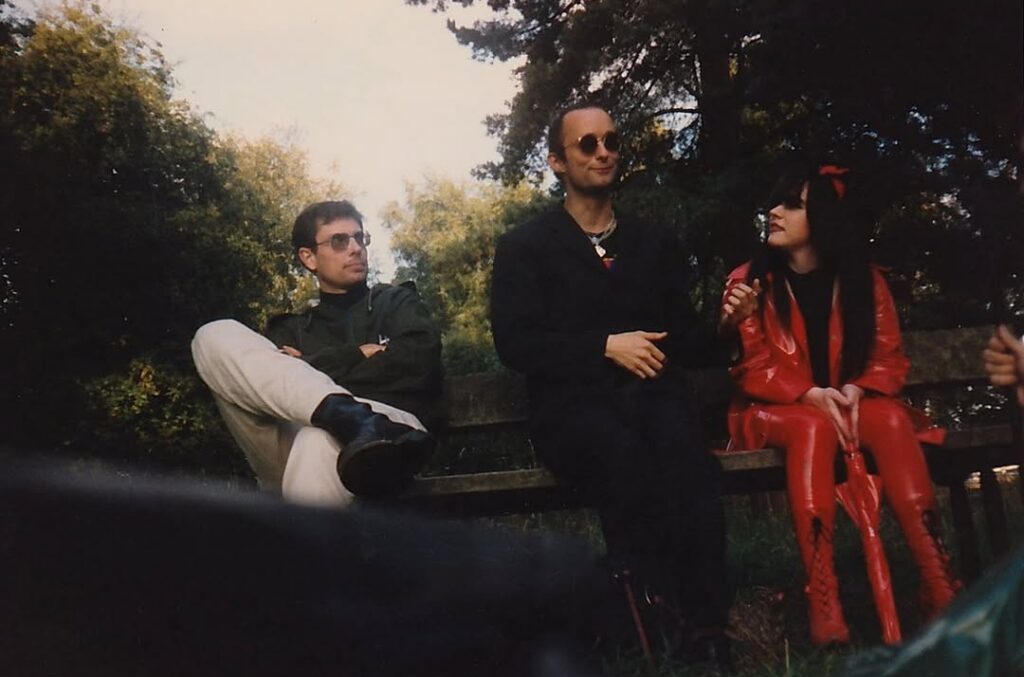
Image Credit: @gh_records on Instagram
“And when in doubt, be extreme.” – Genesis P-Orridge, lead singer of Psychic TV, Throbbing Gristle and founder of COUM Transmissions.
The license and means to be extreme in the current environment of music, especially in the UK, has been eroding since the turn of the millennium. This has left behind both a trail of pioneers and a scarcity of hope for the future of experimental and industrial music. Among these pioneers were John Balance and Peter Christopherson of Coil, alongside Genesis P-Orridge primarily of Psychic TV. The rapid innovation of experimental music in the 1970s was spearheaded by figures such as these, who collectively took risks and explored ideas alien to their contemporaries due to the fertile creative environment of the time. Take for example COUM Transmissions, P-Orridge’s performance art collective. It was one of the first unapologetically boundary-pushing British art groups that, despite legal battles and initial hiccups, still paved the way for an age of innovation.
COUM Transmissions were unsurprisingly commercially unsuccessful so consistently depended on grants from Arts Council England, who provided them with grants of £1500 in 1974 and £800 in 1975. This was a necessary contribution to stimulate experimental music in a period of dominance for radio-friendly new-wave and synthpop. The British industrial scene subsequently developed until the early 2000s, with classics such as Coil’s The Ape of Naples (2005) and Current 93’s Black Ships Ate the Sky (2006) bookending the period. However, funding for experimental music had already begun to fall dramatically, with 90% of Arts Council England’s funding going to Opera by 1998 amidst overall funding consistently dropping. Therefore, the momentum of the industrial revolution had crumbled by the time of the deaths of John Balance in 2004 and Peter Christopherson in 2010, leaving behind a skeleton for change that had already begun decaying.
Since then, the scene has not recovered as its inherently inaccessible nature means it is now impossible to sustainably produce boundary-pushing art in the UK without funding. This is damaging in both restricting artistic boundaries for new artists, who have to conform to an increasingly streaming-centric landscape, and also in suppressing the domino effect that experimental artists can create in other genres. If not for expressive outsiders such as Genesis P-Orridge pushing the boundaries of mainstream music, the likes of Trent Reznor, Hanin Elias and Billy Idol would not have been inspired to challenge norms within their respective sub-genres. This uncovers a deep-rooted issue of experimental music losing traction.
Some of the most influential artists in music were initially seen as subverting musical norms and therefore treated with contempt. If not for the platforms afforded to artists such as This Heat, The Velvet Underground and Brian Eno, the mainstream would be significantly less diverse, and a plethora of their contemporaries wouldn’t exist. The slowdown of this innovation in recent times is the basis for various theories about the lack of progression in music since the turn of the millennium. For example, Simon Reynolds argues in his 2011 book, ‘Retromania: Pop-Culture’s Addiction to its Own Past’, that innovation in music ended around 1990 and “the avant-garde is now an arrière-garde”. This certainly has roots in the fall in funding and ambition for experimental music. Ultimately, without trailblazers the future of music will continue to be constrained to the well-trodden, commercially successful path.
There’s now a necessity for experimental artists to appeal to a stagnant mainstream for survival, thus abandoning their creative license to a record label or to the expectations of the Spotify algorithm. So are we set to lose the possibility of innovation and progress in music? Not entirely. Modern-day boundary pushers do exist, with bands such as Shearling, Xiu Xiu and Vangas still flying the flag for the future of experimental music, but these bands are getting fewer and farther between. As a result, the next generation of experimental artists are not guaranteed a chance to challenge expectations, and this could be detrimental to music as a whole.
Words By Will Palmer