
A Voice for the Towns: Interview with Warrington-Runcorn New Town Development Plan
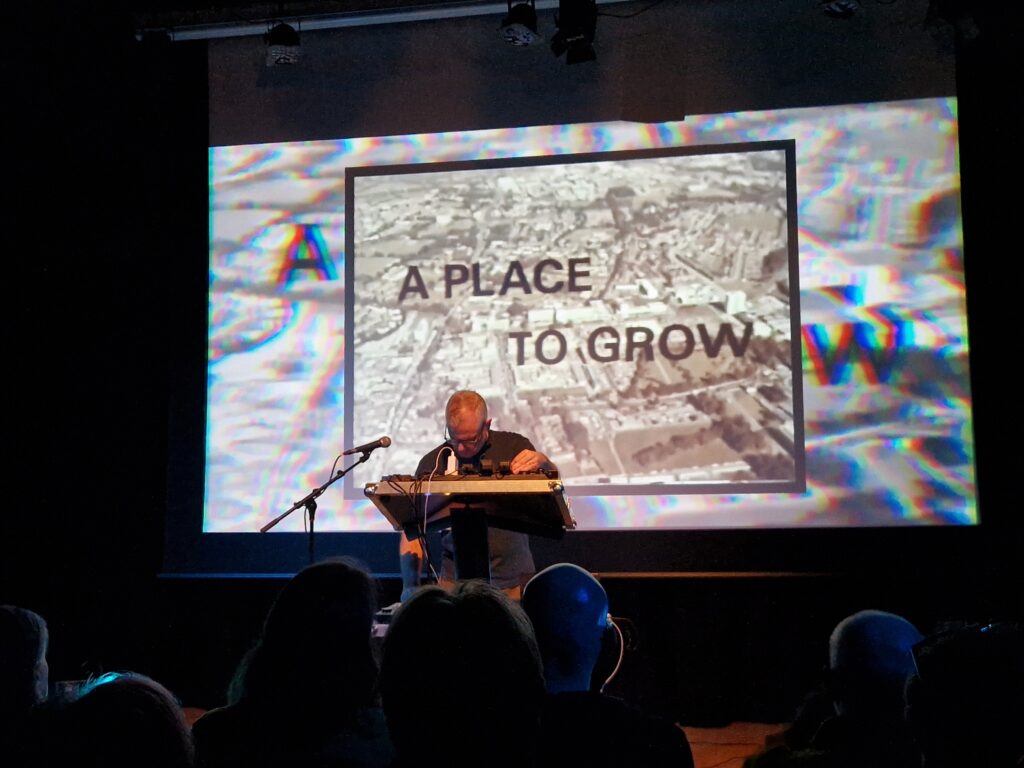
Image credit: Rowan Morrow
It was a rainy Thursday evening in the south-east. I was driving slowly down an under-maintained B-road, on my way home from my (highly glamorous) potwash job at a rural-ish pub. Something about the electronic music playing through my car speakers pulled me out of my thoughts. There was something unique about that sound… a mix of resignation and nervous momentum, urging me forwards through the driving rain.
That track was from Gordon Chapman-Fox’s electronic music project: Warrington-Runcorn New Town Development Plan. WRNTDP is themed around the development of the new towns – a time when, in the decades following the Second World War, the government made huge investments in urban planning. These new towns, such as Warrington and Runcorn, were designed to improve housing shortages and accommodate overspill from cities, but there was also – at times – a giddy utopian sentiment of new, flourishing communities.
“There’s something really lovely and poetic about towns that have dropped off the radar – small, forgotten towns
However, a lack of continued investment, plus a failure to realise some of the more ambitious plans, meant that this haze of optimism gave way to a greyer reality. This is the sentiment that Chapman-Fox has explored through seven albums and three EPs of intricate, retro-futuristic electronic music, trawling the towns through pricking basslines and murky synths.
I’m chatting to Chapman-Fox in Seven Arts, an independent venue in Chapel Allerton, Leeds, before the first of his two shows this afternoon and evening. One of the first things I’m keen to talk about is, well, towns. When so much electronic music seems to come from (or long for) the big city, there’s something refreshingly decentralised about music that embraces the towns. Chapman-Fox says, ‘There’s something really lovely and poetic about towns that have dropped off the radar – small, forgotten towns. I’ve never been a big city guy. It’s always been part of the appeal, to celebrate the uncelebrated.’
As someone from a town (somewhere between Reading and Basingstoke…) I can attest to the fact that they can feel unanchored and unloved. But Chapman-Fox seems committed to celebrating the small-scale: he’s on the independent label Castles in Space, and he’s also an advocate for small, independent venues. ‘As much as anything, the vibe is right for the artist. It’s about playing in somewhere that really gets you. I’ve played some venues where it feels like you’re just another face in the crowd, the next act on the bill. The smaller, more out-of-the-way venues have a more special quality.’
Would he ever think about scaling things up? ‘I’d love to play something like Glastonbury. It’s a special unique thing in its own way, but that’s a once in a lifetime tick-a-box thing, whereas stuff like this is bread and butter to me – I’m very happy playing stuff like this. To sell it out twice, afternoon and evening show, it’s incredible.’
We agree that it can be rewarding to keep things small. Chapman-Fox says, ‘I know I’ve been on 6Music and I’ve sold records and things like that, and it’s become this big thing, but it’s still mainly me doing all this.’ However, he’s willing to accept some new influence into the project. ‘The next album is the first time I’m working with an artist for the video. Up until now it’s been just me, but I can’t do that anymore.’
I’m excited to find out more about Chapman-Fox’s use of video projections, which I’ve been transfixed by both times I’ve seen him play live. In an impressively analogue labour of love, Chapman-Fox stitches together archive footage of the new towns, creating a poignant window into the emotions of the town planners, plus the new and prospective residents. ‘There’s actually very, very little footage of Warrington and Runcorn – so to make it out to two hours’ worth of video, I had to incorporate other footage from other new towns in the 1970s. So there’s bits of Skelmersdale, bits of Crawley and Stevenage from down South, bits of Milton Keynes as well.’
“It’s a celebration of the dreams, while also being very aware of the reality that followed
This retrospective image of the new towns feels tentatively hopeful – but it’s hard not to put the emphasis on tentative, knowing these visions were never fully realised. Chapman-Fox says, ‘The whole thing about that that appeals to me is the optimism building of it, versus the failing and the shoddy reality of what they soon became.’ The sense of hope was still there when the towns were being worked on in the mid-to-late-1970s. ‘But obviously there was a whole shift that comes in with Thatcherism in 1979, 1980, this profit-first attitude. And that’s a death knell for those places – and a death knell for the communities they were trying to make. It’s a celebration of the dreams, while also being very aware of the reality that followed.’
Yet Chapman-Fox is quick to emphasise that the new towns were not the only victim of this profit-first attitude – an attitude that Britain is yet to really recover from. We commiserate together about privatisation, public transport and student loans.
As much as WRNTDP is deeply centred in its new town concept, it never feels like it’s slipping away completely into the past – and there’s nothing gimmicky or detached about its urgent, emotive sound. Chapman-Fox insists, ‘It’s not just about the nostalgia. It’s about today, and what we’ve lost in the intervening 40 or 50 years. Public services are overcharged and underdelivered. There’s been no investment in the infrastructure. As much as anything, this is a howl of rage from me about today, through the prism of yesterday.’
Words by Rowan Morrow