
The world’s forgotten wars: Myanmar
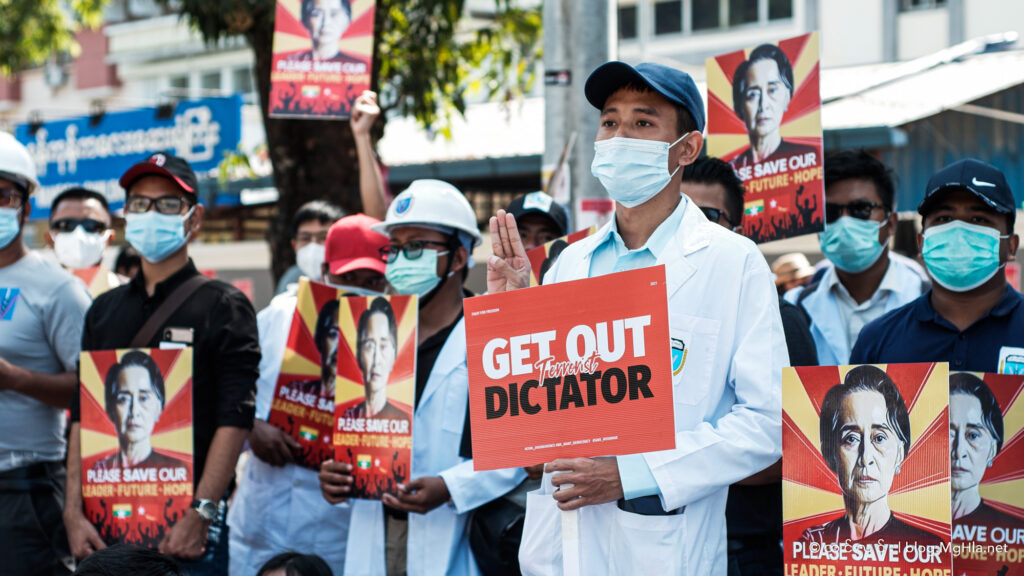
Image credit: Wikimedia Commons
With the war in Ukraine, Iran, Lebanon and Gaza, alongside US military operations in Venezuela and new cartel crackdowns in Mexico, it is easy to get lost in a world of conflict.
But in Myanmar (or Burma), a nationwide civil war has been raging for 5 years.
How did it start:
In the 1990 elections, Aung San Suu Kyi (ASSK) and her National League for Democracy (NLD) won a landslide in a campaign to move the country towards democracy and away from military controlled authority. This outcome was rejected by the military, who launched a coup and placed ASSK under house arrest. In her place, they announced their roadmap to democracy and held new (unfree) elections, which saw the military-backed Union of Solidarity and Development Party (USDP) win. Alongside this, the military was granted 25% of the seats in parliament, ensuring their control over politics.
In 2015, new, competitive elections were held, in which the NLD and ASSK were allowed to stand and win. Following these elections, they agreed to form a coalition with the military, but the NLD remained committed to reforming the political process to reduce the role of the military in politics. This fundamental division between civil and military forces would lay the foundations of the 2020 coup and the civil war.
In 2020, new elections were held in which the NLD won again on the platform of democratic reform. However, unlike in 2015 when the military accepted a reformist government, the military began claiming electoral fraud. Many believed this was simply a tactic to explain away their defeat, but this claim continued and tensions were raised when the military began claiming that they had a role as the constitution’s defenders. To diffuse the situation, the NLD and the military held tense negotiations around issues like the electoral commission and when parliament should open. Even as these negotiations continued, many analysts felt the military was bluffing when they hinted at the idea of a coup, highlighting that whilst their ally- the USDP – had lost, the constitution was still working to protect their influence.
However, in February 2021, the military launched a coup, giving rise to the famous Myanmar yoga-coup video. They removed the government from power, re-arrested ASSK and used the claims of election fraud to legitimise their coup and new government. The coup was met with mass protests, with doctors and state employees going on strike the day after the coup and being quickly joined by growing numbers of pro-democracy advocates from civil society.
The military responded with violence to the protests and killed more than 600 people as part of a nationwide campaign to destroy resistance. The military’s brutality simply fed into growing anger. By April 2021, a coalition of ethnic minorities (many of whom have been fighting the state for a while), ousted government officials and democracy campaigns by forming the National Unity Government (NUG) and the People’s Defence Force (PDF). At this point, the state was ripped in two with pro-democracy anger leading to the eruption of civil war.
Key actors involved:
Unlike many other civil wars, the conflict in Myanmar has not internationalised, but like much of global politics, support for the rebels and junta has been split down a West-Autocrat axis.
The military is backed economically by a coalition of China, Russia and India, who have all invested in the country’s economy in order to turn a profit on the conflict.
Russia’s role has been as an important arms supplier to the military in exchange for supporting the role of the Russian economy in Myanmar, enabling it to evade Ukraine war-related sanctions. This has included a program to support the adoption of a new Russian payment processing system as an alternative to Visa and Mastercard.
India has played a similar role to Russia; however, it has been more focused on supporting trade in non-military goods between the two countries.
China’s role in the conflict has been the most actively engaged in attempts to broker ceasefires, whilst supporting the military economically, all in the interest of protecting their economic interests in the country.
Unsurprisingly, against this autocratic alliance, Western governments have come in behind the NUG and the PDF. However, support has been less substantial than in conflicts like those in Libya or Syria. The primary mode of support has been sanctions placed on the military government, with a focus on state-owned businesses or those owned by the military.
Meanwhile, military support has not been forthcoming. Meanwhile the support provided by China and continued trade by Thailand and Singapore have undermined the effectiveness of these sanctions.
What is happening today and what does the future hold:
Today, the military remains deeply unpopular, with polls suggesting that rebel forces have over 90% public support (CfR). This support is slowly being converted into rebel gains, with the military being forced back and now only controlling 20% of the country.
These defeats have led the military to expand its reliance on its main advantage over the rebels in the form of its air force. Here, the military has expanded bombing campaigns against civilian infrastructure and towns; however, whether this will prove enough to stop the rebels seems unlikely.
The military has recognised its precarious situation and the need for something to change.in late 2025 and early 2026, they held new elections to return the country to the 1990-style controlled democracy in which the USDP unsurprisingly swept to a victory.
These elections are unlikely to solve the government’s lack of legitimacy or the military’s lack of popularity, with a political party that the people had wholeheartedly rejected 5 years ago returning to power under the protection of their military allies.
The military’s future prospects appear to be under further strain with growing internal tensions between elements of the military concerned with losses on the field, the junta leader Min Aung Hlaing and the USDP, who, whilst aligned with the military, seek a greater (although not democratic) role in governance.
Words by Archie Sykes