
Aldous Harding Transforms and Transfixes at Leeds Irish Centre
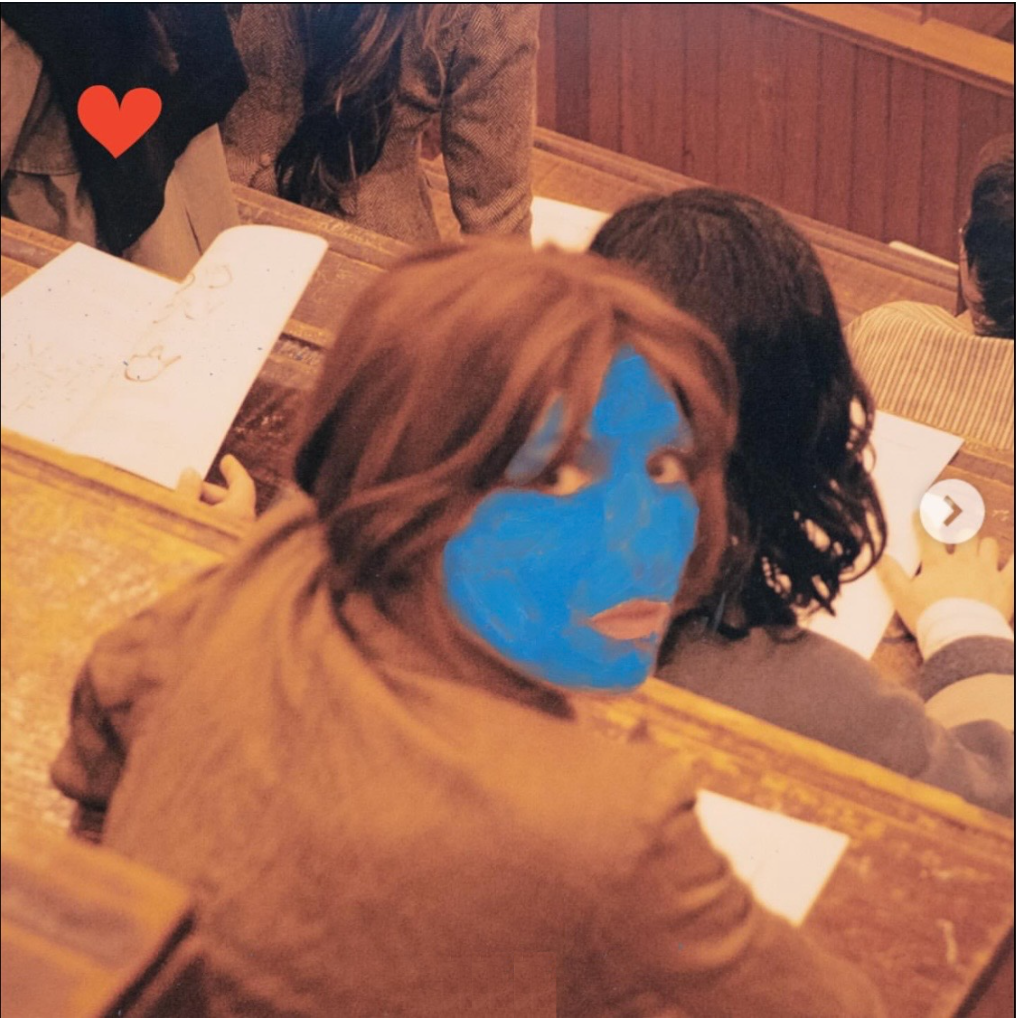
Image credit: @aldousharding on Instagram.
Before her gig at Leeds Irish Centre, Aldous Harding’s performance style had been described to me as ‘mesmerising’, ‘unique’, and ‘absurd’. From the moment she appeared onstage, she certainly moved like no one I’d ever seen. A warm-smiled woman next to me in the crowd noted that ‘everyone who gets to see Harding perform is welcomed into her world’. At that moment the lights darkened and the instrumental began. We fell silent and turned with anticipation, uncertain and ready.
I’d been excited to see Harding live since listening to her 2026 follow-up to Warm Chris (2022), Train On The Island. Already in my top albums of this year, it is an obsessive record. It is one to play, rewind, and play again, but also one that ruminates on details, tangents and nonsensical images. It has the effect of moving through and observing life from different but overlapping perspectives. It is fun at points (‘One Stops’ builds and breaks to euphoric effect), sinister at others (she prays ‘for the incel’ on track ‘Worms’), and oftentimes gentle:
I’ll throw my arms around
Fill up silence in the dark
Find shells and bring them home. (from the album’s conclusion, ‘Coats’)
Harding’s intimate vision of a world in its current state is both unsettling and joyous, troubling and warm. My favourite of hers yet, I wondered how might this expansive piece translate onstage?
From track one, ‘Train on the Island’, it becomes clear that this is more of a theatre show than a gig. Aldous said in an interview with Marc Riley in 2023 that ‘I’m definitely more of an actor than a musician’. Each disjointed twitch of her fingers, each roll back of her eyes and evident physical strain produced a sound that was record-perfect. As much a shapeshifter as a singer, Harding’s ability to use her physicality to access, embody, and possess multiple musical bodies is uncanny. Different voices come out for certain verses, her movements adapting to each of these characters. At points she stared out into the crowd smiling, hyperreal. Her stage presence was both intense and relaxed; surreal and very human. Though there was sense that Harding exists in her own world, she undeniably connected to the crowd. We were silent. Mesmerised. After a few tracks Harding teased with a smile, “You are all so serious”, which was followed by a collective laugh of embarrassment.
Elsewhere in the set, Harding’s closeness to the mic and unwavering, wide-eyed stares were claustrophobic. Just like when you try to take a photo of the moon, trying to capture Harding on camera ends up being a blurry, flattened version. She is somehow supernatural and yet very present. More upbeat moments, such as in the start of ‘What Am I Gonna Do?’ and fan favourites like ‘Designer’, balanced the show’s idiosyncratic intensity. In an interview with RNZ in 2017, Harding shed some light on her live presence: ‘there’s not really anything real about any of this’ ‘it’s a plan, it’s a performance’, though there are ‘moments of realness’. Realness, performance, characters. Is Aldous Harding verging on drag, or theatre to represent her music? Like David Bowie had his personas, is Harding amalgamating her many emotions into one embodied performer?
With her absurdist lyricism and physical theatricality Harding is, at times Lynchian. Like a scene from The Red Room, she conveys the idea of a film played backwards. The strangeness extends to when Harding sings the word ‘vomit’ in “sometimes I eat ‘til I vomit”. Here, she accesses a guttural, repulsed sound. Sometimes Harding sang with her eyes closed, then suddenly opened them again. A friend described these movements as like watching someone ‘open their eyes for the first time’. Though avant-garde in a way I hadn’t experienced before, what stood out most about this show was its warmth. Aldous’ ways of performing felt inherently human, their expression of emotion visceral.
I became aware of myself, too. Stood politely with my jacket tucked as small as it could be, amongst others in the crowd. It made me wonder, how do we hold ourselves as audiences? How do we crane our necks to get a better view, or tuck our feet to take up less space? How do we accommodate others whilst we experience the gig on our own? I danced along politely and I felt silly, self-conscious. Where Harding seemed to inhabit whatever ways of being she wanted to, I, as a crowd member, felt inhibited. Inspired by her performing, I relaxed and stood more naturally. For the rest of the gig, I felt more at ease.
I can’t move with you on my shoulders
I feel that I feel the most
You are through with me on your shoulders
I can prove that I ate the most ‘cause I did (‘I Ate the Most’)
Ahead of the feverishly requested encore. Harding asked wryly, ‘Did you feel it?’. And I end up thinking about what it means to feel, to be in our physical bodies, all the way home.
Words by Francesca Lynes