
Yes, Everything Might Go Wrong. And? A Review of Aireborne Theatre’s Edinburgh Fringe Preview of ‘Sweaty Clowns’
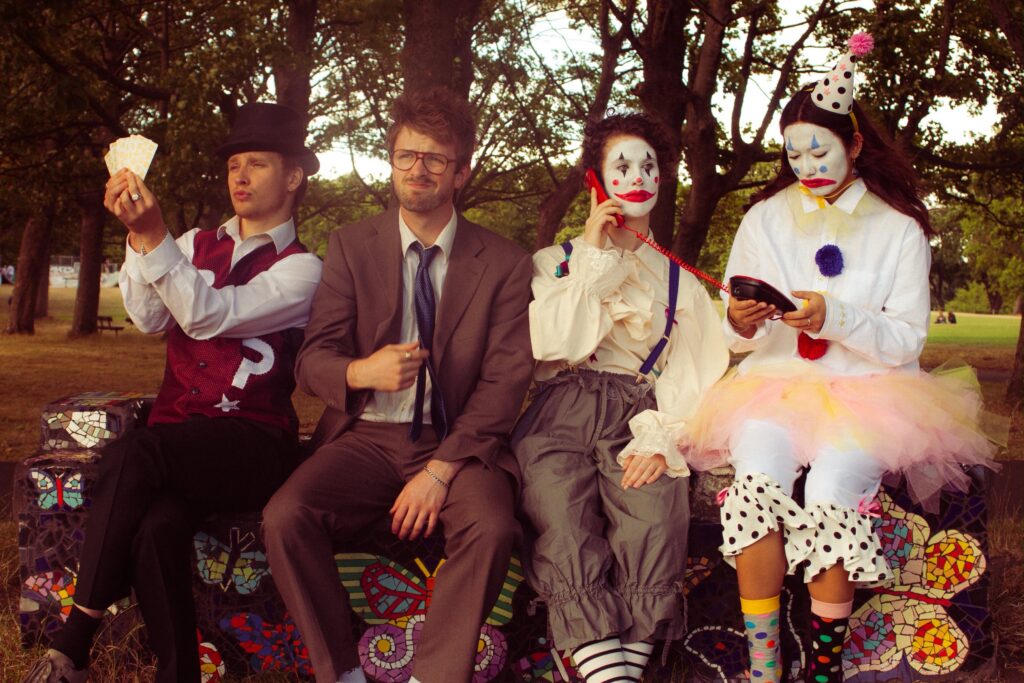
I still remember when I saw the first rendition of Sweaty Clowns back in April; it left such an impact on me that I did not shut up about it for a good few weeks. The jokes kept making me giggle upon reminder, the set and costumes still had a vivid image in my head and the emotional feeling that it evoked in me lingered. It made me all the more excited about it being performed at Edinburgh Fringe Festival later in the year.
I had the privilege of seeing the preview of a recast and rewritten rendition of the show here in Leeds before these beloved clowns (and magicians) make their field trip to Scotland. I don’t use the word privilege here lightly; I believe this show is special in a way that it overcomes the rough-around-the-around-the-edges feeling that is often implicitly embraced with student written theatre.
The humour is extremely effective and relevant in a way that is refreshingly original and the more minimalistic approach to staging to accommodate for the constraints of Fringe only feels more resourceful and compelling. Costumes have been taken up a notch and are memorable and creative. All of this is driven home by the actors and their ability to not only consistently make the audience laugh, but to also evoke genuine emotions in them while doing so.
Themes of escapism and nostalgia are very prominent throughout the show and are also used very effectively for humour. The dialogue is full of references to the past – music from 2016, clown costumes that look like they are from the 2000s, dated magic tricks, and even an off-stage character named Lance Armstrong (seriously, how long has it been since you heard that name?). It is so prominent that any reference to the current time made (like one to Jessie Buckley in Hamnet) felt very intentionally out of place. It works extremely well because clowning is that out of fashion, contributing to the entertainment company our characters work being at risk of being shut down. All four of our characters seem to be running away from something and latching onto something for comfort.
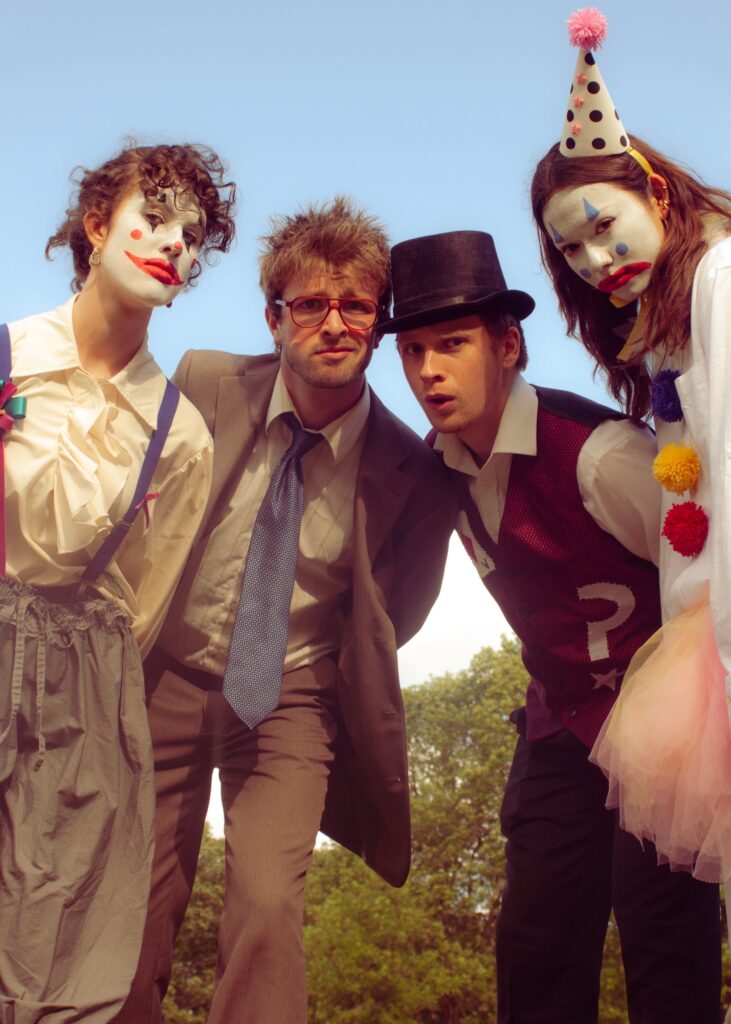
We see Magic Andy, who seems to be stuck in 2016, entering the stage holding a Bluetooth speaker playing Closer. He turns to us and asks, “For real, where did they go?” in reference to the Chainsmokers. This joke, while extremely funny, also serves as an effective insight into who he is as a person – he is a hack who refuses to be challenged about his ways and is alluded to having a gambling habit, yet he seems perfectly content doing the most overdone magic tricks in front of kids while playing Sorry by Justin Bieber.His striking costume has his name embroidered on it with a beautiful cross stitch of his rabbit Mr. Whiskers. He seems to be extremely passionate about his craft albeit its aimless nature. He is used as the primary comic relief, and it works excellently. Bill Riley really knows how to get a room full of people laughing because there was rarely a moment where the audience wasn’t. But beyond this seemingly manic persona, we see a very sad man – he has no friends outside of work, consistently touchy with his manager who does not seem to reciprocate the same and doesn’t seem ready to grow up. All he has is his rabbit, magic and the Chainsmokers. It is very human from him to be fully committed to this, desperate to make it work.
We see Morgan who just can’t seem to let go of clowns and she refuses to accept that kids find them scary these days. She knows deep down that clowning and clown makeup is a dying artform among kids, yet she keeps wanting to make Buffo the Clown work. It makes sense for her though as she recalls how a clown brought her sister, who was sick throughout childhood, a moment of genuine happiness in a very turbulent time. She is hopeful, despite her many failures as a clown, because she genuinely loves it. The possibility of her making even one little child happy perhaps trumps everything else. Kelda Coke Jensen embodies this excellently and her shining moment is an everything-went-wrong-but-life-went-on-fine dialogue where I believe her character truly fully unravels and shines.
Dylan lives with her mom and is dispassionate about her job but really doesn’t even remember how long she’s been working here. She hasn’t even willingly explored her options out of this career – even as she thinks about leaving this job, she just wants to get the same job but on a cruise ship. Momoko Penk captures this feeling-out-of-place feeling perfectly as she consistently appears disinterested in everything she is doing while also conveying to the audience that she might not be ready to confront it just yet. Through her performance, we see someone very human, falling into the natural habit of finding comfort in the stability of a job but also getting lost in that same comfort and feeling stuck.
The Manager, who appears to be strictly serious, tells us “I can’t sell this building to save our business, I live here”. He is the only character who isn’t a performer in the occupation sense, yet his whole life revolves around this performance company. This decision feels fitting and intentional as we see more of him fighting for his dying business. We never see much of his personality outside of this until the show reaches its conclusion, but throughout the play, we do see him trying to suppress any real emotion he is almost about to have. It gives you just enough of a moment to wonder if he is capable of emotion and makes you think if he was passionate about this when he first opened the business and slowly fell out of love with it. This pessimistic and strictly rational portrayal by Ben Harris really ties all four of our characters together as it makes the final scene of the play feel all the more cathartic.
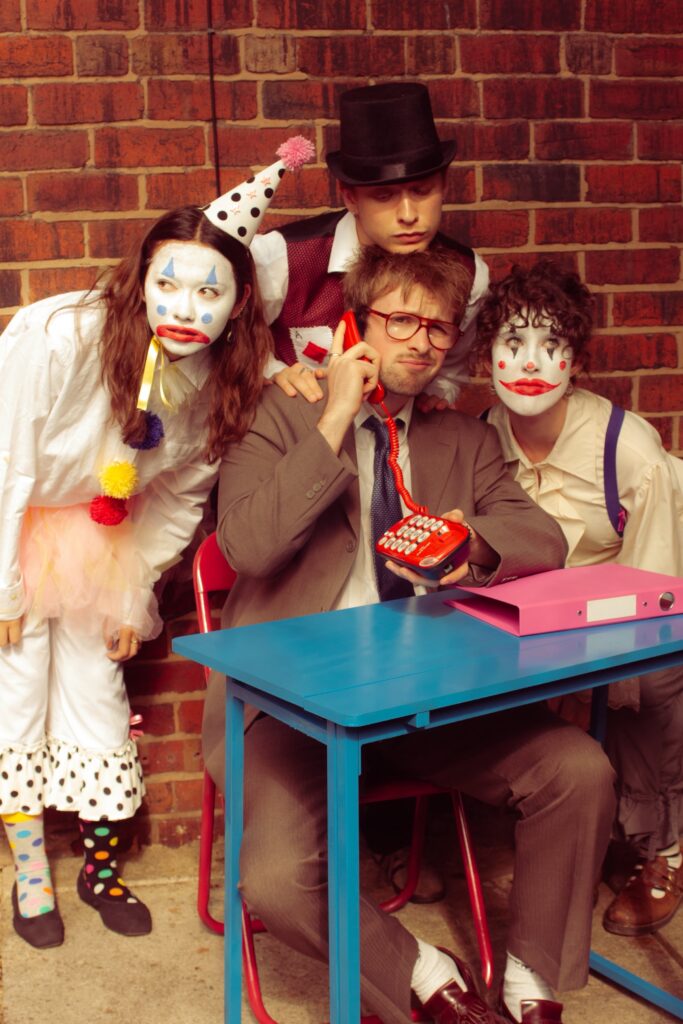
I personally see myself in all four of them in some capacity, even when everything is going wrong for them. These themes ease their way into the audience’s heart while consistently making them laugh and this was reflected in the audience’s reaction, with there being multiple moments when they audibly expressed sympathy for the characters. It speaks to the quality of writing by Sam Dallamore-Hynd and Chris Louridas. We experience a play that is by all means complete chaos, but one which is filled with all these powerful themes and genuinely emotional moments from its very flawed but human characters.Sweaty Clowns works so well not just because it is funny, witty, charming or creative (it is all those things). It works because we truly get to see the people beyond the smiles. Beyond the smile of the endearingly pitiful burnt-out clowns, the chaos of the amusing magician with the gambling addiction, and the franticness of their cynical manager who is trying his best to keep his patience while direly trying to save his business.
It works because, yes, these people are struggling and it is desperate and it is pitiful – almost pathetic – but their misery is delivered in a way that feels charming and relatable, resonating with the very real emotions a lot of us have and reaching all the nostalgic parts of our brains. There is comfort in the sheer commotion of everything in the show; even when everything seems to be going wrong, it leaves you with an enduring warmth in your heart.
Sweaty Clowns will be showing in the Surgeon’s Hall between the 7th and the 18th of August in Edinburgh this summer. Grab your tickets to see the sweatiest of clowns at the Fringe Festival this year here: https://www.edfringe.com/tickets/whats-on/sweaty-clowns
Words by Amyra Surana