
Are Book Fans Too Involved in Book to Film Adaptations?
Isma Asghar writes about their thoughts on book-to-film adaptations, specifically on whether they do more harm than good
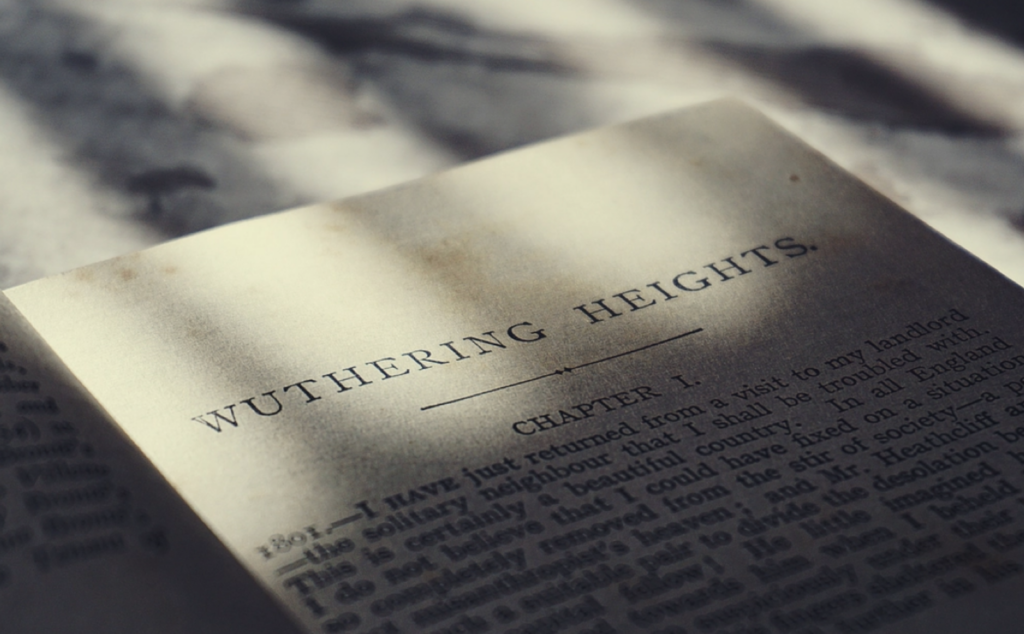
Image Credit: Rawpixel
With the plethora of book to movie adaptations in 2026 alone, – from Wuthering Heights to The Odyssey – it begs the question: is it fair that pre-existing fans and their perspectives are diluted to feed mainstream media narratives which have existed on paper for several millennia?
The never-failing argument of ‘adaptations introduce new people to books’ is always lingering but never reflected upon. With ever-decreasing literacy rates and lowered processing abilities, destroyed attention spans have become the new normal, especially for younger generations who have not known life without technology. So why do we pretend there is an influx of people introduced to reading because of movie trailers on TikTok?
I think people want to indulge in the idea of being literate and how this inherently equates to intelligence without actually aiming to change or grow through reading. Instead, they opt to watch the movie without acknowledging the creative liberties of directors.
Some directors feed this discourse by contributing to the rise of ‘second screen view’ films. Fans of classics like Emily Bronte’s Wuthering Heights were disappointed with Emerald Fennell’s adaptation distancing itself from Bronte’s canonical text. Not only introducing a race swap, but aging the characters to include mature scenes. She opts for a narrative of love over revenge, showing how individual liberties can obscure an original text to fulfil a director’s fantasies while disillusioning any who would have been inclined to attempt a classic after seeing the movie. Fennell’s 2026 adaptation of Wuthering Heights created an intense love story in a visually appealing world yet omitted key details detracting from the original narrative to fulfil her own creative vision.
Fan criticism also rears its ugly head during the process of adapting books to the big screen. For example, BBC’s A Good Girl’s Guide to Murder was crafted with heavy direction from the author herself, yet fans were discontent at the failed fan service with casting claiming Emma Myer’s visual and portrayal of the beloved Pippa Fitz-Amobi was inaccurate. The author Holly Jackson claimed “Emma had the ability to do her justice […] she is a once-in-a-generation talent!”
Yet despite this, the influence of fans discredited her abilities at portraying the characters showing how even readers can adopt a toxic fan culture to the extent that they view even the original author’s viewpoint as incorrect. I think, since Jackson herself was a key component in the creative direction of the adaptation, the fans lose validity in their criticism. They are no longer digging into a director who has done the book injustice, but criticising a world and concept the author has chosen to make the fans privy to.
This brings into question how much control the fans deserve as they are the ultimate consumers and the first people who bring the narrative to life once it has entered the stratosphere. The combination of discontent from both author and readership is proven during The Odyssey‘s premiere and Christopher Nolan’s claim of using Wilson as his primary reference. Emily Wilson is the first woman translator of The Odyssey and successfully weaved commentary on gender into a narrative which was previously only associated with male heroism.
Regardless, key figures of feminine strength, like Zendaya playing Athena, have roughly five minutes of screen time across the three hour long film. Wilson’s scathing review states “the script allows only for a set of all too brief tableaux of female victims” making clear that Nolan only achieved a successful adaptation in the broadest sense: the box office. While it is ultimately up to Nolan how he chose to adapt his vision, my contention lies with how there are a multitude of pre-existing translations of The Odyssey yet Nolan chooses Wilson’s and omits what makes hers a unique perspective on the age old narrative.
The absurdity of there being more adaptations than original concepts being released just speaks volumes on how as a society we are losing our touch with creativity and critical thinking skills, not only in the creation of these sub-par films but in the overwhelming perception of them without actually acknowledging the original texts’ message and how this is translated in film. We are losing the understanding of individual analysis and nuance as a collective and the impacts have infiltrated our society’s literacy rates, to the extent that even the films we consume reduce intricate stories into palatable concepts for the big screen.
Whilst the intensity of fans can be overwhelming to consider in the process of adapting a narrative to film, I believe that they should be prioritised over feeding the soon-to-be “braindead” masses a digestible plot which most likely has skewed the author’s intention. We can consider the economically precarious times in which the authors are acting in when adapting their stories, yet they should perhaps attempt to retain the original narrative as much as possible to not jeopardise the fanbase which help grow their success in the first place.
Words by Isma Asghar