
The Great Niche-ification of the 21st Century
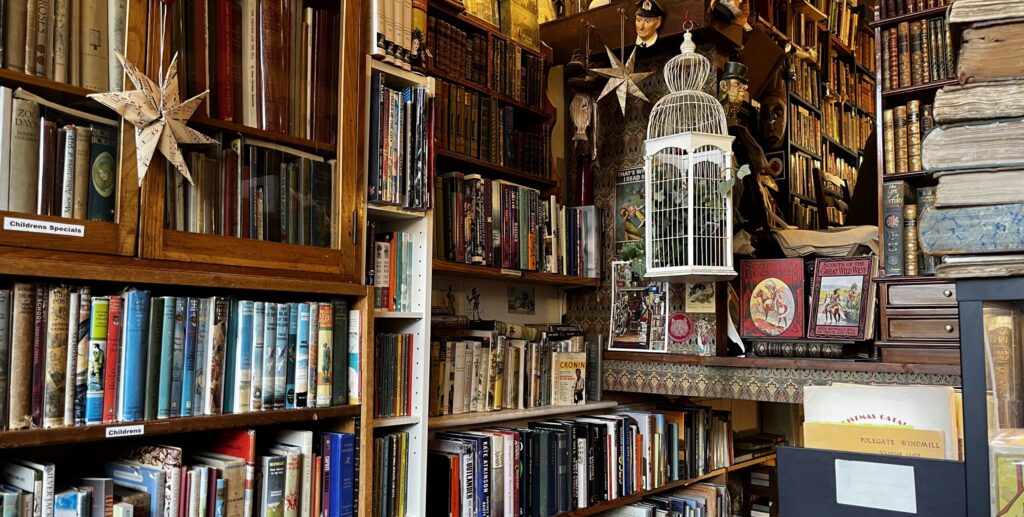
image credit: Jeshna Arya
Apparently, liking things is no longer enough. You have to like the right things, for the right reasons, with the right amount of irony.
There was a time when having an uncommon interest was a simple endeavour. You liked a band nobody had heard of because nobody had accidentally stumbled upon them on the radio. You read a strange little book because its cover caught your eye in a second-hand shop. You dressed oddly because you liked mismatched outfits. Nobody had to know about it. Nobody had to get it. In fact, that was the whole point.
Now, being interesting seems to require supporting evidence.
The playlist. The reading list. The carefully curated wardrobe. The film director whose entire filmography you discovered three days ago and are already prepared to defend in court. We are no longer people with interests but curators of our own eccentricity, desperate to prove that we are not like everyone else, preferably in a way that everyone else will recognise.
This is the era of the niche epidemic, a condition in which being ordinary is embarrassing, popularity is grounds for suspicion, and the most damning thing anyone can say about your taste is that it is, God forbid, basic.
Carrying a Penguin Classic is fine provided it isn’t Ulysses, which nobody believes you finished. Ordering a pumpkin spice latte requires a long preamble. You bring home a locally crafted ceramic from holiday instead of a fridge magnet and suddenly you’re a God. Liking Arctic Monkeys is perfectly acceptable but you need to clarify that the first two albums were better. But liking an artist’s most popular song? An absolute public humiliation. Even sincere answers now come with a preface: “I know, it’s so cliché”. And should you confess to enjoying something genuinely popular without irony, context or a B-side to establish your credentials, you might as well hand in your cultural citizenship and get on the next flight to Jupiter. If we are embarrassed to love what everyone else loves, what exactly are we afraid of? That beneath the curated references we might be a little more alike than we’d hoped?
We have never had more access to culture, nor have we worked so hard to distinguish ourselves through it. The internet lets us discover 1960s Ethiopian jazz, develop an opinion on a Japanese film director whose work is available on precisely one streaming service. Isn’t this extraordinary? The problem is not that we are discovering new things. The problem is that discovery needs an audience. Once upon a time, finding something virtually unknown was its own reward. Now, the discovery often feels incomplete until it can be documented, posted, recommended or subtly deployed in conversation. Even rating something has become a performance. A four is carefully weighed because five suggests enthusiasm and two suggests it went above and beyond your brain.
We have confused having taste with being a person of taste. Taste is supposed to be personal, proudly ours. Yet we live in a day and age where some interests are sophisticated; others are embarrassing.
We are encouraged to turn our lives into aesthetically coherent narratives. It is an opportunity to demonstrate that you have the sort of life other people might wish to have. Even individuality has acquired a template. There is an aesthetic for being effortlessly intellectual, a wardrobe for looking accidentally cool, a reading list for seeming politically conscious, and a playlist for appearing emotionally complicated.
The undiscovered, meanwhile, has developed an unfortunate habit of being discovered. An unpopular band gets popular and its earliest fans behave like they’ve been stabbed in the back. “I saw them in a pub function room in 2014” is not not just a memory but a defence statement. A once niche something becomes popular and its former devotees migrate elsewhere searching for another corner that has not yet been ruined by other people. I am tempted to call this snobbish. If a thing becomes valuable partly because few people know about it, then its popularity threatens the very quality that made it valuable. And so the cycle continues: discover, love, display, become embarrassed by the crowd, move on. Repeat until your yearly wrapped resembles an archeological dig. Then comes the horror: finding out your most-played song, the one you’d never admit to, played nine hundred times on a Tuesday.
But the thing is subcultures and gatekeeping isn’t new, they predate the algorithm that’s now built on visibility. We want to be niche, but we would quite like everyone to know it.
That is why being interesting has begun to feel so exhausting. We are encouraged not merely to have interests but to have interesting interests. One asks what makes you curious. The other asks what makes you stand out. And the later has a way of ruining the former. For example, there is a difference between loving a practically undiscovered band and loving the fact that the band is undicovered. One is about the music. The other is about the obsession with how you’re percieved. There is nothing pretentious about loving difficult and different art. But being well-researched is not the same as being genuinely curious. You can memorise a discography and have nothing to say about what it means to you. You can accumulate references like souvenirs without asking where they have taken you.
An interesting person is not the one who knows the most unusual things. It is the one who stays curious about them, who can be enthusiastic without being embarrassed, like something popular without feeling they have betrayed the artist, someone who can enjoy a thing without immediately turning it into evidence of who they are.
In the age of relentless self-curation, the best thing we can do is to like something privately and proudly. So by all means, listen to the unpopular band or an artist’s most popular song. Read the difficult book. Develop an inexplicable obsession with a forgotten seventeenth-century artist. Be strange, be curious, be insufferably enthusiastic.
Just remember that the point was never to be the only person in the room who knew about it.
The point was to love it.
And if someone else happens to love it too? How dreadful. You might have something in common.
Words by Jeshna Arya