
Apocalypse or strategy? Mahdism and Iran’s nuclear drive
Haadiyah Mulla explores the role of Mahdism in driving Iran’s pursuit of nuclear weapons
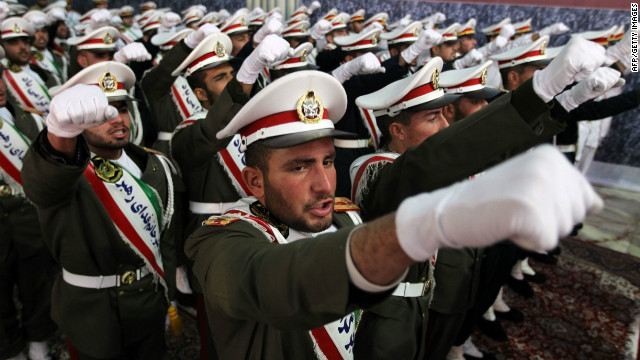
Image Credit: Safwat Sayed via Flickr
In today’s increasingly multipolar world, understanding the drivers of Iran’s foreign policy has become more complex. Tehran’s actions often appear unpredictable, shaped by a mixture of ideological conviction, security anxieties, and geopolitical opportunism. Nowhere is this ambiguity more evident than in Iran’s long-running pursuit of nuclear capabilities. However, whilst debates frequently focus on security or strategic incentives, the concept of Mahdism may help to shed light on how ideology colours Iran’s nuclear thinking.
What is Mahdism?
Lesser known and under-researched is the concept of Mahdism. Described as ‘an extreme and apocalyptic vision’ by United Against a Nuclear Iran, Mahdism is rooted in the belief that the Imam Mahdi, who Shi’a Muslims regard as the 12th divinely ordained Imam, will return as a messianic figure and rid the world of all its evil.
Although this interpretation remains contested, it matters politically because the Islamic Republic’s leadership has occasionally invoked Mahdist rhetoric, framing political struggle as part of a battle between justice and injustice. This provides a language of legitimacy that hardline factions can draw upon.
How is this relevant to Iran’s nuclear programme?
As a religious ideology, Mahdism is presented as central to the work of the Islamic Revolutionary Guard Corps. Established in 1979, following the Islamic revolution, the IRGC serve as the primary enforcer of Ayatollah Khamenei’s demands. The IRGC act independently of Iran’s traditional military and operates with the primary aim of defending and guarding the Islamic revolution.
From 2009 onwards, the IRGC has taken various steps to indoctrinate and push this ideology into its officers. It has not only shaped their worldview, but also their actions, with some analysts arguing that Mahdism’s influence has extended into its support for Iran’s nuclear programme. Supposedly, hardline clerics and IRGC members believe that the acquisition of nuclear weapons will help to create an ‘apocalyptic opportunity’ or global conflict, which will hasten the return of the Mahdi.
The threat to Israel
The deteriorating relationship between Iran and Israel is often analysed through the lens of Mahdism by supporters of this argument. With Israel positioning itself as Iran’s biggest adversary, Iran’s pursuit of nuclear weapons serves as an existential threat.
According to the logic of Mahdism, to prepare for the return of the Mahdi, Iran will need to remove any potential challenges. From Iran’s perspective, the biggest challenge is Israel. Therefore, Iran’s nuclear programme can be tied to the IRGC’s policy of eradicating Israel and Zionism.
Is Iran truly hellbent on securing nuclear weapons for religious reasons?
Iran’s pursuit of nuclear weapons cannot be solely attributed to Mahdism. Whilst it may play a role in shaping the ideology and worldview of the Islamic Republic, nationalism and security concerns provide more understanding of Iran’s nuclear programme. It would be ignorant and simplistic to boil down Iran’s pursuit of nuclear weapons to religious fervour.
For example, the legacy of the eight-year-long Iran-Iraq war still bears significance on Iran’s strategic thinking.
The memory of the war has drastically shaped Iran’s national identity and security outlook. The role of the West in aiding Iraq cemented the notion of Iran as a state existing in isolation.
In this context, we can understand that Iran seeks to protect itself against an international community that it views with a large degree of suspicion and animosity.
As a result, Iran has increasingly undertaken measures to become more self-reliant, ranging from the development of their technology, economy, and, more importantly, building up their nuclear arsenal to deter aggressors.
Rethinking assumptions about Iran
Whilst it’s hard to sum up exactly what is driving Iran’s pursuit of nuclear weapons into a short article, no single factor can explain its nuclear programme.
As the threat of Iran’s nuclear capabilities looms larger, Western policymakers must take a holistic view; they will need to reassess not only the strategic drivers behind Iran’s actions but also the potential role of Mahdism.
Is Iran truly preparing for the return of the Mahdi through its pursuit of nuclear weapons, or does this religious rhetoric serve as a tool for political warfare?
Words by Haadiyah Mulla