
The Autumn Budget and the 18-20 Minimum Wage Increase
Emily Yarham writes about the autumn budget of whether it is helpful for young people in wages
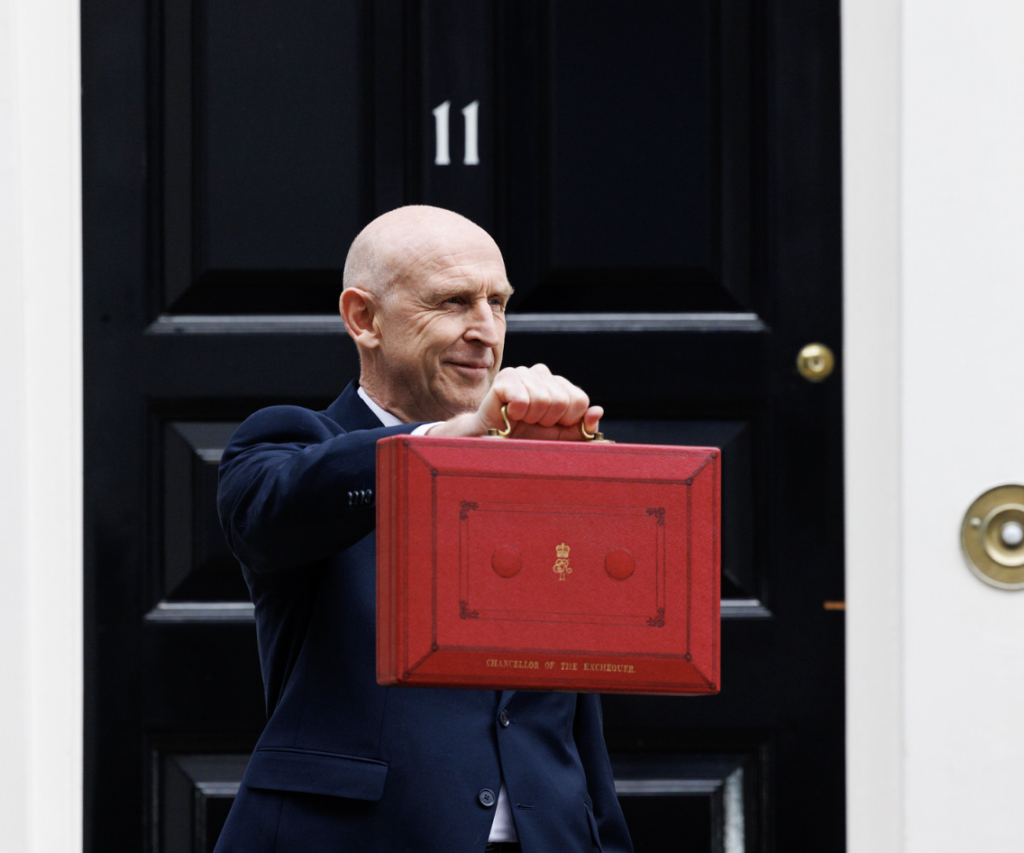
Kirsty O'Connor / No 10 Downing Street | CC BY-NC-ND 4.0
The beginning of hope for young workers, or too little too late?
Even those not keen on politics would have found it hard to miss the announcement of the Autumn Budget, the first of Chancellor John Healey under Andy Burnham’s premiership.
It was full of big decisions which can’t be mistaken with sweeping this country’s issues under the rug; the removal of £50 worth of VAT from electricity bills for over 29 million households, the removal of £100 worth of standing charges on gas bills, and the direct payout of £100 to help cover energy bills for all 20 million households in council tax bands A-D.
These decisions are hard to find fault with: addressing rising energy costs and helping households in need through a winter which is likely to see the continuation of the Iran War, causing the price of oil to skyrocket, was a direct promise of this government and is evidently something which they have sought to deliver on.
A more controversial topic, which was also a headline announcement, was the decision to raise all minimum wages across all groups (including the national living wage) by 3.9%. For 18-20 year olds, this means an increase of 42p from £10.85 hourly to £11.27 hourly. So why has the government taken this decision? And what makes it so controversial among the young people that it should be benefitting?
With over one million young people aged 16-24 not in education, employment, or training (NEET), attracting young people back into the workforce and increasing their job opportunities has to be a priority for this government. Increasing their minimum wage is one way to do this.
The UK’s housing crisis disproportionately impacts young people, with inflated housing costs preventing young people from being able to raise the extortionate amounts required for deposits, and rising costs of essentials preventing them from saving money at all. Increasing the ability of younger age groups to save money by increasing their wages seems to be a fair address by this government to this problem.
To focus more specifically on the 18-20 age group, rising costs of attending university are putting people off enrolling onto degree programmes, which not only reduces their job opportunities, but reinforces the cycle of working class students maintaining a low earning potential across their lifetime if they are dissuaded from entering higher education. Student housing costs have increased by 15% in the last year only. Young people need to see wage increases to help them afford their futures, as well as to live in the present, with 49% of 18-34 year olds telling The Standard that they don’t earn enough to cover their basic living costs.
However, not all young people are happy about this announcement. Labour promised in their 2024 manifesto to abolish ‘discriminatory age bands’ which mean that adults under 21 aren’t entitled to the same minimum wage as every other adult. After all, if 18+ is the defined legal adult who is taxed the same as any adult over 21, pays the same bills, and is charged no differently for their essentials, then why should they have a lower earning potential than anyone over 21? They have not delivered on this promise. Furthermore, increasing the minimum wage will not address the problem that the job opportunities for young people leaving GCSEs, A-Levels, or higher education are simply not there. For example, more people than ever are graduating from university, yet a decline of 33% was seen in graduate-level jobs available in 2025. Corporate greed and AI growth are just some of the reasons for this, and a minimum wage rise alone can’t solve these crises.
In my view, the rise of the minimum wage for 18-20 year olds is undoubtedly a good thing, but it doesn’t go far enough. 18 year old adults who are taxed the same as 21 year olds should not be paid less simply because they are deemed to have less financial burdens.
However, it is a step in the right direction: the government is increasing wages in line with inflation equally across all wage bands even if they have not yet addressed the wage band issue itself. The government have also recently announced measures to combat lacking and declining job opportunities for young people and graduates, such as the announcement that 90,000 people age 18-24 seeking a job and claiming Universal Credit will be offered a 6-month, 25 hours weekly job placement which matches their skill sets, known as the ‘Jobs Guarantee’ Scheme.
I think it’s fair to suggest that even if the minimum wage changes are not as radical as many had hoped, the government are showing a willingness to help young people find work from multiple different angles rather than just focusing on pay scale. As for the ending of wage bands, this is still in their manifesto and still something they are committed to changing.
We can hope that this may be a measure we can expect to see in future budgets under this government, following the trajectory that we are seeing so far.
Words by Emily Yarham
All views expressed in this section are those of the writer alone and do not represent the views of The Gryphon.