
Student Snow Seekers: A Guide to an Unforgettable Ski Season
James Davies reminisces on his ski season and urges us students to get out to those snowy resorts while he’s at it.
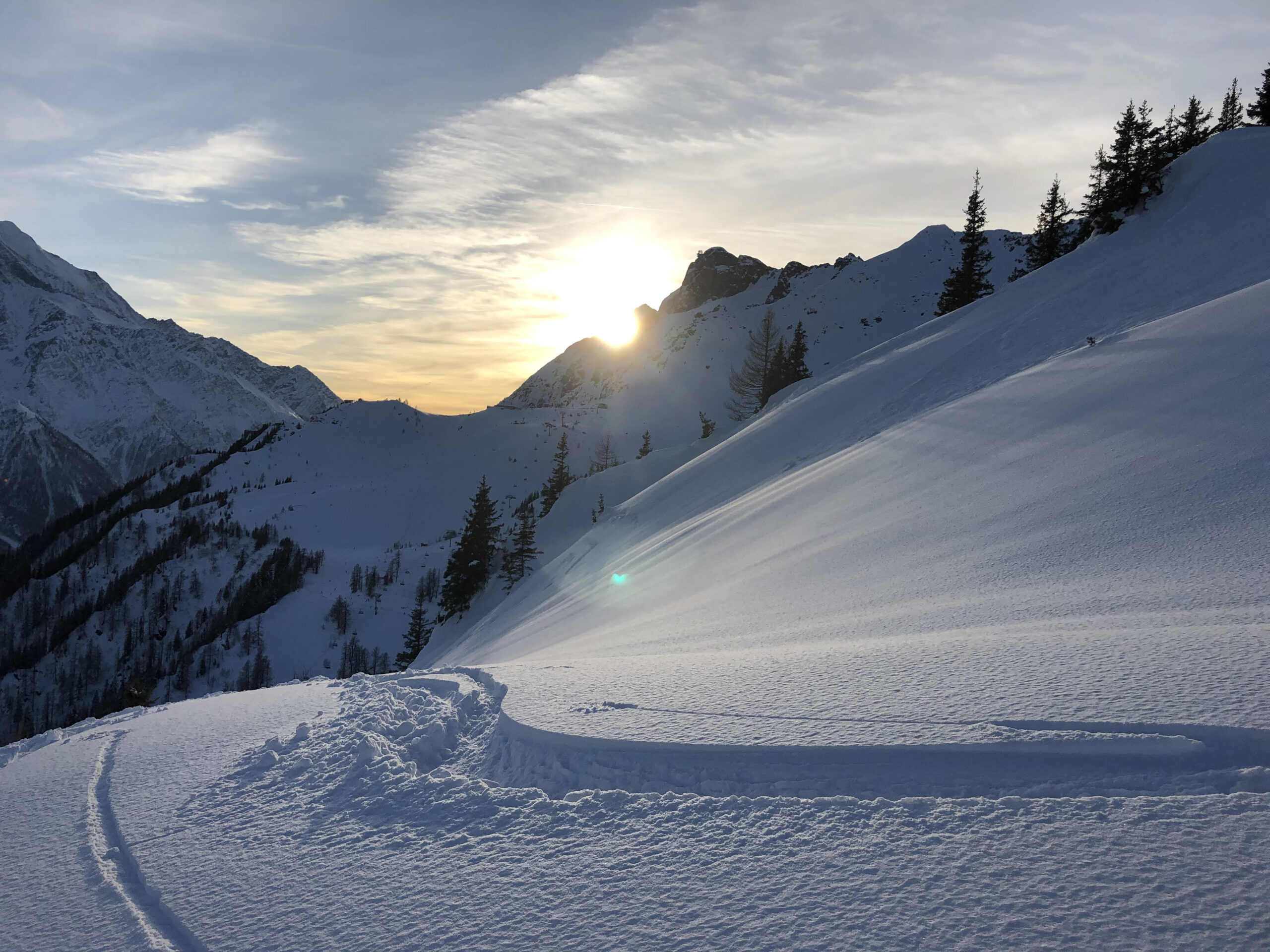
Image Credit: James Davies
James Davies reminisces on his ski season and urges us students to get out to those snowy resorts while he’s at it.
The most common excuse I hear from those who are hesitant to venture beyond the (sometimes stifling) confines of this country to do a ski season is either “I can’t ski” or “I can’t afford it.” This article seeks to debunk these widely held assumptions and pose the question: “why the hell not?”
Let’s begin with the claim “I can’t ski.” Whilst this is a seemingly valid concern, one’s skiing ability is actually of little consequence. Upon arrival in the French ski town of Chamonix, nestled comfortably in the shadow of Mont-Blanc, I was somewhat surprised at the range of skiing abilities out on the slopes. I had succumbed to the very same misconceptions that I am attempting to debunk. Contrary to what one might expect, only a small minority were particularly skilled – a large chunk of those I worked with were beginners and still developing their confidence. A significant percentage were at an intermediate level, confident in their ability on pistes but still unwilling to go out of their comfort zone on other parts of the mountain. You would be surprised how many people go on a ski season with minimal prior experience, and come out the other side as skilled skiers or snowboarders.
A more apt name for a ski season would be a ‘work season’ with the chance to ski (although this might endanger the popularity of such an endeavour). You are going to a ski resort to work, in some capacity – unless, of course, you want to pursue the life of someone they call a ‘ski bum’. For now, though, let’s focus simply on getting you to the slopes.
You would be surprised how many people go on a ski season with minimal prior experience, and come out the other side as skilled skiers or snowboarders.
Doing a ski season is no different from any other point in your adult life in the sense that you will probably have to work to live. You’re likely to be working 4 or 5 days a week, and – depending on the nature of your work – will not have time, or will be too tired, to ski more than 4 days a week. Some may find comfort in the fact that during the entirety of our season in Whistler, Canada, a friend of mine went skiing on only one occasion.
This brings us neatly to our next misconception: “I can’t afford it.” There are a range of similarities between going to university and doing a ski season, but the key difference lies in the way it’s funded. Whilst a government loan would go a long way on season, you’ll likely be expected to fund the venture yourself. This is made much easier by the companies that you can work for, who will (for the most part) give you the job before you arrive and may even provide affordable staff accommodation. Seasonal jobs often also come with ‘local’ or ‘seasonaire’ discounts, and many employers will offer to pay for your ski pass – significantly reducing your outgoing costs.
Several ski resorts are currently in the midst of a housing crisis, so accommodation can be trickier to arrange. However, if you can find staff accommodation, or just start looking sooner rather than later, housing shouldn’t be a problem (as long as you don’t mind sleeping in a bunk bed for 6 months). Keep in mind that, as with any travel, there are some up-front costs to be aware of. You’ll need ski kit, warm clothing and flights. Although, compared to your average week-long ski holiday, you’ll be getting far more bang for your buck.
If, like me, you’re partial to the idea of spending 6 months living in a resort, skiing every week and being able to earn money whilst you’re at it, I would highly recommend doing a ski season. On arrival, you’ll quickly realise that living amongst the mountains and immersing yourself in the alpine lifestyle can be an eye-opening and life-changing experience.