
Smoothies, Stories, and the Search for Belonging
Jacqueline Wong interviews Martine Neang, a French-Cambodian filmmaker, on how she defines and creates multicultural identity.
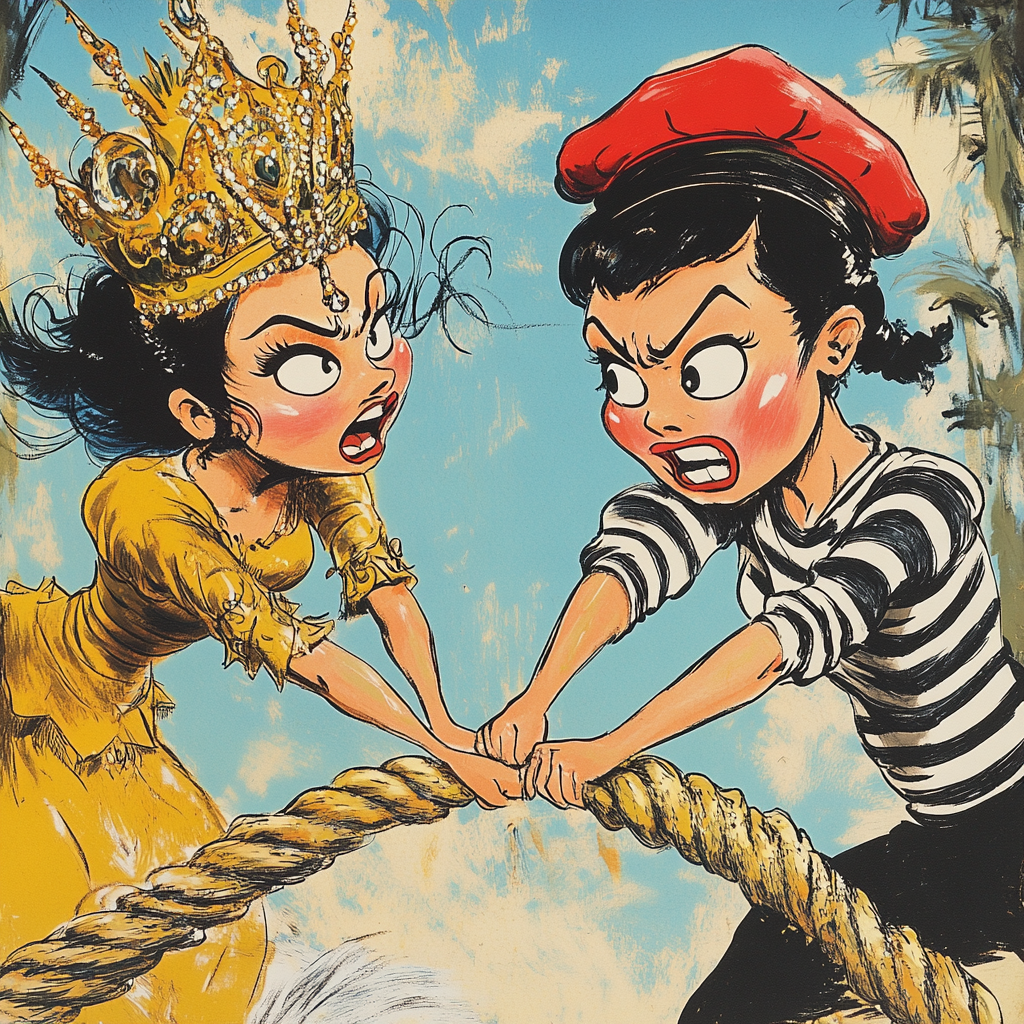
Image: 'Tug of war: French-Cambodian personalities' — by Martine Neang
“You could be a smoothie of blueberry and mango, or kiwi and apple. But at the end of the day, you’re all smoothies.”
That’s how Martine Neang, a French-Cambodian filmmaker and recent University of Leeds Arts graduate, describes the strange beauty of growing up between cultures — a bit of this here and there, something entirely your own. Her smoothie analogy offers a simple way to capture something much deeper — what it means to grow up shaped by multiple influences and still try to define who you are.
But identity, as Martine has discovered through years of creative work and reflection, isn’t always easy to blend. For many navigating inherited memory and cross-cultural life, the journey to belonging is far from smooth.
A Life Between Cultures
Martine was born and raised in Cambodia to a Cambodian father who had fled the Khmer Rouge genocide and rebuilt his life in France before returning. She was educated entirely in the French school system, all while growing up in a Cambodian household and occasional summer visits to France.
“I’m officially French-Cambodian,” she told me, “but it’s hard to put myself in one category.” That sense of hybridity became the driving force behind her creative practice.
Even as a child, she was asking questions. She described herself as a “curious kid,” always sensing the weight of stories left unsaid. “I was raised inside a story that hadn’t been told yet,” she said. “Even when I didn’t ask, it was always floating.”
ROOTS: A Family Memory, Rewritten
That invisible story eventually took shape in ROOTS, Martine’s debut documentary. What began as casual filming on her phone — capturing some quiet moments with relatives around the house — gradually transformed into a full-scale act of remembrance. “It was like they had been waiting their whole lives for someone to listen,” she said.
Filmed across Cambodia and France, ROOTS wove together spontaneous interviews and raw family moments. “It was never planned,” she told me. “I didn’t have a script. I didn’t have a shot list. I just had a lot of footage, and one day I sat down and asked myself, ‘What do I do with this?’”
She finished the film in time for a family reunion. The first screening took place in her parents’ bedroom. Kids on the floor, elders on the bed. Laughter, silence, tears. “It was one of the most magical moments I’ve ever experienced,” she recalled. Her father, a man of few words, simply said, “Martine, I’m buying you a proper camera.”
What began as a way to honour her family’s history soon became a way to understand her own. In telling their story, she started to shape hers, as a living thread, stitched across generations and geographies.
Smoothies, Chameleons, and Magical Trees
That blend of creativity and belonging didn’t end with ROOTS. In her final year at university, Martine launched Home, Nowhere and Everywhere, an AI art project that explored identity through visual storytelling. She hosted workshops, inviting students from third-culture backgrounds to create metaphors that represented their experiences.
“The point wasn’t how good the image looked,” she said. “They (participants) resonated with each other. They found home in each other, because they didn’t really have one of their own.” Dialogues were the point. From conversations, they crafted visual metaphors: a magical tree representing scattered relationships across the world; a chameleon in a British pub, awkward and out of place; a futuristic city combining temples, towers, and accents of multiple cultures. These are symbols of fragmented belonging turned into something whole.


When Belonging Isn’t Inherited
“Your community doesn’t have to be inherited. It can be chosen. Sometimes it’s your flatmates, your friends, or that random person you meet at an event you almost skipped.” That is the advice Martine offers to students, or anyone, who has ever felt like they don’t fully belong.
In a world that often asks us to label ourselves, Martine’s story gently resists. Identity doesn’t need to be easily explained. And maybe that’s the point. Belonging doesn’t always come from picking one flavour. Sometimes, it’s about learning to live with the blend — and realising that’s enough. Because in the end, identity isn’t always about having the right answers but giving ourselves the space to ask questions, and realising we are not alone in asking them.
Image Credits: Martine Neang