
AI: Useful Tool or Tricky Trap for Freshers?
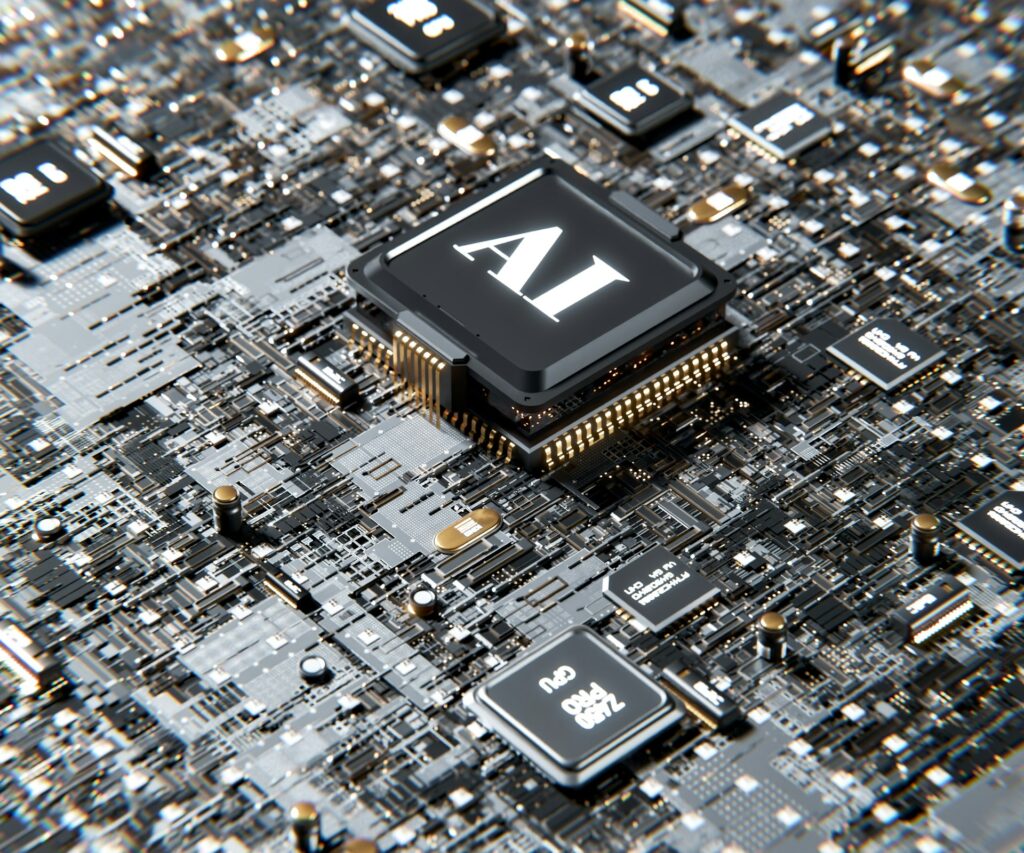
Image credit: Igor Omilaev on Unsplash
Landing at university feels like stepping into a storm of new experiences. Lectures, societies, flatmates, independence. On top of that, you’ll probably hear a lot of talk about artificial intelligence. Some hail it as the future of education and creativity, while others see it as a threat to jobs, art, even truth itself. The reality is more complicated, and as a fresher you’ll almost certainly come across AI tools in your time here. So how should you think about them?
At its core, AI isn’t as magical as it looks. Tools like ChatGPT don’t “understand” the way humans do. In a paper titled “Theory is all you need: AI, Human Cognition and Casual Reasoning”, University of Oxford researchers put it bluntly: large language models are not actually thinking, they’re just very good at faking it. Their thought experiment makes the point. Imagine giving today’s most advanced AI to scholars in 1633, just as Galileo was arguing that the Earth orbited the sun. Trained on every scientific text of the time, the AI would have confidently declared Galileo delusional. After all, 99.9% of sources insisted Earth was the centre of the universe, and the maths available then supported it. The AI would have crushed new ideas because, unlike humans, it doesn’t search for truth, but rather counts patterns in data.
The same applies to the Wright brothers in 1903. Every expert, even the New York Times, claimed flight was impossible. But the Wrights believed otherwise and designed experiments to prove it. Oxford researchers call this “belief asymmetry”: humans can hold a conviction that contradicts all the data and then create new evidence to back it up. AI simply can’t. It can remix what’s already there, but it can’t imagine a future that doesn’t fit current patterns.
This matters for you because it shapes how you might use AI at university. It can be a helpful assistant in summarising readings, generating practice questions or polishing your CV. It can suggest recipes, help draft society posters, or tidy up your essays. But it cannot replace your own critical thinking. Rely on it too heavily, and you risk short-circuiting the very skills you’re here to develop. Worse, you risk swallowing its mistakes wholesale. Moreover, AI is infamous for “hallucinating”: inventing sources, misquoting facts, or generating convincing nonsense.
The bigger picture is just as important. University is not only about producing polished essays or passing exams, but about developing the habits of mind that let you question, test, and create. If you let AI do all the heavy lifting, you risk missing out on the messy, challenging process of discovery that shapes real learning. Struggling through a dense reading, forming your own argument, or piecing together evidence might feel harder than copying an AI’s response, but those are the very skills that set you apart. AI may be able to remix the past, but only you can imagine the future.
So where does that leave freshers? Somewhere in the middle. AI is here, and you’ll almost certainly use it during your degree. The key is balance. Let it lighten the load, but don’t let it dull your ability to think. Let it support your process but not become your product. Treat it as a tool, not a crutch. Because in the end, university is about more than getting tasks done. It’s about learning how to imagine, to question, and to see beyond the patterns of the present. That’s something no algorithm can do for you.
Words by Longoae Domingos Tembwa
Image credit: Igor Omilaev on Unsplash