
Redefining the Runway
Ruby May Britton explores how fashion weeks are undergoing a 21st century makeover.
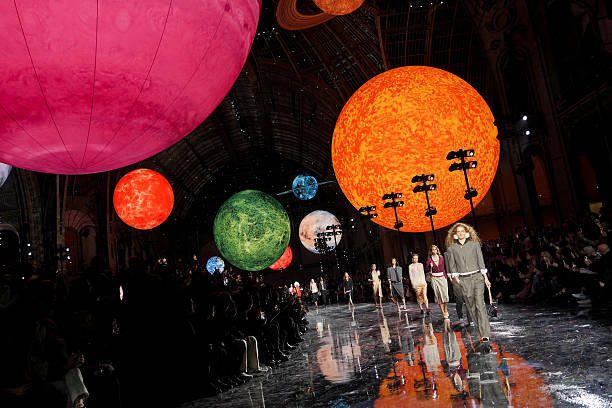
Fashion week, once known as ‘press week’ in New York circa 1943, has long since symbolised all things glitz and glamour, giving designers a unique opportunity to showcase their newest work. However, as we near the end of 2025, with the most recent London Fashion Week fresh in our minds, there is no doubt that this once-exclusive insider event has changed. Nowadays, our focus isn’t solely on the runway; instead, it’s about what values the runway represents. Fashion Week’s priorities are no longer which dress sparkles the most or which piece will cause the biggest uproar, instead, the spotlight shines on sustainability, inclusivity and keeping up with our ever-evolving digital world.
Back in 2020, Copenhagen Fashion Week introduced their first sustainability action plan, meaning that for the first time in fashion history, brands were under scrutiny in a different way; sustainability was no longer just encouraged, it became mandatory. Now, London is following in Copenhagen’s footsteps, becoming the first of the ‘big four’ (London, New York, Milan, and Paris) to adopt these standards. As London holds quite the influence in the fashion world, we can only hope that other cities will fall in line. Many brands featured in London Fashion Week 2025 have taken sustainability in their stride. TAMMAM, a British sustainable couture label, showcased its own sustainable line on Camden High Street, catching the eyes of many. Additionally, this year’s Fashion Week debuted the first UK-grown cotton from Goodrop, celebrating another turning point in Britain’s journey towards a more sustainable future.
Despite all this, it is worth noting that these requirements implemented by London Fashion Week does not mean that the event is now completely sustainable. There are still brands which do not comply with these standards and contradictions remain – fast fashion giants such as H&M share the stage with eBay, an OG promoter of second-hand clothing. This vast juxtaposition highlights that this event, although moving in the right direction, still has a lot of work to be done in terms of sustainability. With the inclusion of brands consistently criticised for their promotion of overconsumption and waste, Is it one step forward and three steps back? Can Fashion Week ever truly become sustainable? These questions persist, with many factors indicating that a future in which fashion and ethics come hand in hand is a long way off.
Beyond sustainability, Fashion Weeks have undoubtedly evolved through digitalisation. The catwalk – once emblematic of true exclusivity – can now be accessed by everyone and anyone, provided they have a Wi-Fi connection. This also extends to who can now be involved with the event. Students and self-proclaimed Tik Tok influencers can now be sit by industry legends, bridging the gap between fashion’s elite and those sat at home eagerly watching. This inclusivity also extends to the runway itself; today we have the privilege to witness models of all body types, races, and genders dominate the catwalk, challenging the rigid casting type of the past.
Overall, Fashion Week has extended beyond its reputation for exclusive glamour and spectacle, It has become a reflection of our societal values. Although there is still work to be done, this shift towards sustainability and inclusion indicates that fashion is evolving into an industry that belongs to everyone; defined by progression, universality and openness.
Words by Ruby May Britton