
Starmer now saying the right things, but will rhetoric become reality?
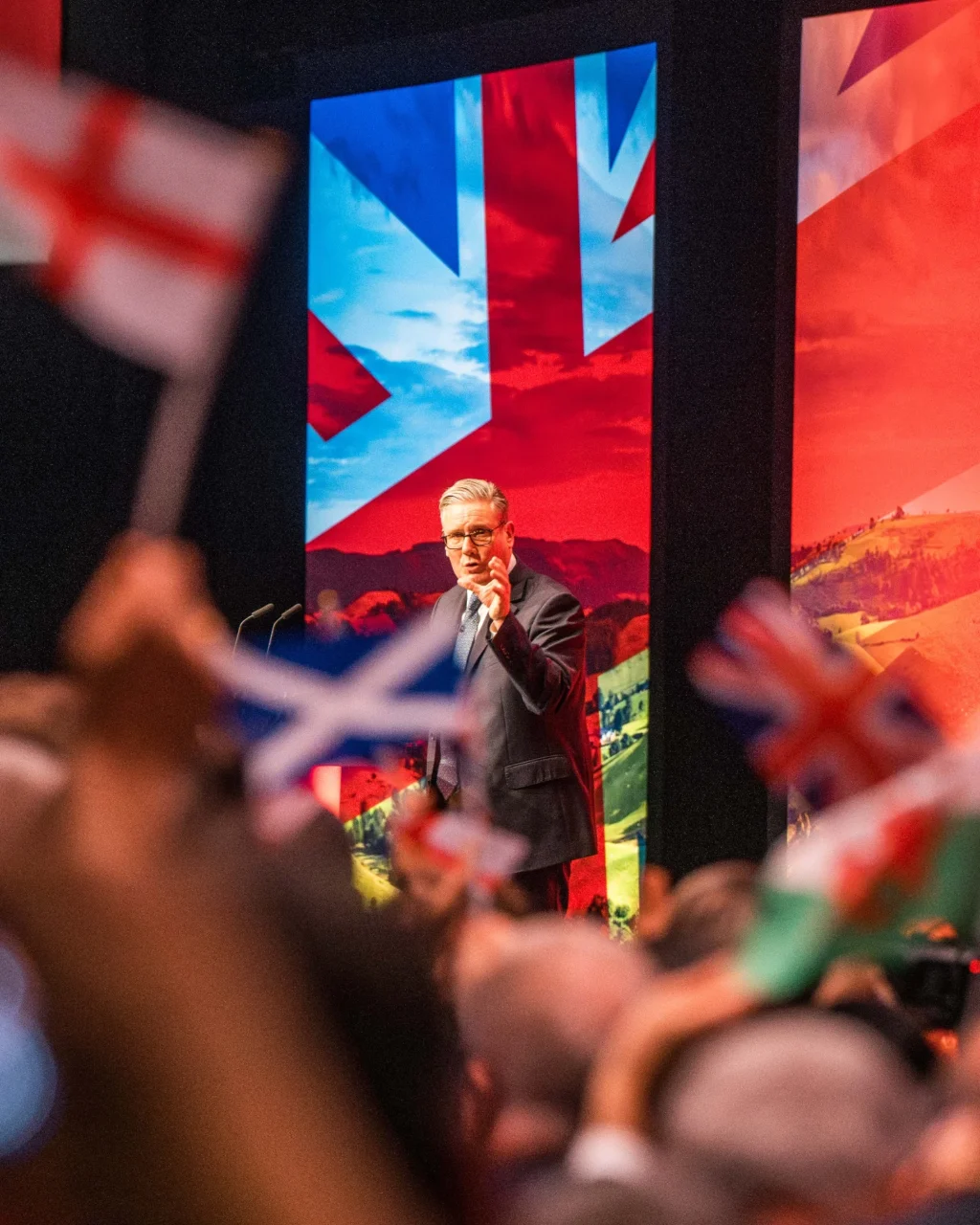
Image credit: Keir Starmer Instagram
The Labour conference, held last week in Liverpool, fell at a pivotal point for the Labour government. Drawing closer to the 18th month mark, yet with their popularity dipping into a worrying low, the conference platform posed the potential for the party to re-energise and start to deliver as it promised ahead of the election last July.
After increasing concern at the direction the government has been taking in the past months, notably the unjust two-child benefit cap and rightwards shift on immigration, I was pleasantly surprised by Starmer’s speech. He’s in no way known for his charismatic communication skills, but showed a rare determination which prevented the speech from slipping, as many of Starmer’s do, immediately into the forgettable.
Reform UK loomed large in the speech, as Starmer described a country at “a fork in the road.” He challenged how true Farage’s patriotism really is, highlighting one of the most poignant attacks against Reform: the confusion over whether they would privatise sections of the NHS.
The government’s recognition of Palestinian statehood drew a large cheer from the crowd. Shadowing this decision was criticism of the conditionality of the government’s recognition, which hinged on the continuation of Israel’s actions in Gaza. The UN has declared the actions of Israel in occupied Palestine to be a genocide. Despite accusations of too little, too late, the government’s decision to recognise the state of Palestine will relieve many within the party who have criticised Starmer’s approach to the conflict and resultant humanitarian crisis.
Beyond this, the speech was short on policy. Instead, in tone and in content, Starmer was keen to present the attitudes of the governing party, striving for a moment of revitalisation amidst increased criticism. His speech portrayed a tableau of the country, and the party, but implicit to this was a central problem in issues of British – national identity.
Countering a prevailing narrative of national decline, the PM identified the successes that embody Britain as “the grit of the Lionesses.. the swagger of Oasis..the Strength of the Red Roses”. However, with the exception of the Lionesses, whose consecutive wins have provided a rare moment of national hope, the United Kingdom is swamped in nostalgia. When thinking of what makes Britain Britain, answers seem to splutter out at the millennium. This is a nation, or more accurately, four nations, which have struggled to define themselves into the 21st-century. The peak of international interest in Britain, the ‘Cool Britannia’ of the Spice Girls, New Labour and Britpop, still inform how people in this country perceive the nation, despite being almost 30 years past.
What is, therefore, the Britain of this century? What unites the country which Starmer struggles to govern?
More diverse, some may say, and more tolerant. But the reshaping of Britain into a multicultural entity has not been without, often violent, backlash. In his speech, Starmer rebutted Reform’s false promises of ‘miracle cures.’ However, Labour itself has bought into these isolationist ideas in recent months, defaulting to simplified Stop the Boats answers as a quick fix for the nation’s perceived ills whilst simultaneously positioning itself as the party of tolerance and forward-thinking. But just where is this forward-thinking? After the speech has been made, and the conference stands packed up, what will Labour actually do?
If Reform’s rising poll success shows anything, it reveals that there is a public demand for change. Progressive taxation, including closing tax loopholes, reforming the rail system, sorting a new arrangement with EU partners post-Brexit; these are all areas which deserve immediate attention, and within which the government could score big wins. Labour promised change after 14 years of Conservative austerity, and 16 months in, now is without doubt time to deliver.
In short, Starmer’s conference speech showed signs of a government back on track, but bold policies are needed to keep the wheels turning.
Words by Em O’Riley