
Diversity for Decoration: Why Inclusion Matters in the Fashion Industry
Ruby May Britton argues that diversity is fundamental to the future success of the fashion industry.
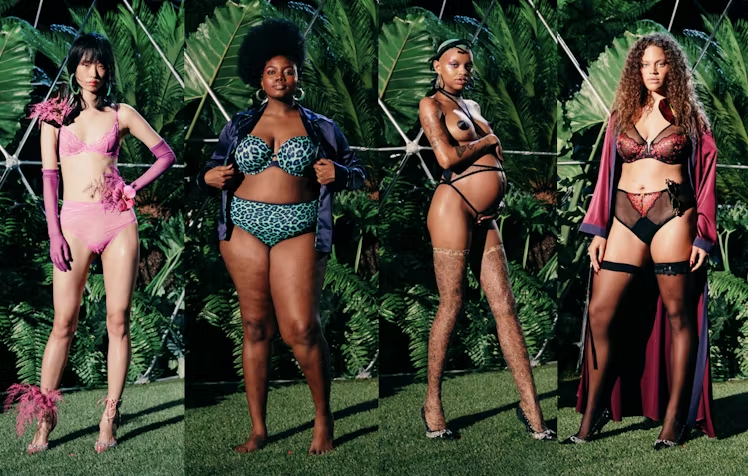
For decades, the Fashion industry has been dominated by one idealised body type: tall, thin, white women. Undoubtedly, this has been setting unrealistic standards and underrepresenting countless groups for as long as we can remember. Major runways have often reinforced an image of exclusivity, honouring the same silhouettes time and time again, rather than recognizing and commemorating the inclusivity that fashion can embody.
It’s becoming evident that, quite frankly, people are getting bored. There is a major demand for diversity, and in recent years, dynamics have finally begun to shift. Many brands and designers are embracing diversity across runways, marketing campaigns, and magazine covers – thus proving that style has not one single shape, colour, or size
My personal favourite example of this change within the industry is Rihanna’s iconic Savage x Fenty shows. First taking place in 2018, these runways have since become a celebration of racial diversity and body inclusivity, revolutionising the sphere of lingerie, which has been largely defined by its use of ‘perfect’ bodies. This is particularly evident in the Victoria’s Secret Fashion shows, cancelled in 2019 due to the controversy surrounding the brands lack of diversity. Recently the show has returned in 2024 and 2025 with a supposed ‘rebrand’. Whilst there was a lot more inclusion than previous years, this ‘rebrand’ falls short for me. There was simply not much to applaud when competitors such as Fenty have already established diversity as a foundation for their brand. To me, these shows extend beyond being just fashion events; they should be a commemoration of individuality, showcasing beauty in all its different forms.
These conversations surrounding diversity have since extended to the world of fashion media, providing perhaps a much-needed evolution within the industry. In 2017, Edward Enniful was named the new editor-in-chief of British Vogue, becoming the first black editor in-chief of the magazine. Enniful reshaped and reinvented the publication, ensuring it better reflected its modern-day audience. Most notably he featured Adwoa Aboah, an activist and mixed-race model, on his first cover, setting a new tone for the publication. Since then, he has made efforts to ensure that Vogue continues taking huge strides towards being a more diverse and inclusive magazine
As well as this, figures such as Paloma Elsesser have graced the cover of the prominent British and American vogue, marking a turning point as these publications have long since seemingly only valued thinner bodies. Elsesser was also the first plus sized model to win Fashion Awards for model of the year, demonstrating that beauty is not limited to one shape or size. Due to its vast impact within society, it is so important that people feel seen and represented. Diversity is not for decoration and should be a core interest for brands. Fashion has the unique opportunity to foster a sense of acceptance within people, as well as dismantling long-standing stereotypes about beauty. With the welcoming of new voices and perspectives, the world of fashion can evolve and reflect the diverse world we live in, making style truly universal.
Words by Ruby May Britton.