
Paper Tigers and Plastic Heroes: Luigi Mangione and the spectacle of political murder
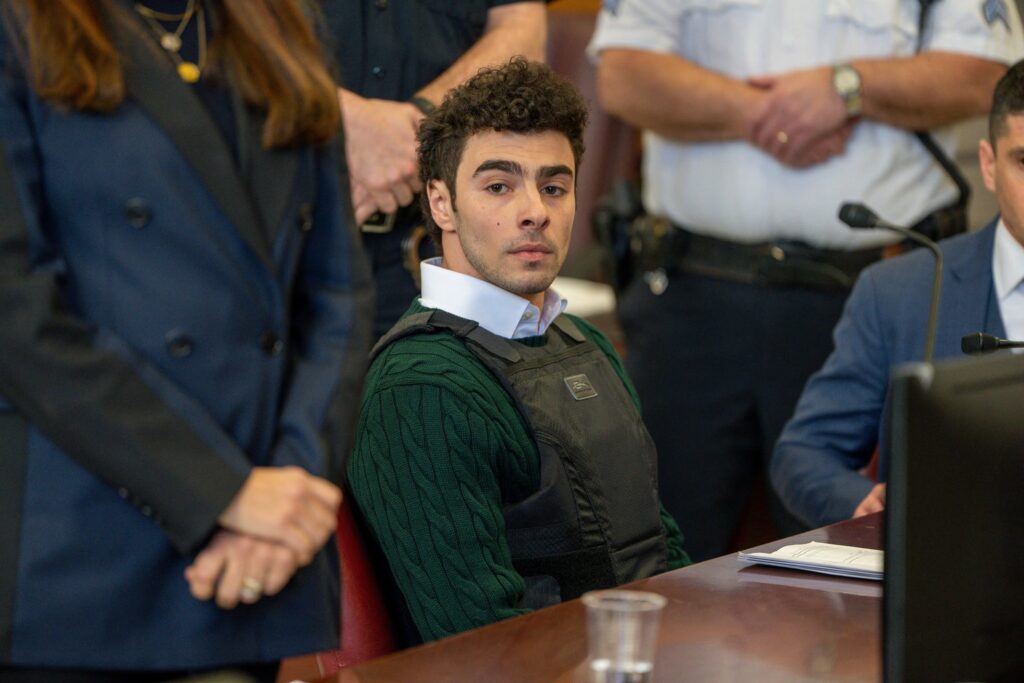
Image Credit: ABC News
Until recently, it felt as though the dust had settled on the case of accused murderer Luigi Mangione. Like all other news from before this year, it had been consumed by the relentless cesspool of headlines relating to the Trump administration. However, with Mangione’s top-notch crowdfunded lawyers appealing the usability of key evidence in the case, it is looking more likely that his sentence will not be as severe as previously thought. This is sure to bring on another wave of discussion of the events of that December morning, so perhaps it is worth looking back on the fallout with a new pair of eyes. To do so, we must revisit the social media storm that almost started a revolution and the face that launched a thousand thirst traps.
It was a bitterly cold morning on the streets of Manhattan when a man alleged to be Luigi Mangione lay in wait by the entrance of a hotel. In his hand, he held a 3D-printed “ghost gun”- an untraceable homemade firearm capable of firing 9mm rounds with the efficacy of one bought in one of America’s 78,000 licensed dealers. At 6:44 am, UnitedHealthcare CEO Brian Thompson approached the building on his way to a meeting. The man raised the weapon, fired three shots, and fled.
People in the United States die from gun violence every day. In New York in 2024, 896 people are estimated to have lost their lives in this manner. However, the majority of these tragedies soon fade into the overcrowded background noise of the country’s eternal political slugfest around gun control, the individual details and shattered lives transmuting into political factoids and bargaining chips. This case, as I’m sure we all recall, was different. Before the police had even produced a suspect, the internet became obsessed with every detail that emerged in the wake of the murder. Each nugget of information seemed to deepen the intrigue that came with a representative of America’s most hated institution meeting a violent end, with the case becoming the centre of a globe-spanning debate.
Five days later, as he was eating breakfast in a McDonald’s in Altoona, Pennsylvania, a worker recognised Mangione as the wanted suspect in the shooting. Seeking the $100,000 reward offered by UnitedHealth and the authorities, she called the police. Soon after Mangione was apprehended and identified as the suspect, more details about his life emerged. A cult of personality began to form around him, with photos of the tanned, muscular young man climbing mountains in Hawaii becoming the focus of a growing obsession with the life of the man who allegedly pulled the trigger.
With the pace at which political discourse has moved in the last decade, it can be difficult to take a step back and realise quite how different the world is from the now tame-seeming mid 2010s. It was an era when the march of social progress seemed linear and unstoppable, with people citing the year as a reason for certain attitudes no longer being acceptable. I don’t know about you, but I haven’t heard anyone say “you can’t say that, it’s 2025”. Whilst the terrifying acceptability of openly fascist views in public discourse is unavoidable, it is perhaps more concerning that we have become more open to the idea of assassination as a commonly employed tactic in the rapidly escalating culture war. In the case of Luigi Mangione, it did not take long for battle lines to be drawn.
Within a couple of weeks of the suspect becoming known to the public, several prominent voices had weighed in on the case from both sides of the political binary. Enter from stage right Ben Shapiro, the ubiquitous American cultural commentator known for “OWNING FEMINISTS” in every corner of the internet. His characteristically smug dismissal of the feelings of those showing support for Mangione was met with a reaction entirely uncharacteristic of his usually adoring followers. Instead of the usual chorus of sycophancy, Shapiro’s comments were filled with users expressing disdain at his perceived disconnect from his audience, such as “I hate how you’re bending and twisting this into a left vs. right issue” and “This is not a left or right thing. It’s a human thing”.
This set the tone for the rest of Mangione’s month or so at the centre of the political spotlight. Rather than being seized upon by one political group or another as a martyr or cartoonish demagogue, he was turned into a symbol for potential class consciousness in arguably the most divided country in the developed world. One of Mangione’s most popular supporters (going by @freeluigi_kr on Instagram) posts cutesy hand drawn comics imagining the heartwarming adventures a fictionalised Mangione is having while incarcerated. Similarly, parasocial content became the norm in the discussion of the Mangione case, and soon enough fans were making pilgrimages to the mountain in Hawaii where the infamous shirtless photo was taken.
The growing frequency of assassination as a mode of political expression is concerning for frighteningly obvious reasons. However, what is often overlooked in these cases is how quickly the court of public opinion kicks into gear. Since the assassination of right-wing commentator Charlie Kirk on the 10th of September, it has been impossible to avoid the bitter exchange of memes and vitriol that started before Kirk had even been declared dead. There is no longer time for media outlets to strategically plot their angle in terms of reporting when TikTok’s coverage is instantaneous and comprehensive. While the modern obsession with visuals in politics isn’t entirely new. We may make fun of Donald Trump’s combover, but the US hasn’t elected a bald president since TV became popular. The fact is that since the political upsets of the last decade, visuals have taken precedence over considered analysis. A key point in the Mangione appeal is the humiliation he endured as a result of a very public televised “perp walk” alongside NYC mayor Eric Adams, and it took less than a day after the murder for social media to be flooded with AI “art” of him leading the masses into open rebellion. It may be easy to dismiss as a bubble, but this sort of content is informing the debate a lot more than the BBC’s occasional updates.
For the time being, Luigi Mangione’s alleged actions have returned to being a footnote in the history of recent politics. Despite the passion which drove the early discussion of the case, he did not end up inspiring a revolution. Whilst the results of the ongoing legal procedures are yet to be seen, it is clear that the legacy of the initial fallout will be the rise and fall of a fictionalised hero and a villain who didn’t catch on. It is perhaps far too early for the significance of the cult of Luigi to be apparent, but the morbid lesson it has taught us so far is that acts of violence merely serve as inspiration for story beats in the superficial metanarratives of the times in which we live.
Words by Will Garrood