
What is happening in Sudan?
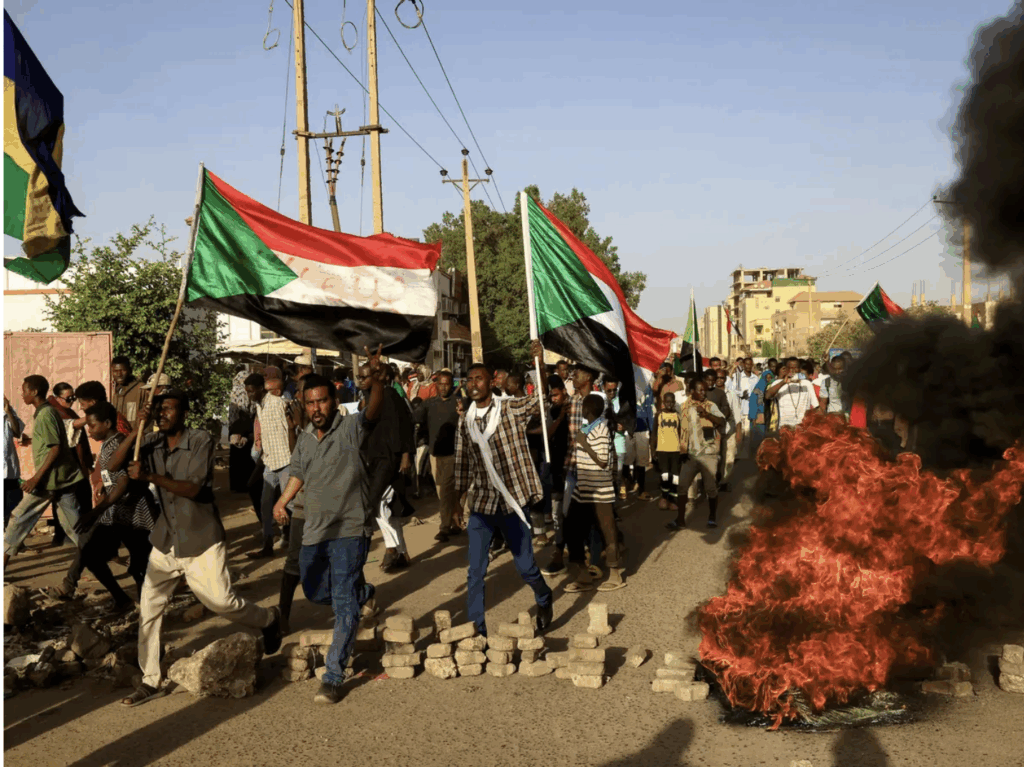
Image credit: Reuters
The crisis in Sudan continues to escalate, with rising levels of starvation, illness and mass violence posing serious risks to the population. It is an incredibly complex situation that requires urgent international attention and support with the conflict almost reaching three years of constant disagreements and brutality. The conflict is a violent power struggle between two military groups: the Sudanese Armed Forces (SAF) and the Rapid Support Forces (RSF). It has led to the exacerbation of the country’s ever-present political instability and humanitarian crises.
How did it start and why is the military in charge?
After decades of oppressive rule under President Omar al-Bashir (who faced accusations of numerous crimes against humanity and extensive corruption), Sudan saw a significant shift in 2019 when he was overthrown in a military coup after months of widespread civil unrest and protests. His removal then led to agreements of a transitional government, a coalition between civilian leaders and the military, to stabilize the nation and make way for democracy.
However, this coalition was incredibly short lived, with tensions escalating over the proposed integration of the RSF into the SAF – a key step in the planned transition to civilian governance. The leaders of the military groups- General Abdel Fattah al-Burhan (SAF) and General Mohamed Hamdan Dagalo, known as Hemedti (RAF) – both sought to leverage the nation’s vulnerability for their own power ambitions, leading Sudan into further chaos.
The RSF was originally founded by Bashir in effort to suppress “Southern Sudanese rebels and, most notably, to fight in the Darfur War” where the paramilitary group committed horrific attacks, ranging from sexual violence to ethnic cleansing of the non-Arab population who resided in the southern region. This then led to the division of the country and resultantly the formation of the Republic of South Sudan in 2011.
The conflict between the RSF and SAF most significantly escalated in April 2023 when members of the RSF were relocated to various parts of the country, which the military perceived as a direct threat to its authority and thus violence ensued- although it is unclear who started. The situation has since spiralled out of control with around 20,000 to 150,000 deceased. However, an accurate figure is hard to produce due to limited official documentation.
At Present
Since then, conflict between the military groups has continued, resulting in widespread devastation, including thousands of deaths, countless injuries and “one of the world’s largest displacement crises.” More than 12.3 million people have been forced from their homes, with many seeking refuge in neighbouring countries like Egypt, South Sudan and Libya. Others remain trapped in overcrowded and under-resourced refugee camps where conditions worsen by the day with limited medical aid and food shortages. The restricted flow of humanitarian aid into Sudan due to road blocks and security threats have added to the growing concern of food scarcity and starvation.
International organisations and diplomatic intermediaries have made some attempts to broker peace and encourage effective conflict resolution. However, these have largely failed with the Treaty of Jeddah 2023, facilitated by Saudi Arabia and the United States, unable to take shape due to the unwillingness of the SAF and RSF to compromise and reach agreement on a ceasefire despite numerous attempts to propose measures to end the war even now. Alongside this, the European Union has applied sanctions against two companies- Alkhaleej Bank and Red Rock Mining Company- linked with the Sudan conflict in hopes of utilising its diplomatic tools to apply pressure to bodies involved.
In February 2025, the SAF was able to make progress in the capital, Khartoum, which had been dominated by the RSF since the outbreak of conflict. After weeks of fighting, the SAF successfully gained control of Khartoum International Airport and the presidential palace in March. Many viewed this as a key turning point in the war for the SAF and potentially a sign of the nearing end of the conflict. Yet, only last week was the airport targeted in a drone attack with officials pointing this act of violence to the RSF who are retaliating against the re-opening of the airport after its restoration. This has seriously impeded movement in and out of the country as well as damaging critical infrastructure such as electricity and dams, worsening conditions for all citizens.
Alongside this, the RSF has also seized control of el-Fasher only just this week which was the “Sudanese army’s last stronghold in the vast western region of Darfur.” This comes months after continuous violent siege on the town, stripping its inhabitants of access to food, water or medical care. The RSF allegedly believe this strategic military success will solidify its position to fight for the separation of Darfur from the rest of the land. This will prove a severe impediment to the free movement of civilians with many trapped due to the perpetual fighting and now the massacring of thousands.

Humanitarian impacts
The humanitarian crisis in Sudan has reached catastrophic levels, with millions caught in the crossfire of a brutal conflict where both main parties involved cannot claim innocence, being accused of committing a series of horrific atrocities. Civilians, particularly women and children, have been subject to mass killings and sexual violence. “Organisations including UNICEF, Save the Children, Amnesty International and Human Rights Watch have recorded cases of sexual violence, with victims between 1 and 75 years.” This has sadly forced some women – in fear of their safety – to turn to committing mass suicides as a form of protection; rape in Sudan has been used as weapon of war to further suppress any resistance from civilians as the militias battle to dominate key geographical locations within the region.
The threat of famine and disease increases by the day, exacerbated by the total collapse of healthcare services and clean water supplies. As a result, preventable diseases such as cholera, malaria, and measles are spreading rapidly, especially in overcrowded displacement camps. Doctors and aid workers have been targeted in the attacks and the blockade of supplies has left millions in dire need of essential medicines and food supplies.
Despite international condemnation and desperate appeals for intervention, both the SAF and RSF continue their battle of egos over the survival of civilians, pushing Sudan deeper into a humanitarian catastrophe with no clear end in sight.
Can it be termed a genocide?
Under the 1948 UN Genocide Convention, genocide is defined as the deliberate destruction of any specific racial, ethnic or religious groups. Some debate that the civil war in Sudan can be termed a genocide as in Darfur (specifically West Darfur) numerous reports point to ethnically targeted violence against non-Arab communities like the Masalit. In June 2023, the ICC’s chief prosecutor, Karim Khan, began a new investigation into the current violence in Darfur, citing “credible allegations of crimes that may amount to war crimes, crimes against humanity and genocide.”
However, genocide has not yet been officially declared by international bodies (such as the UN or ICC) in relation to the 2023 – 2025 Sudan conflict and is just widely referred to as a civil war in spite of the fact that this term in no way acknowledges the full of scope of civilian persecution and the involvement of influencing global powers within this. Although US Secretary of State, Antony Blinken, concluded that the recent events did evidence a case of genocide whilst days before he also dismissed the narrative that there is a genocide simultaneously occurring in Gaza.
Is there an end in sight?
It is difficult to say whether this atrocity will come to a close at the current moment with broader implications for peace remaining uncertain as evident with the ongoing fighting affecting civilian populations and the RSF’s unyielding dominance in other regions of Sudan. What further complicates this conflict is the fact that any attempts to de-escalate and reach some form of ceasefire continue to be undermined by both the militias unwillingness to compromise but also the pervasive involvement of certain states in aiding and abetting the RSF’s growth to power. Global actors who are backing the paramilitary group are seeking to exploit Sudan’s rich supply of gold mines, vast agricultural land that could be used for farming as compared to other African countries as well as Sudan’s key trade routes. It would also allow them to broaden their geopolitical influence across the Arab world should the RSF continue to dominate and eventually rule over Sudan. This has been seen in previous instances with cases such as Yemen where the UAE supported local militias and influenced regional politics.
This makes it of paramount importance to end the current international complicity by raising awareness of the horrific events occurring currently in Sudan and demand action to allow for humanitarian access as well as effective discussions towards a ceasefire, particularly in a situation that is more fitting of being termed a proxy war than a civil war.
Words by Hannah Chohan
For more information about the events in Sudan, please read: