
Gym Bro vs Tradwife: The Backwards Fantasy of Gender Extremes
Callie McGinty discusses the online phenomenon of the gym bro and the tradwife- and how they reflect and encourage extreme gender stereotypes.
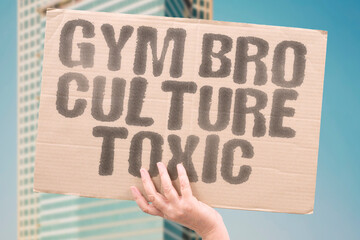
Image Credit: AndriiKoval / Adobe Stock
Social media has seen a recent boom in fitness and lifestyle influencers who promote dangerous hypermasculine and hyperfeminine ideals. The extremes of these influencers are “gym bros” and “tradwives”. Gym bro is the Urban Dictionary term for someone whose personality and lifestyle are hugely influenced by the gym. In the world of online influencing, the gym bro is a male influencer who posts fitness videos, working out for hours at a time. Meanwhile, “tradwife” is the choice term for women who, typically, create content about motherhood and homemaking. Gym bro and tradwife content don’t just exist as simplistic lifestyle videos. With such alarming portrayals of traditional gender extremes, it’s hard not to find this content uncomfortable.
Gym Bro Culture
Gym bro culture has grown at a rapid rate on social media platforms, with the hashtag having almost 3 million videos on TikTok. Gym culture, on its own, is relatively harmless – using TikTok to find workout inspiration is in no way a dangerous use of social media. The issue arises, however, when gym culture is made to seem intrinsically connected to extreme portrayals of masculinity.
Something that I have noticed in recent years is the normalisation of toxic diet-culture among young men. Women, in my experience, have always been exposed to criticism about what they eat and how much of it and, in recent years, men have become victims of the same problem. I would like to think that extreme bulking and cutting culture, if relabelled, would be alarming to most people. Yet when this method of muscle-building and weight-loss is utilised by young men, it is widely accepted, and even praised, as part of the gym bro mindset.
The content surrounding the gym bro lifestyle doesn’t stop at workout videos and protein powder recommendations. Gym bro culture sits at the top of the umbrella of hyper-masculinity, with hustle culture, financial freedom and an unhealthy work-life balance falling under it. The idolisation of figures like Patrick Bateman (despite the director’s satirical intentions) only serve to emphasise these unrealistic standards of masculinity. Even those who don’t engage with this kind of content are targeted. With figures like Andrew Tate claiming that women are not attracted to “losers” and perpetuating the ideal of an alpha-male, young men are growing up to believe that muscularity signifies masculinity.
The Tradwife
Men aren’t the only ones regressing to these restrictive and binary perceptions of gender. With the TikTok algorithm’s penchant for showing controversial videos that are bound to spark debate, the recent “tradwife” movement has amassed a dangerous level of engagement.

Of course, there isn’t inherently an issue with videos of women showcasing their domestic affairs and relationship to motherhood – parents are free to decide whether they stay at home with their children or go out into the workforce. The controversy of this movement, however, is the complete rejection of feminism it entails.
When women like @Ballerinafarm (Hannah Neeleman), Nara Smith and Estee Williams film and edit content about their domestic lifestyles, making them look incredibly glamorous and stress-free, there becomes an expectation for women to cook, clean and parent in stylish clothes without a worry in the world. Although not all of these women are self-proclaimed tradwives, they exhibit the same values: cooking every meal from scratch, always having a perfect appearance, and portraying their lives as attached solely to the domestic sphere. In their videos, there is no split of domestic labour between husband and wife, and the tradwife’s life begins and ends with her husband and family.
This very 1950s-esque lifestyle not only portrays an unrealistic standard of femininity, but it also encourages people to view women solely as mothers and wives. This content plays up to the expectations that men like Andrew Tate project. The gym bro hypermasculine archetype is the perfect match for the hyper-feminine tradwife who lives to serve her husband. This goes beyond ragebait content with the goal of user engagement; it takes us back to first-wave feminism and creates dangerous ideals for younger audiences. One comment on a video posted by @ballerinafarm says: “Unpopular opinion… this is what most girls like”. Comments like this one are upsetting because they show that some people believe women and girls should aspire to have the life that tradwives are showing online. It is equally upsetting because viewers are actively being lied to. If tradwives reject their freedom as women to work, then how exactly do they define their social media presence? If they are being paid to create and upload content, do they not, as women, have a career?
The Reality is Performance
The fuel for both the gym bro and the tradwife is performance. The gym bros of TikTok are not spending 24/7 in the gym and always working, and tradwives cannot afford to live to their standards without any income. In Jordan Theresa’s YouTube video entitled ‘Nara Smith, Food as Status Symbol, & the Performative Fantasy of the Tradwife’, she suggests that “fantasy is integral to the success of the tradwife”. Both lifestyles require a lot of money and a lot of privilege. Jordan Theresa describes their “stripped back lifestyle” as “the greatest signifier of wealth”. Videos of the domestic housewife and her breadwinner husband are simply a fantasy being pedalled by wealthy influencers.
This content is, frankly, a slap in the face to all that feminism has achieved in the modern world, whilst also being obtusely ignorant of women who have no choice but to live a life of servitude. Most importantly, the life of the gym bro and tradwife is absolutely nothing to aspire to, and it must be kept in mind that these videos are mostly made with the hope of garnering views and inciting arguments. One can only hope that the gym bro and tradwife will eventually cease to be relevant and that, maybe, the next trendy set of influencer archetypes will be slightly more progressive.
Words by Callie McGinty