
Are the streets safe for cyclists?
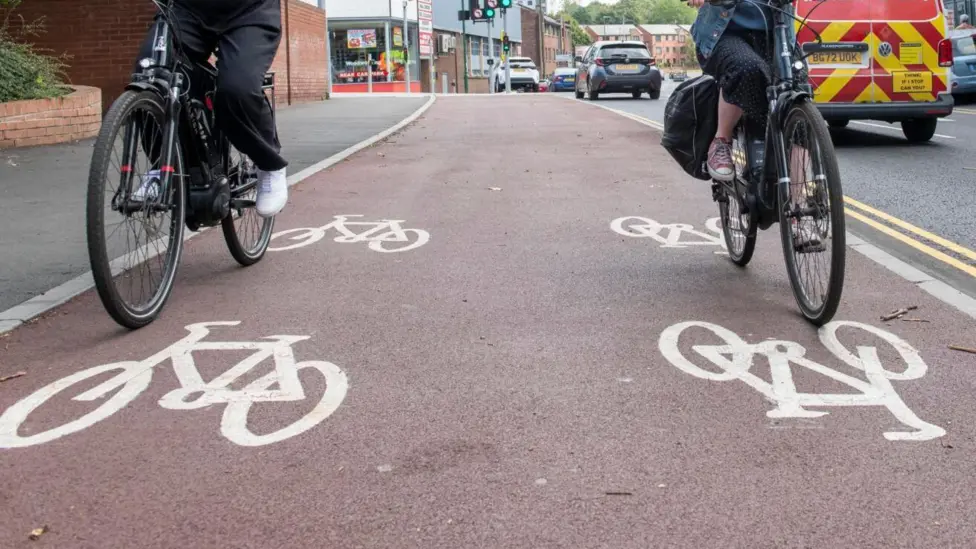
Image credit- BBC news
Last summer, independent GAP insurance provider ALA analysed the safest cities to cycle around in the UK, with Bristol topping the list. Having recently moved to Leeds, I have already had to repair my bike four times in the past three weeks. Most of that has been fixing punctured inner tubes – the result of glass scattered along the route into town from Headingley, not to mention the countless potholes that mark roads where cycle lanes simply seem to vanish.
Local resident Jamie Hood (41), who cycles daily from Headingley to his conservation job at the Royal Armouries, shares my frustrations. “Broken glass is an absolute issue in Leeds,” he said. “You see more of it in the cycle paths after the weekend – it’s probably related to council funding and maintenance.” Hood pointed out that while the new cycle lane being installed along Otley Road is a welcome improvement, “it sometimes feels like it’s not necessarily thought through from a cyclist’s point of view, like they’ve just shoehorned it in.”
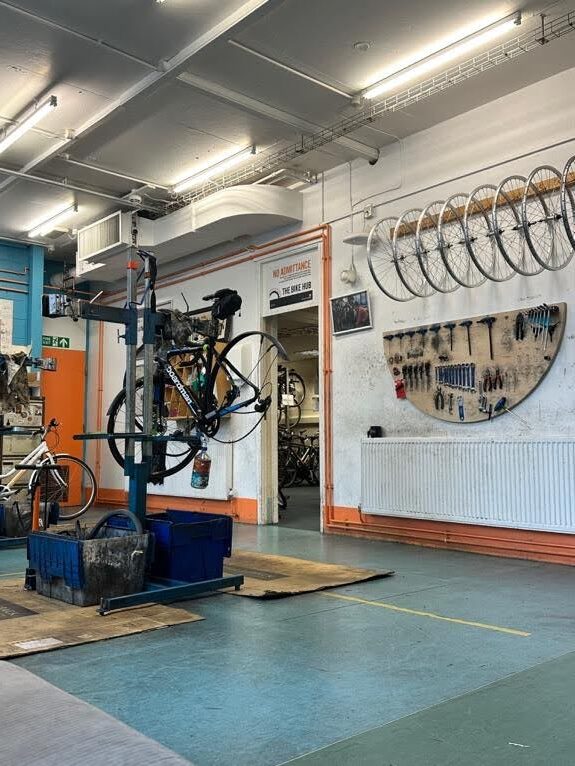
Upon moving, I was excited to see a raised bike lane being installed on Otley Road. However, this quickly turned to disappointment when I discovered its completion date is projected to be Summer 2026. Even so, it’s a step in the right direction, a small sign that Leeds is at least trying to make cycling safer. This is quite apparent considering Leeds was deemed the “worst city in the UK for cyclists” in a study by Idealo in 2023. But my first impression is that Leeds is far behind other UK cities when it comes to bike safety, despite positive initiatives like the Bike Hub offered by the University of Leeds and Leeds Beckett, run by friendly volunteers and cycling enthusiasts.
Hood, who has also lived and cycled in London, agrees that Leeds has some catching up to do: “In London, the traffic is slower and there’s a kind of safety in numbers. The cycle network is more widespread and better thought through. In Leeds, the traffic is faster, the lanes are intermittent, and they just disappear. You can see they’re doing their best; they’re working with what they have.”
My undergraduate days were spent in Nottingham — fourth on ALA’s list — and while I generally felt safe cycling there, it often came down to my own confidence rather than the infrastructure. Dangerous driving was a daily sight. I’d frequently see drivers shoot through red lights near the university, or pedestrians too absorbed in their phones to notice a bike heading straight towards them. Unlike in Germany, where I spent a year abroad and where bike lanes are well-maintained and treated with respect, in the UK, I’ve often felt very unseen and unsafe, even with bright bike lights, wearing eclectically coloured neon backpacks on Nottingham’s dedicated cycle lanes. Many people will simply walk in the centre of bike lanes here, with no regard for their own or anyone else’s safety.
When the lanes disappear, cyclists are forced onto the roads, where things become far more precarious. The potholes in Leeds alone are enough to keep you tense, but it’s the cars that really make you question your safety. Hood has noticed this too: “Drivers here tend to get much closer – sometimes only twenty centimetres away. You can basically reach out and touch them. That gust of wind when a car passes at speed can really affect how your bike handles.” We should try to foster a culture that promotes a symbiotic relationship between motorists and cyclists.
Hood believes this isn’t malice but a lack of understanding: “I’ve always wondered if, as part of the driving test, people should have to spend ten minutes on a bike – even a simulation. It’s not that people are being malicious; they just don’t know what it feels like.”
Yet, cyclists are often expected to bear the burden of safety themselves – wear a helmet, high-vis, obey the rules. These are things both Hood and I already abide by, with him especially wanting to encourage safe cycling for his children. Admittedly, “It doesn’t help when cyclists run reds or act unpredictably,” he admits. “I’m not perfect either, but everyone should be considerate. We’ve got to set a good example.” However, this tends to be just a fraction of the cycling population; thus, I propose that, on top of the bike-friendly infrastructure that is slowly increasing, with help from local government investment, there needs to be a cultural shift in tone. The sense of responsibility for cyclists seems even more prominent in a city like Leeds, where car culture dominates. “People use cars more here,” Hood observes, and “road maintenance isn’t great either – potholes can be a real danger to cyclists.”
So, the question remains: how do we make cycling safer, and more appealing in Leeds? It doesn’t seem like alternative modes of transport are improving here, so the idea about incorporating cycling into driver training feels like a small but potentially transformative step. Understanding the vulnerability of a cyclist from first-hand experience could change the tone of how we share the roads.
According to a government survey from 2019–2023, an average of two cyclists died and 80 were seriously injured each week on UK roads, with nearly half of those deaths involving a car. It’s a sobering reminder that while cycling brings freedom, fitness and joy, safety shouldn’t have to rely on luck or fluorescent clothing.
On a positive note, whilst Leeds may not be the most ideal city to cycle in currently, there are plans to transition to “the Best City in the UK” by 2030. The intent is to increase the cycle network and subsequently the number of cyclists across all ages. I have faith that the council can achieve that title if it continues to prioritise pedals and pedestrians over petrol and exhausts.
Words by Jacob Edwards