
When the Crows Creep in: Open Theatre’s ‘Corvus’
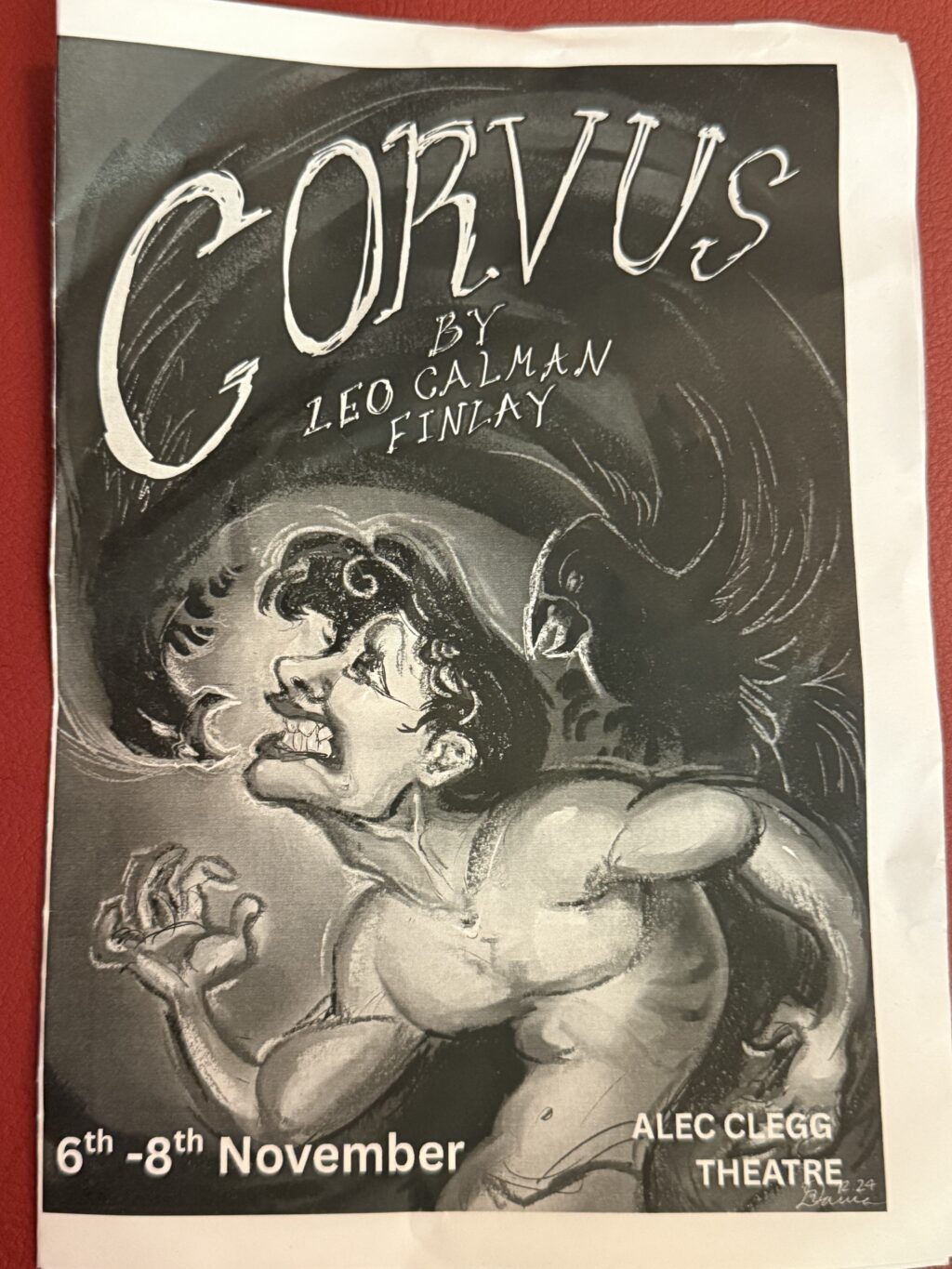
Image Credit: Lily Rodney
Lily Rodney reviews the LUU Open Theatre production of ‘Corvus’, discussing the key explorations of anxiety and paranoia.
The LUU Open Theatre’s production Corvus, directed by Leo Calman-Finlay, was a striking and immersive exploration of anxiety, paranoia, and the fragile boundaries between reality and the subconscious. From the moment the audience entered the theatre, protagonist Joe, played with remarkable depth and subtlety by Abner Goh, sat asleep in his chair, already absorbed in the world that we would soon be engulfed in. This choice immediately dissolved the barrier between the audience and the performance, pulling viewers into Joe’s quiet disintegration before the first line was spoken.
The opening sequence, in which the crows (wonderfully played by Monoko Boyes and Harry Blaney) gradually overwhelmed Joe, was particularly striking. Their presence escalated from subtle disturbance to total domination, culminating in Joe’s beautifully delivered soliloquy. Goh’s performance here was tender, raw, and unsettling. “The crows creep in,” an emphatic line, felt like a physical tightening of the play’s grip. It was a chilling portrayal of intrusive thoughts consuming a mind with nowhere to retreat.
Calman-Finlay’s direction intricately balanced humour and despair. When Joe reached out for support, he was met not with compassion but ridicule, from caricatured posh university friends more concerned with drinking than wellbeing. Their exaggerated comedy, which had the audience in laughter, was grounded in uncomfortable truth: the very real culture of peer pressure and alcohol consumption apparent in student life, where Joe was made to feel ostracised and shamed for not wanting to partake in it. This nuance—laughing while wincing—became a defining strength of the production.
The parents, too, were wonderfully drawn stereotypes. Joe’s mother, affectionate yet hopelessly old-fashioned, clung to chicken soup and warmth as cures for Joe’s declining mental health. His father, rigid and emotionally unavailable, dismissed Joe’s suffering with an obsession for academic performance. Though familiar archetypes, they were performed with sharp humour and precision, where every moment felt necessary and impactful.
The absurd, nymphomaniac-leaning therapist added another layer of comedic frustration. Her complete refusal to listen intensified the audience’s sympathy for Joe as his terror escalated. Throughout, reality blurred further with hallucination; the crows slipped from metaphor into the physical world, tightening their hold. Harry Blaney’s original soundtrack created a dreamlike, slightly eerie atmosphere. The chilling, unsettling music and disquieting voice-overs—particularly the chilling command “wake up”—wove tension through every scene, amplifying Joe’s psychological unravelling.
The ending of the play was thought-provoking. I originally thought that the crows were representative of Joe’s crippling anxiety and mental health, something he wanted to run away from. However, by the end it seemed as though he became a crow—or rather, his paranoia and existential dread consumed him entirely, and he became one with these problems, lacking the appropriate support and tools to cope with his mental struggle. The final scene carried innuendos of the crucifixion, as Joe submitted to these problems. If this was intentional, it was very impactful. In Christian terms, Jesus died for the sins of humanity so that we may have redemption; it is as though Joe had to be submitted to this fate as a warning to us, or to modern society, where the struggles and depression adolescents face are extremely real and dangerous.
Corvus was dark, humorous, and deeply thought-provoking. Calman-Finlay’s direction, supported by Rory O’Dwyer’s assistant direction, created a production that vehemently communicated the emotions and struggles present for young people. It was a vivid portrayal of how easily a mind can spiral when met with apathy instead of empathy—and a sobering reminder of the stakes of ignoring mental health.
Words by Lily Rodney