
Maruja Live at The Wardrobe: Being Part of the Whole
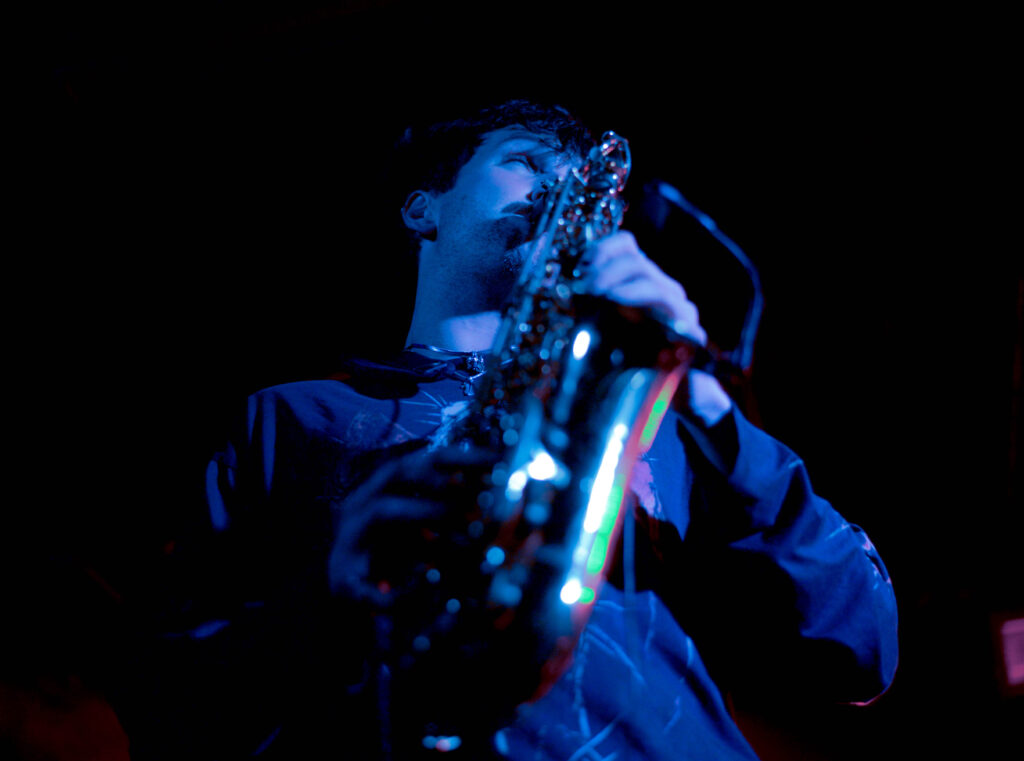
Image Credit: Daniel Brown (@danbrowncreative on Instagram)
I sit in the shower with a tangerine in my hands. Hot water is pouring down on my shoulders, my back, my thighs, my hair clings to my skin. The water drips from my lashes and blurs my vision every now and again as I dig my nails into the tangerine’s skin. I unpeel the tangerine and watch as oil bursts from its pores. The skin gets stuck under my nails, and it hurts a bit, but I’m determined to reach the flesh inside. I let the peel fall to the ground, and its scent envelopes me, clinging to the steam on the walls. I separate the slices and pop them into my mouth, one after the other. By now, the juice has mixed with the water and is running down my hands. It’s everywhere. I wince a little at the sourness that tingles my gum. I watch as the tangerine’s juice flows down the drain and think of Maruja’s ‘Saoirse’: “This is a song for peace, an outpouring of grief and a refusal to be numb to what we are seeing.”
Maruja’s live performance at The Wardrobe in Leeds City Centre is not only a promotion of their recent album Pain To Power (2025), it seems the audience has also come here to experience a spiritual cleansing of the soul. The band, consisting of Harry Wilkinson (lead vocals, guitar), Joe Carroll (saxophone, vocals), Matt Buonaccorsi (bass) and Jacob Hayes (drums), bring talent and originality onto the stage. Yet, standing under the purple lights at The Wardrobe, it feels like each member of the audience pours a little of themselves into the music. This is a night of mutual understanding, the individual mind connects to the collective. It’s like being part of the crowd gives you access to a sixth sense, to feel the music in your bones. On their webpage, Maruja writes: “Thank you for sharing your bodies and souls with us at the live shows.”

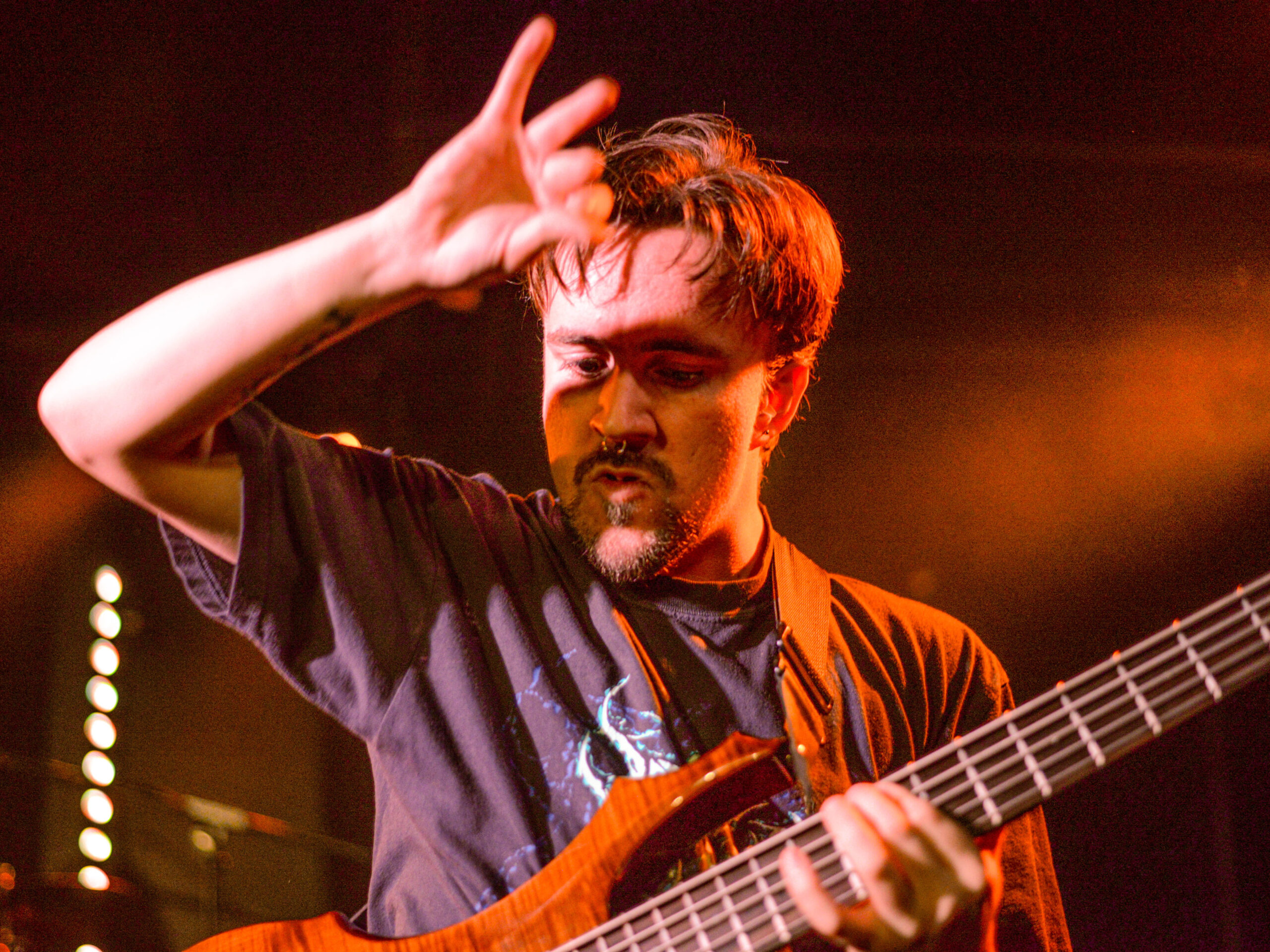
Throughout much of the set, Hayes sets the basis for the vocals with aggressive drums. Wilkinson, a hardcore-looking individual with tattoos across his chest and short cut hair, takes control of our attention with his rap and spoken word vocals. The saxophone plays alongside, and you cannot help but grasp onto its melodies tightly and plunge into the story that Maruja is telling us. Carroll plays the saxophone in a way that you’re unsure whether it’s tamed him or he’s tamed it; a symbiotic relationship of sorts. There’s a flicker of crazy in his eyes that lets us know that music has taken over his body. Similarly, as you watch Buonaccorsi, it’s evident that he harbours admiration and respect for his bass that only devoted musicians can feel. The bass becomes a lover, a friend. As you melt into Maruja’s cacophony of sounds, it’s clear that the chaos is intended and precisely guided by their skill and intuition.
Throughout the set, they unpeel that very chaos and show their audience what lies beneath the hard exterior. Their gig starts with songs expressing rage and frustration, and Carroll regularly incites the crowd to create mosh pits and walls of death. The audience, a range of young to old, sneaker to springer boot, becomes a whirlwind of bodies. Even outside the pit, you’ll see the wild bobbing of heads and typical knee-hip bend that’s the only appropriate movement to this kind of music. “Blood calls blood/ Will we ever bleed enough?” Maruja’s frustration is echoed through us all. Their songs are shamelessly political; they call out wealth injustices, war crimes, the Palestinian genocide. Their chaotic jazz-rock expresses a deep-seated grief and overwhelm resulting from watching the powerful get away with corruption and social atrocities. Maruja’s music gives voice to the anger, the panic and the despair of being a pawn in a political game that has no rules.
Yet, contrary to being overwhelmed by the intensity of their music, they manage a fine balance by adding softer layers to their set. “Why so much division/ Love is my God.” Wilkinson separates his rap from the classic scene, which often glorifies hate and violence, instead preaching about solidarity and the strength we find in others. Carroll exemplifies how we lift each other up as he vanishes from the stage and is found again surfing the crowd. In the space of their gig, Maruja create an outlet for frustration, the bodies throwing themselves against each other, the feet wildly dancing, the heads bobbing. Still, alongside the loudness of it all, they find space to incite hope and encourage their audience not only to love themselves but also their fellows.
Close to the end of their set, they ask for silence in solidarity for the victims of injustices and war across the world. A crowd that had previously buzzed with energy, a room that had been filled with deafening sound, now goes entirely quiet. You look out onto the crowd and feel a little breathless seeing the mass of raised fists. There are goosebumps on your skin; it seems your body has caught up with the spiritual experience of a Maruja gig. Here, in this small space, the band evokes a sense of togetherness among their fans that instils a bit of hope and lets you reclaim a sense of agency.
Walking out of The Wardrobe’s basement, you’re not quite the same person as before Maruja’s performance. There’s a line stuck in your head: “We are love in abundance, and our courage can’t be tamed”, you’re reminded that we’re not quite so alone, not so powerless, because together, we are a people, a community. Maruja’s gig is thus not just a gig; it’s a reminder that we are the foundation that those at the top stand upon. There is power in the ways we can stand together.
Words by Emma Fee Bittmann