
Leaning Left, Leaning Right: Prototyping Our Way to Balance
Jacqueline Wong discusses how to manage your commitments when everything feels exceptionally hard to balance.
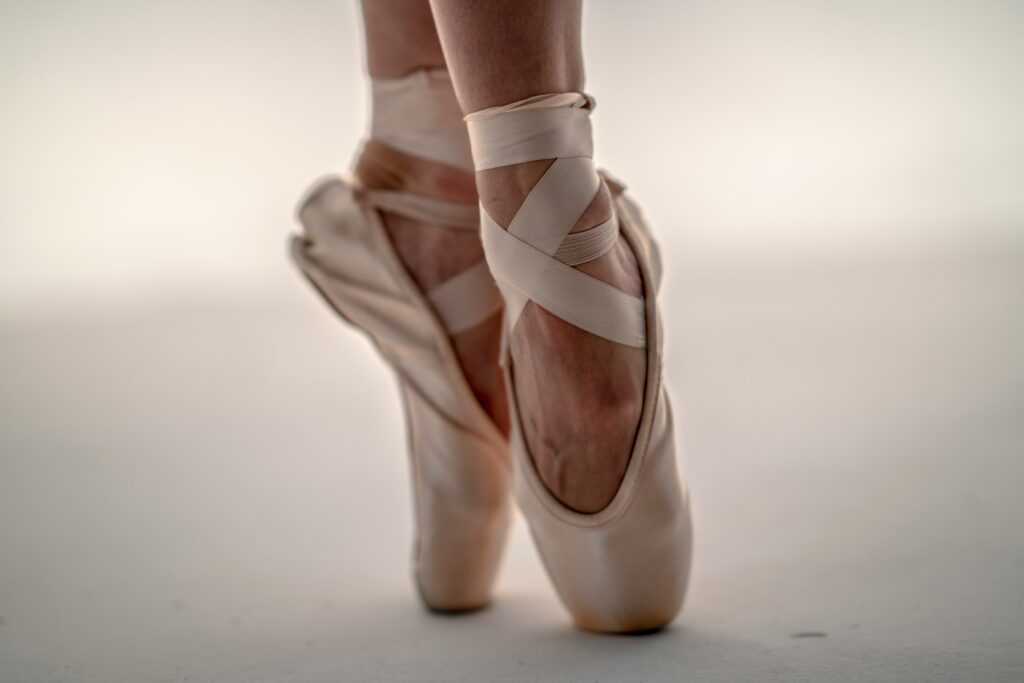
Image credit: Unsplash / Nihal Dimirci
I learnt something in ballet that my teacher probably never meant as life advice; somehow, it stayed with me anyway. She taught us to balance, but rather than asking us to stand still, she told us to lean at first. If you tip too far left, try leaning right next time, because the only way to find the centre is to feel the edges.
In ballet, steadiness is the illusion. Behind that one poised moment is an entire network of muscles working as hard as possible to make you look effortless. Balance is strength shown as grace.
At the start, I just saw balancing as another technical cue, but the more I wobbled and occasionally fell over in the most ungraceful way possible, the more I reframed my understanding of balance as a series of tiny experiments. You don’t learn or earn it in one go but by being a little off before you get steady, and you locate stability by starting with being a wobbling penguin.
And honestly? Students do this constantly, whether we realise it or not.
We try to look put-together like we know what we are doing. From the outside, it might look “balanced,” as if we effortlessly manage our studies, society commitments, part-time jobs, and friendships all at once. But inside, it can feel like the tiny stabiliser muscles firing all day just to keep us upright.
Real balance is dynamic — it wobbles and demands constant recalibration. Just like dancers adjust on the fly, students adjust without even noticing: adding more work one week, pulling back the next; trading a night out for sleep, trading sleep for a deadline. We’re all running prototypes and have ourselves tested in different directions until something starts to hold. Balance is something we prototype into existence. Each version we attempt leaves traces and teaches us our limits.
Whether you’re standing in ballet shoes or trying to survive Week 10, balance isn’t about holding everything without moving, but becoming sensitive to the shifts, knowing when to lean, release, and hold. A dancer finds their centre by moving, experimenting, and trusting their body to learn through repetition.
Dear students, maybe you just need the courage to test different ways to begin and learn through contrast. Because in ballet, as in life, the wobble is the way towards balance, whatever it means to you.
Words by Jacqueline Wong