
Jacquemus Goes Wild With ‘Le Palmiers’ at Paris Fashion Week
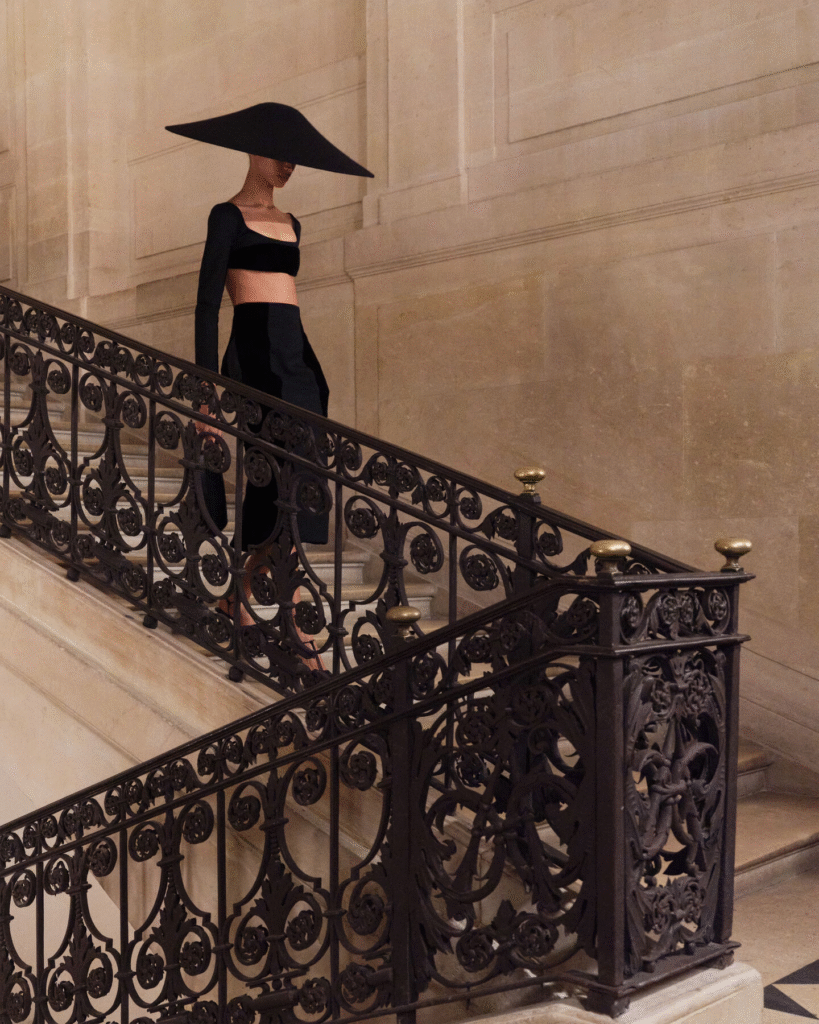
Jacquemus’ ‘Le Palmier’ collection for Fall/Winter 2026 was a whimsical reclamation of fun, every piece a devotion to modern re-imagination of that past. That’s exactly what the show was: from beginning to end a display of joy, a cheeky endearment which asked its audience to smile in the presence of colour, form, and confetti motifs. The 1980 side ponytails stood out on their own, subtly underscoring the collections nod to the era’s vibrancy. From neon spandex and leg warmers to the unmistakeable power suit and belt combination, it’s hard to ignore the influence of the 80’s on Simon Porte Jacquemus’ collection.
A large part of the collection’s success can be put down to its salutation to trends from eras past, whilst beautifully providing them with enough cultural relevance for right now. Take look 20, for example, a knitted dress-turned-jacket featuring a trailing cape and higher than high neck. There’s an air of 1950’s Chanel about it, with soft shoulders and a tulip waist, equally playing with the subdued sexiness of the 90’s, all whilst delivering a fresh sensibility for the now, with waist-height pockets and a geometrically round shape. It’s a complete tease: the model hidden behind the dresses high neck and a wide-brim hat, yet staring back as if to claim that her coverage doesn’t equal concealment.
This sultry, laid-back, cool-girl character can be seen throughout the show, with the regular appearance of sheer dresses, cinched waists and mesh capes all suggesting a sexual tension that’s is not only fun, but hugely anecdotal. The collection suggests that emotional dressing is not separate, but totally intertwined: to be sexy is to dress for oneself, so dress to oneself is a joy, to be joyful when dressed is the most fun of all. It all comes down to the whimsy of the entire collection which allows us to invest emotionally in different pieces, relived entirely by the end of the show. It’s exciting to see neon skirts and confetti fabric, ties thrown over the shoulder, but I am quickly reminded of the dramatic reality supplied by monotone tailoring and brooding headwear. Fashion should make us feel, and ‘Le Palmier’ was like watching the emotional development of history in a most considered way. I saw anger, sex, joy, sadness, confusion and direction all parade in a most delicious way.
It would be contemptuous of me to ignore the shows closing garment.
Black dress. One shoulder. Empty wine glass. That’s it. The dress itself is fine, featuring a dangerously low one shoulder detail revealing the entire right breast of its owner, but the styling and intention is what provides it weight. The promiscuity of the model as she casually retains her dignity, presenting herself as the entertainer for the evening, sauntering across the checkerboard floor of the Picasso museum, tells us a story of dangerous fun. Jacquemus’ final look is fashion in its most simplest form, and I loved it. From the frizzy side pony, to the unbalanced one earring and trio of arm bangles, to the jilted wineglass and the models ever so slight smirk, the entire look feels wildly natural. It’s simple, a homage to periods past and futures becoming, wrapped in timeless glamour.
Even the music choice for the show furthered the purpose of the entire collection, lines like ‘set me free’ and ‘love to love you baby’ echoing from alcove to alcove of the museum. A backdrop for the essential message not to deny oneself the emotional vulnerability so often disgraced, nor should we let fashion dull in the face of challenging times. No matter how politics, society or even culture is flailing at the turn of modern moral panic, we can rely on the art of fashion to uplift us. It feels very much like Simon Porte Jacquemus saying, ‘whatever. I’ll love to love, I’ll hate to hate, and I’ll damn well design to design in whatever way I feel like’. Le Palmier was certainly a opportunity to basque in the simplicity of enjoyment: experiencing art on it’s own terms.
Words by Ruby Tanner