
The ‘Emptyhad’: Is Manchester City’s Supposedly Sparse Stadium Really Just an Urban Myth?
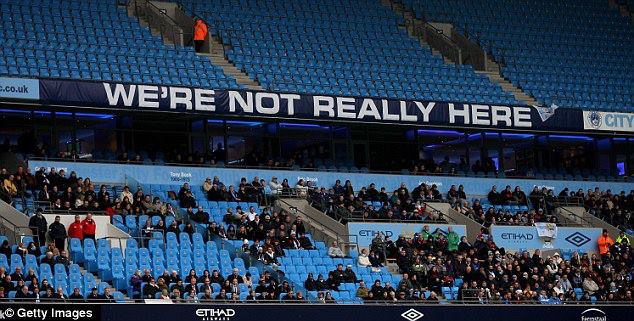
Credit: TheEmptyHad Stadium on Facebook
Words by Nico Biddulph
Manchester City’s 2-all draw against Nottingham Forest in early March was not only significant in the title race, but it also served as a reminder of the disparity between the levels of fan fervour at Premier League different clubs. As a neutral, I was a first-time visitor at the Etihad, and what I saw in the stands was a vindication of the ‘Emptyhad’ accusation that the ground so often receives.
“A club whose comparatively modest fanbase is unrepresentative of their recent sporting dominance”
Watching City games on television, from which only the bottom, less sparsely populated tier of the stadium is visible, I had always assumed this accusation to be exaggerated, a cheap jibe borne partly from jealousy, or a lack of desire to waste breath on the more complex resentments that rival fans have with the Manchester club. However, as I stared across at the three-tiered East Stand opposite me and noticed several large patches of empty seats, I started to see the validity of the ‘Emptyhad’ tag. Even behind the goals in the bottom tier, where the most impassioned supporters are traditionally placed, I could see unoccupied blue plastic at regular four-seat intervals. To compound the problem, the fans that were in these areas were sat down for large periods of the game.
This displayed a startling contrast with the tightly packed sea of bodies in the Kop or Stretford End, at Liverpool and Manchester United respectively, who stand for their team during the whole match. Throughout their history, these two clubs have achieved several generations of success, turning them into iconic institutions, and acquiring substantial fanbases as a consequence. Manchester City are the opposite; a club whose comparatively modest fanbase is unrepresentative of their recent sporting dominance.
Part of the reason that I was able to attend this game was because of a lack of demand, a problem that is unfamiliar to the teams around City in the table. For a first time neutral such as myself, attaining a Liverpool ticket at short notice (which is what I did for this City match) would be about as difficult as convincing Steven Gerrard to come out of retirement and play for Everton. At Arsenal, a similarly laborious process exists whereby a potential buyer must own a membership, enter a ballot, and if unsuccessful in said ballot, must spend often in excess of five or six hours on a ticket exchange page, sometimes in vain.
It would be hard to understate how unlikely it would be for Premier League tickets to go on general sale at either of these two clubs – as they did for City’s game versus Forest. To add, both teams have larger capacities than the Sky Blues. Although, some may argue that a waning of enthusiasm is only natural for a fixture such as this – a game against a team lower down in the table during a midweek – attendance has also been a problem at other times. Pictures from a League Cup semi-final against Newcastle recently did the rounds in the media, showing large swathes of empty blue plastic in the Etihad’s upper tiers. This was also an issue against Brighton and Salford.
It is perhaps reductive to deride Manchester City’s fanbase so emphatically – before Sheikh Mansour’s 2008 takeover, they had a reputation for having a large and passionate support for their level. Whilst at their old Maine Road stadium, they recorded an average attendance of 28,000 during their 1998-99 season in the third tier, or going further back, famously took 10,000 away fans to Stoke in 1981. This enthusiastic local support still remains, demonstrated by a 2012 newspaper poll which suggested almost half of Manchester’s postcodes are home to a majority of City fans. The problem with Man City’s atmosphere, therefore, lies not in a lack of passion. Instead, it is perhaps a result of an overreach in ambition.
What we have ended up with is a stadium that feels sterile and cold, with the pride and passion that once blessed Maine Road being dissipated too thinly. The big games may still fill to the brim – the optics of the final day matches in many of City’s recent title wins, in which the ground is packed with a sea of blue, show a rare glimpse of life. Crucially though, it is in the slightly less popular, but still important games, in which the Sky Blue’s over-ambition is exposed. Manchester City may have escaped the endless drudgery of ‘midtabledom’ and the threat of ever returning to League One, but their atmosphere, as collateral damage, has been diminished.