
A neglected land
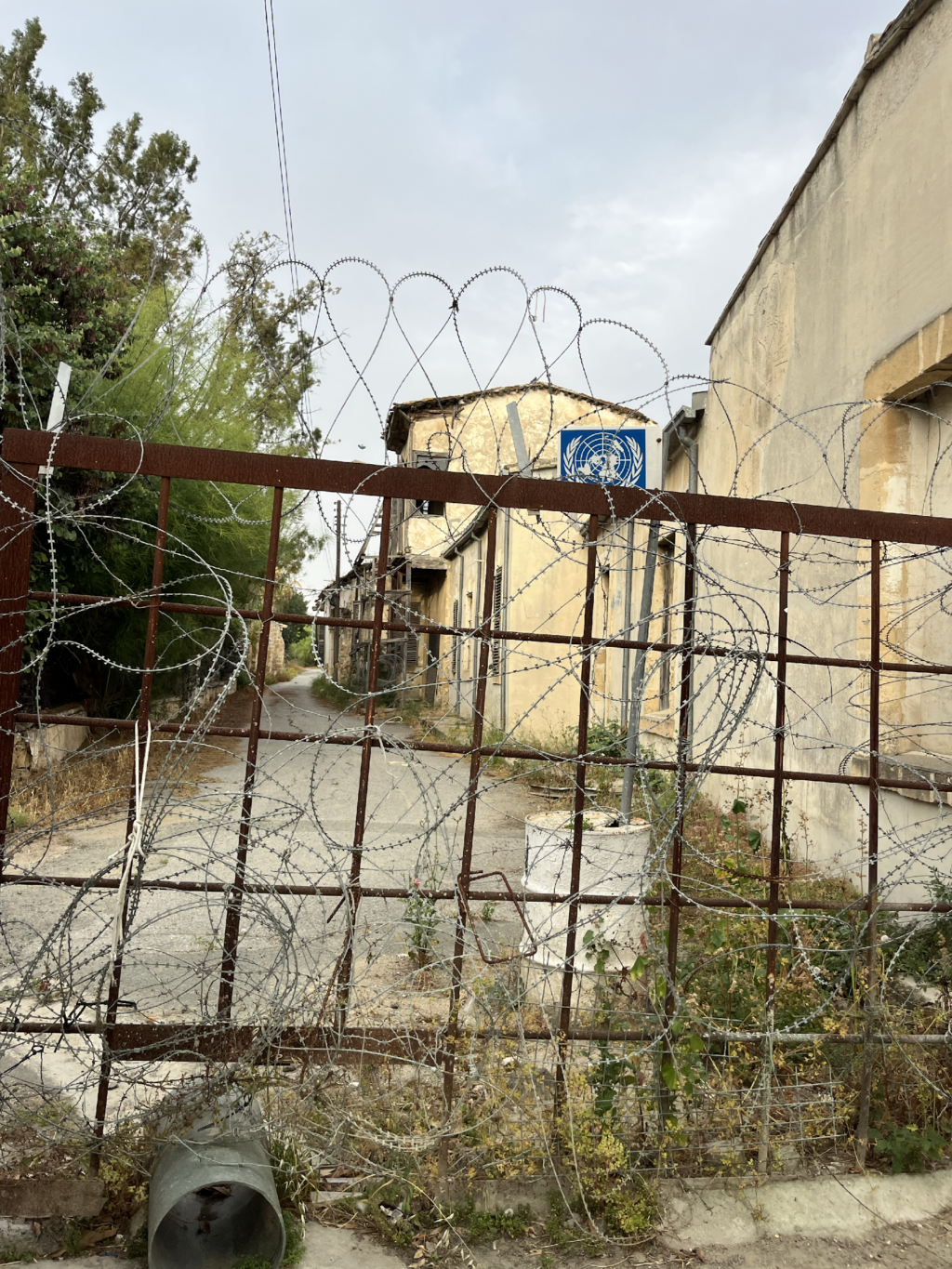
Image credit: Alex Wallace
(Written December 2025)
I stood facing the United Nations Buffer Zone in Nicosia, watching the cats pass through the designated tunnel that lay nestled beneath the razor wire, large enough only for the movement of small creatures. Civilians, if they wish, must cross at one of two authorised checkpoints, one in the West of Nicosia, the other, more notorious, on the infamous Ledra Street, known to the British as Murder Street during the Cyprus Emergency of the 1950s.
The previous day we’d gone for a walk, passing the old Venetian bridges that dated back to the 15th and 16th centuries, that took us to the abandoned Turkish Cypriot village of Vretsia. Whilst Vretsia itself was untouched during the emergency years and the intercommunal fighting of 1963-64, during the invasion of 1974 the population of 400-500 refused to surrender their guns to Greek Cypriot forces trying to disarm Turkish Cypriot villages. Its location meant that the village became a transit area for those trying to flee to the Turkish-controlled north through the mountains. The 160 people who remained were evacuated to the north under a UN escort. The village captures the conflict perfectly. It sits serenely on the edge of Paphos forest, frozen in time. There was an eerie stillness as we walked along, peering cautiously into the decaying buildings. Some villagers had clearly hoped to return, others had hastily packed and moved north. The largest of the houses, former property of the Mukhtar, stood two storeys tall with three large, shuttered windows on the upper floor. This home would have been a place of happiness where marriages were held. Now it’s host to dust, touched only by hunters who rest there seasonally.
Much like the village, the question of Cypriot reunification seems to have been shelved alongside the history books. There have been attempts, such as the Annan Plan in 2004, however with the typical arrogance of foreign interventionism, this failed to reflect the demands of those living on the island by disregarding the views of the Cypriot public. The 89% turnout showed the importance of the issue, and the 76% vote against it by Greek Cypriots illustrates the shortcomings of the plan. Moves towards reunification moved slowly, with failed talks as recently as 2017, leading to the longest pause in the peace process ever.
In the meantime, British politicians have remained indifferent to the plight of the divided island and have even gone on to benefit in numerous ways from this. There’s the case of a number of MPs (one of whom is now a lord) who, in the 1990s, bought houses in the north, likely originally owned by Greek Cypriots who’d fled south, subsequently advocating for greater privileges for the north, overlooking the fact that the only country to recognise the independence of the territory upon which their house sat was Turkey.
More recently, in September 2024, British politicians were accused of breaching lobbying rules by asking parliamentary questions after returning from trips to the TRNC. Highlighted by journalist Peter Geoghegan, these trips were organised by Freedom and Fairness for Northern Cyprus, a group that campaigns for the recognition of northern Cyprus as an independent state; it is worth noting the collaboration they’ve had with London-based PR firm, College Green Group, a company run by the son of a Conservative peer. Despite these shameless cases of self-interest from abroad, hope for reunification is growing on the island itself.
In October 2025, Tufan Erhürman won a landslide election, defeating the incumbent by over 27 percentage points. He has stated his support for resuming reunification talks, though what this will mean in practice remains uncertain. Public opinion is mixed, which is likely a legacy of previous failed attempts, and few on the island welcome the prospect of more externally mediated negotiations, particularly those who remember American interference, including covert CIA activity, during the twentieth century. Though I don’t envy Mr Erhürman’s position, there is reason to hope that the peace process will move forward in a way that aligns with the wishes of the people.
Ignorance of Cypriots’ history can be frustrating. The Cyprus people think of as a premium holiday destination is a very different place- party hotels in Ayia Napa and white sand beaches. In reality, many of the locals in these places may be strangers in their own land, unable to return to the places they once called home.
Words by Alex Wallace