
Disco, NATO, Bosnia and Me
Tess Armstrong covers the exhibition ‘Music, Leeds, Us’
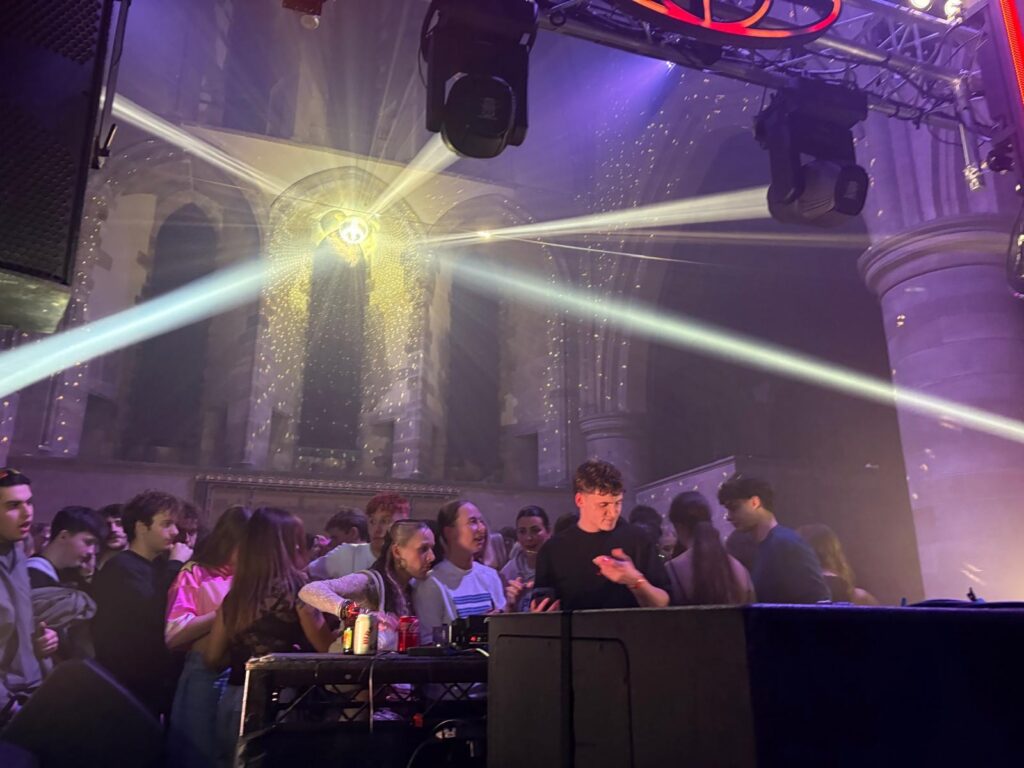
New exhibition reimagines the history of Leeds Queer-led underground rave scene, what came before us, and how to continue the legacy.
‘I promise to respect my brothers and sisters, hang loose, and have a real good time…’ states the declaration all entrants had to sign before entering the infamous Leeds club event ‘Vague’, held at the Leeds-famous Warehouse back in the 90s. The paper, now framed in Leeds City Museum archives, also holds other, perhaps more poignant, declarations such as the commitment to protect all LGBTQ patrons from potential abuse and understanding the club’s wider presence, working towards the cause of greater ‘inter-racial and inter-sexual understanding’. Vague’s heyday as an event only lasted from 1993 – 1996, but its impact on the clubbing scene is one of many being currently explored in the Museum’s ongoing exhibition ‘Music, Leeds, Us’.
As a Leeds student of four years,I think I’m somewhat attuned to the full-bellied clubbing scene Leeds has to offer – big names like Beaverworks and Mint Warehouse. There’s also the mark of the smaller, grassroots venues, like Cosmic Slop, Eiger Studios, and the newly-founded ‘Under the Arches’. Whenever I meet people from other parts of the UK, and tell them I go to Leeds Uni, I’m always met with a twitch of the green eyed monster, at the thumping, full of life, cheap as chips (comparatively) menu of rave and club events Leeds offers up: “I’ve gotta come to Leeds for a night out” is something I’m forever being told by friends back home. And of course, if you ever meet a Leeds student, they’ll always tell you about the DJ epidemic of Hyde Park – they’re going to start putting ‘ability to buy pioneer decks’ on UCAS applications. But perhaps like other doe-eyed, hedonistic, students, I’ve failed to recognise the roots of the Leeds music scene. After all, it has come to encompass my Friday and Saturday nights – and a few regrettable Sunday mornings.
The camaraderie between marginalised communities and underground music scenes is a long recognised partnership in music history. And Leeds is no different. What ‘Music, Leeds, Us’ has outlined is the driving force of queer communities in providing the heart to all things underground-adjacent – a strong community, fuelled by escapism and appreciation of what rave culture can mean: a safe space for those who might not find one outside of the club dancefloor.
The exhibition celebrates the work of Leeds legend Suzy Mason, the integral cog in the Leeds disco machine. Mason was responsible for a plethora of infamous Leeds queer nights, ‘Vague’ included, but additionally ‘The Kit Kat Club’ and iconic ‘Speedqueen’. The identity of these nights lay in the outrageous and the extra-terrestrial, to be free from the exclusivity that mainstream UK clubbing was offering at the time, and in Mason’s own words, “a reaction to what was becoming an increasing corporate club scene and big name DJs charging huge fees”. The impact of this cannot be understated, both nationally, and internationally. Mason proved that nightclubs were more than their superficial stereotype. She and her fellow event organisers were invited by NATO’s stabilisation force to join them on a tour of post-war Bosnia with the British Army. “We ran club nights, put on school discos, and ran workshops in children’s homes and camps for displaced youths all who had never had a party before”, states Mason in an interview for IL Summer Mag, under a scheme to bring calmer relations between Serbian, Bosnians and Croatians through the joint ecstasy of dance events. I wonder if British Army sergeants, after saluting the flag, saluted their obligatory commitment to ‘hang loose’ too.
It’s indubitable that the work of Suzy Mason and many pioneers like her in the Queer community, the Latinx community, the Leeds born-and-bred community, including the likes of Tony Hannan, the godfather of ‘Up Yer Ronson’ and many more, have created a legacy of the independent, unpolished, boundary-pushing and community-driven Leeds music scene us students know and love today.
But, Leeds is facing a crisis. In the past year, beloved trailblazers of the non-commercial music scene of Leeds have been forced to shut their doors – the Old Red Bus Station, Sheaf Street, The Wire, and, most recently, Freedom Mills, all fell victim to financial constraints and landlord conflicts, through which Leeds council has offered no support. I feel the overwhelming message of ‘Music, Leeds, Us’ is celebratory, yes, but also a wake-up call – to pay homage to the marginalised communities that have paved the way of our club haven, by supporting it now more than ever. Write to the council, keep showing up for underground events, and let this legacy be heard and continued. If Suzy Mason can hitchhike a ride with NATO to Bosnia, we can honour her by keeping the party going.
Words by Tess Armstrong