
Like sticking your head out of a car window: James Adrian Brown and Sulk Rooms at Seven Arts Leeds
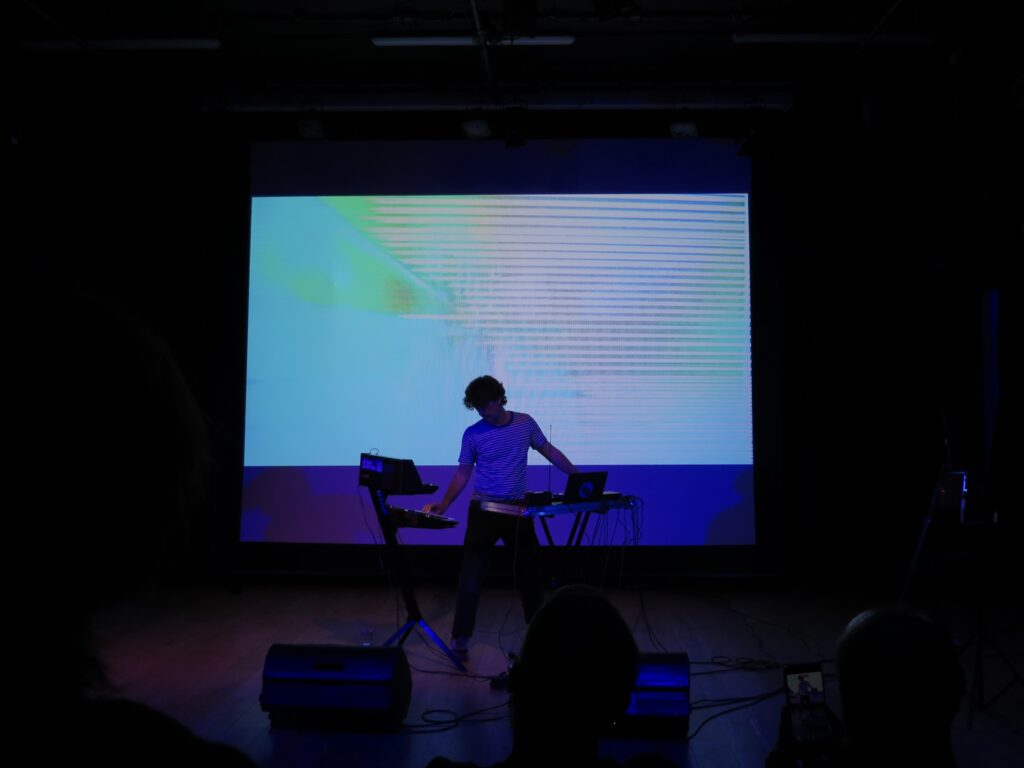
Image Credit: Daniel Marshall
It’s a hot Friday ahead of the bank holiday weekend, and I’m at Seven Arts Leeds, a small independent cafe-bar-music venue in Chapel Allerton. Seven Arts is bigger on the inside – you walk past the bar, head through an unassuming door and enter an intimate but comfortable gig space. As a seated gig, there’s a greater sense of concentration. Sat in tiered rows, everybody neatly faces the front, turning their anticipatory gaze towards the low stage.
Opening tonight is Sulk Rooms, a.k.a. Thomas Ragsdale, who walks out in front of a looming red screen. In the centre is a yellow circle with a piercing pupil, which looks like a kind of evil lizard eye, but eventually reveals itself to be the sun breaking through clouds. Silhouetted before it is a synth deck and an electric guitar.
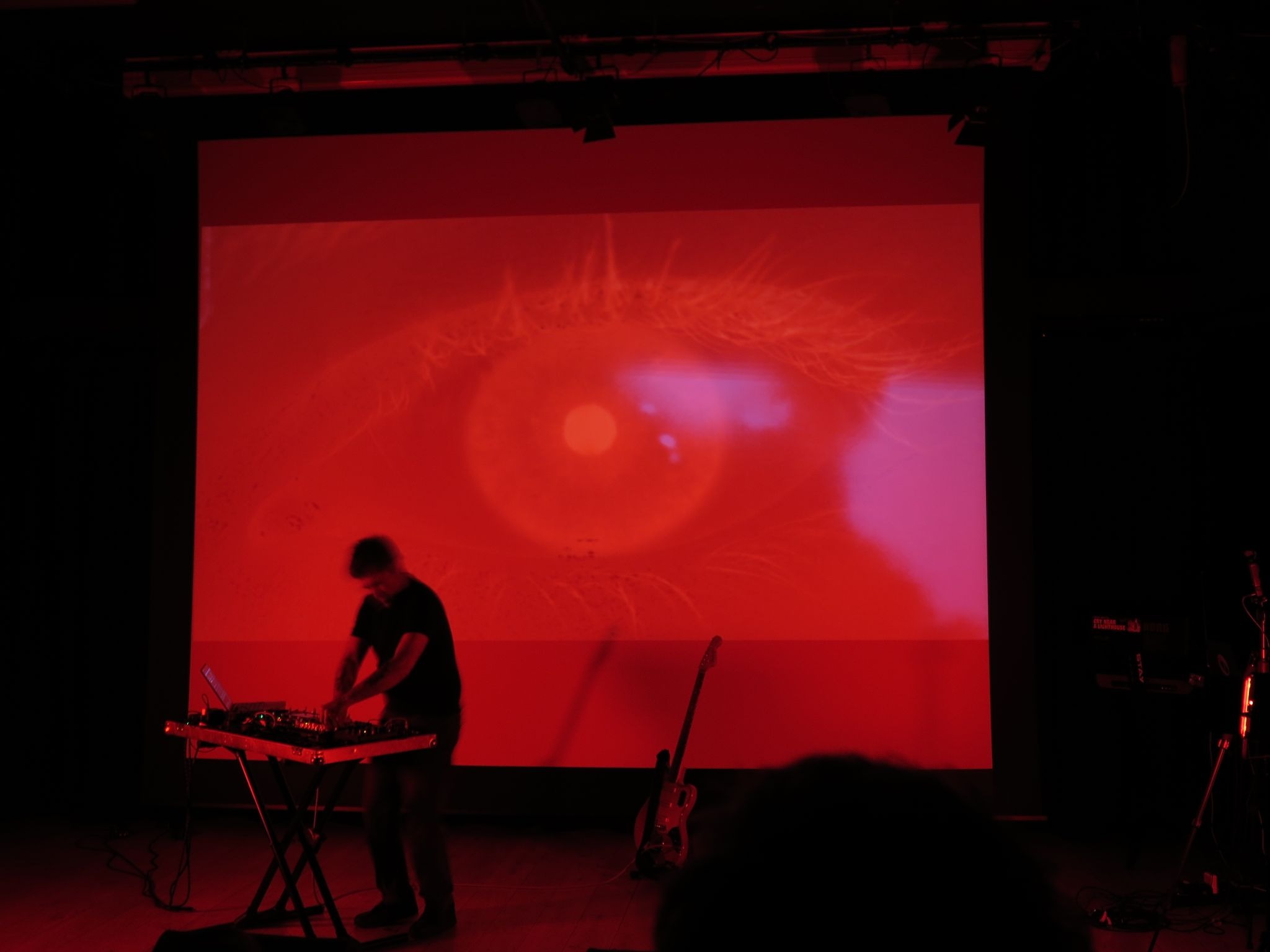
He opens with a marching bassline, then goes for the guitar. The venue is enclosed enough that I can actually hear the twinges of acoustic strumming. I’m endeared by the lack of studied nonchalance often seen in electronic performances. He’s immediately rocking back and forth, leaning deep over the decks, sometimes jerking backwards like he’s just been given an electric shock.
The guitar is very stylish, and a unique visual contrast to the static synth decks, but the texture it’s adding isn’t immediately obvious to me. Later in the set, when he’s really strumming at it, there’s a slightly surreal sense of air guitar.
Still, the pace is intense and determined. Euphoric synths drop into crunching bass that echoes like miniature detonations. There’s a sense of a lot of things rushing past at speed, like sticking your head out of a car window. Sometimes it feels like each element needs more time to settle before something new is added, but it all contributes to the tingling intensity of driving, frenetic pace.
Jungle breaks fade in and out, with various samples dropped into the mixing pot and churned at rapid speed. It moves more decisively into a more drum-and-bass avenue, complete with skittering, murderous hi-hats and intense drum breaks, a sense of sensory attack – then falls out to the guitar again, gently plucking. Minimal, blippy synth rhythms enter the scene in a way that feels deeper and more sustained, and the set ends on a deservedly thumpy crescendo.
Next is James Adrian Brown, looking slightly dazed in a stripy tshirt. There’s a slight cartoon-character energy about him, but his competence is evident as soon as he starts on the synths.
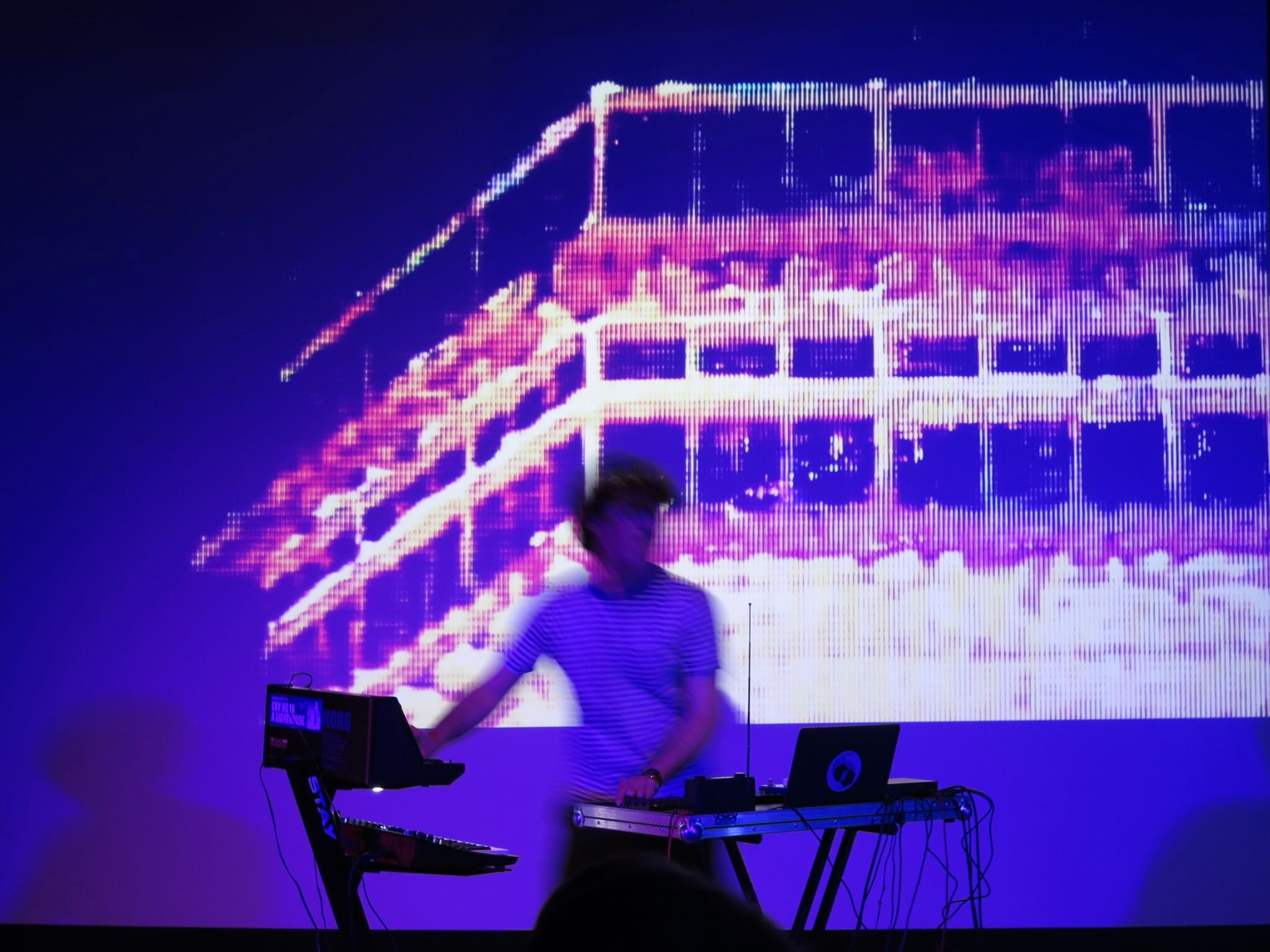
A slow, murky beginning. Clicking drums rise from the haze, building into intricate, asymmetric rhythms that tickle at the brain. Brown is doused in the projected lights, with bright blocks of colour that remind me of a TV testing screen.
Formerly a songwriter and guitarist with alternative rock band Pulled Apart By Horses, Brown has moved into the electronic scene, signing with Castles In Space – a UK electronic record label full of esoteric delights (such as Warrington-Runcorn New Town Development Plan and Apta, two other great electronic artists from the North of the UK). His electronic persona already seems fully-fledged, with a joyful retro-futuristic aesthetic and a real sense of fun. He wiggles his hips as he steps between the decks, splashing bright synths over firm, crunchy drums. It’s moody, weird and exciting.
A choppy, alien-sounding vocal sample enters the mix. The visuals steer through grainy natural images, with the bright colours of a school science textbook. There’s a computer-game quality to the blippy synths, but a gnarly bass anchor keeps things feeling grown-up and exciting. The rhythms are enticingly off-kilter, keeping the crowd on their tiptoes.
Then the visuals go to blue and white, which reminds me of the album cover for Spiritualized’s Ladies and Gentlemen We Are Floating in Space (1997) – and I think I can hear influences from a similarly spacey, psychedelic sound. Now a synth squeaks over echoing drums like a balloon ready to pop.
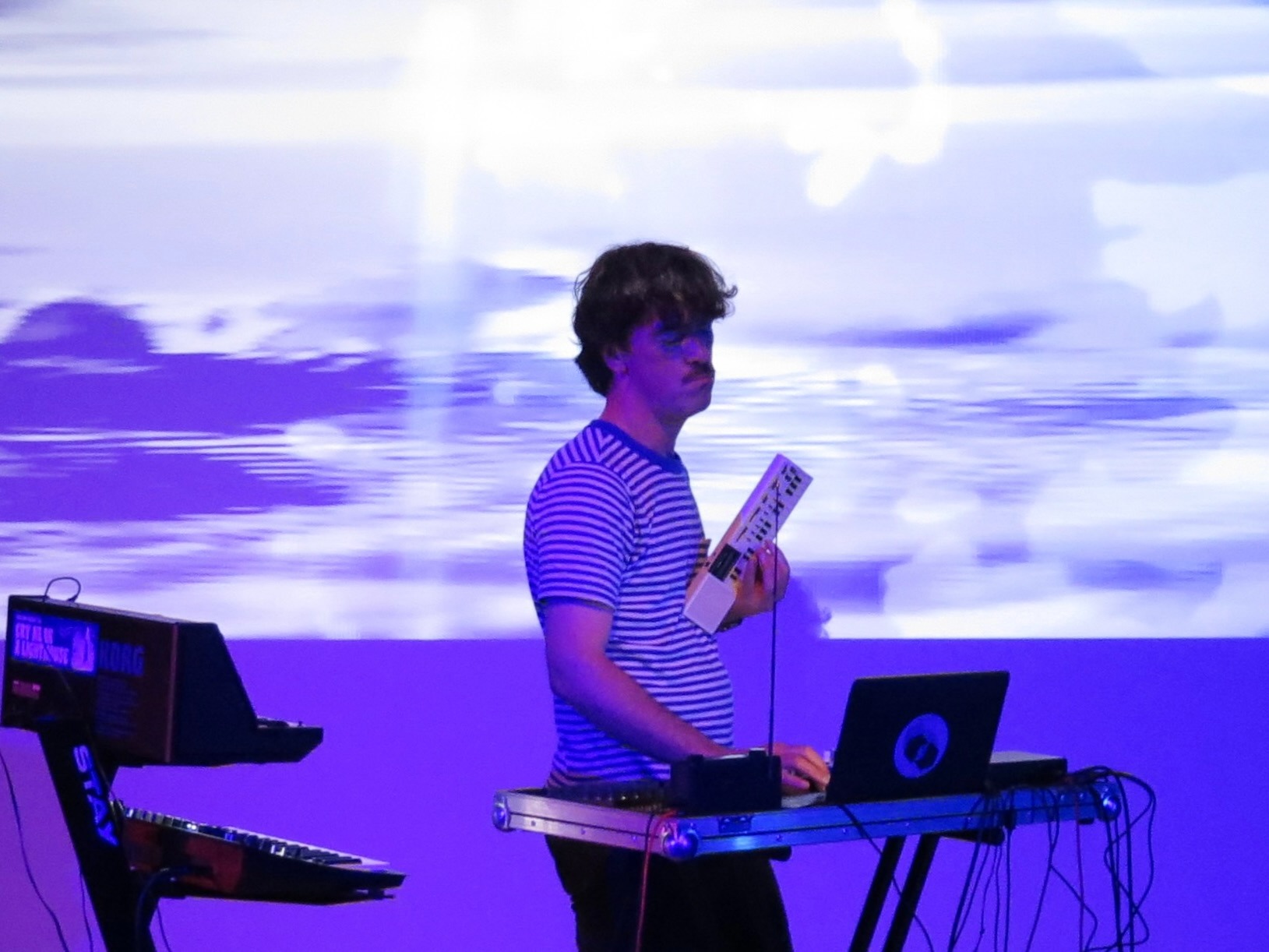
Brown holds up a white Casio toy synthesiser – giving the audience space to wonder about this strange object before it enters into the mix. It clearly has a special quality from the way he hugs it to his chest. The background drops down as he plays a mesmerising isolated melody on the white rectangle. There’s a fascinating tactile quality, something tangible beyond the standard use of mysterious dials and hidden keys on his other synth decks.
When the music builds again, it’s mellower. This mournful feeling continues for a while, a pulsing wave waiting for something – then the beat returns, crunchy and choppy. For a moment it’s almost unsettlingly harsh, before a hyper synth starts again.
The white synthesiser makes a charming second appearance. I love the way Brown uses it as a visual prop – it’s an attention-demanding object, seemingly imbued with magical qualities as he clutches it like a lunchbox or a lucky charm. He’s a striking performer, younger than many people in the audience, often seeming endearingly thrilled (or even a little surprised) at the quality of his handiwork.
Scrambly vocal samples dissolve into a lilting repeated synth rhythm, which becomes violin-like, more orchestral. Then, abruptly, it all stops.
The suddenness has me questioning whether his set has actually been cut short. The screen returns to the bright rectangles that had reminded me of a TV colour testing screen. It’s a decisive stop, but I’m leaning forwards, wondering if there will be more.
There isn’t, but I’m touched by people leaving their seats and going down to the front, waiting to speak to Brown and Sulk Rooms, enthusing and buying merch. I go down too, and Brown humours me with questions about the strange white synthesiser. Although it was a small venue gig, and perhaps not as full as these artists deserved, it’s a great reminder of the diversity and vibrancy of the Leeds electronic scene – and it demonstrates that independent events like this can foster a genuine sense of community between artists and fans.
Words by Rowan Morrow