
Notes from Abroad: Spain’s Civil War Divisions are Very Much Alive
Luca Frigerio reflects on his study abroad in Granada and the political divides throughout Spain relative to Britain
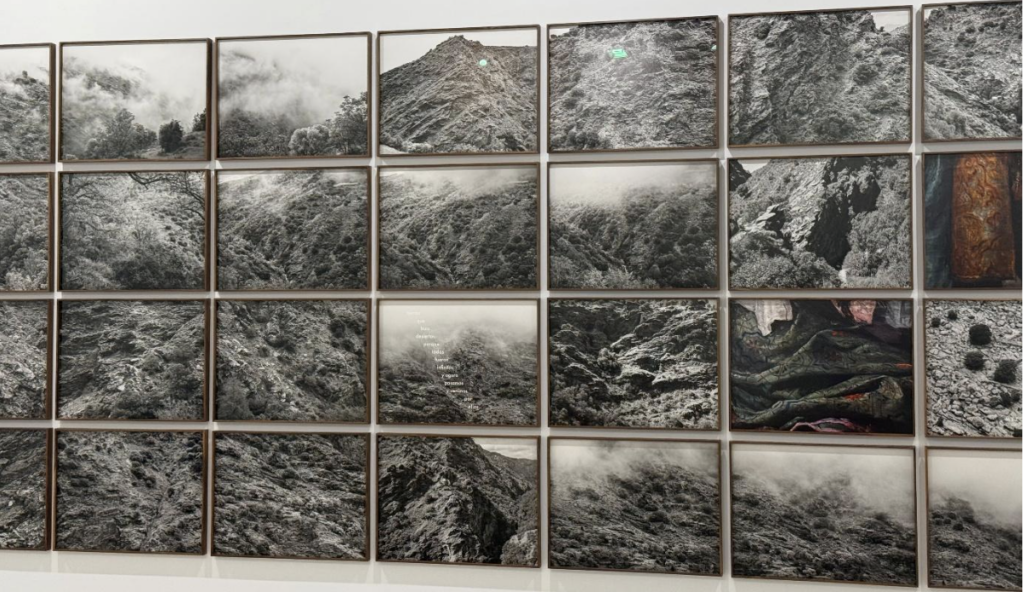
Image Credit: Luca Frigerio – Xavier Ribas’ El Silencio que Cae
My study abroad in Granada began six weeks ago. In many ways, my experience here has been reflective of most Leeds students’ perception of Spain. Granada is the home of tapas, whitewashed houses, cheap vermouth, flamenco, and sun-soaked siestas. But there is one thing I have noticed here which may be less apparent in the parts of Spain known to most tourists and students alike: an unspoken, but sinister political division. Spain is a modern democracy, with a thriving economy and favourable image across the world and especially in Britain.
However, this projection of harmony and success clouds its recent history: marked by a brutal Civil War and forty years of authoritarianism under the rule of Francisco Franco, which didn’t end until 1975. The divides which hastened this era of hardship and violence persist today, and they are much more complex than a simple left/right binary. It’s a divide between people’s fundamental understanding of what ‘Spain’ is, and what it means to be ‘Spanish’. It’s a division between republicanism and monarchism, progression and tradition, secularism and devout religiosity, and much more. These divisions permeate all aspects of Spanish society. They become obvious – given you know where to look.
On my second day here, I thought I had found a gem not far from my apartment: a bar open from the early morning until late into the night. Think a rustic terrace, dated interior and mardy waiters. There are plenty of these around Granada, but this one was mine. “Me pones un Café Bombón por fa”, I asked the bloke behind the counter, certain that my accent immediately outed me as English. But minutes later my coffee arrived, along with a gigantic croissant toasted and smothered in jam. €3. Ridiculous. Mad. Una locura.
However, despite my initial infatuation, my love affair with this bar was set to end. I clocked the waiters wearing a bracelet with the Spanish flag and another emblem – La Cruz de Borgoña (the Cross of Burgundy). To unsuspecting tourists or even Spaniards uninterested in politics, this wouldn’t cause a stir, but sadly a personal boycott was in order.
The Cross of Burgundy’s primary association is that it was the flag of the Spanish Empire, and it has been co-opted by various hard-line Monarchist groups since, such as the Carlists, who were fundamental to the establishment and consolidation of Franco’s one-party state. I have since seen the Cross of Burgundy frequently due to its association with far-right party Vox, who lead a hard-line anti-immigration stance, and are generally known for their nostalgia for Spain’s half-century of Francoism. Moreover, polling for the upcoming Spanish General Election largely puts Vox at 18%, which would likely see them become the junior partner in a Conservative coalition, in large part due to their popularity with young people. It puzzled me at first, given that a classmate of mine told me that “somos todos rojos” (we’re all reds/socialists) when referring to Granada’s student body. This generational divide is also shocking to me, especially coming from a liberal campus like Leeds.
These divides are also represented physically in the city centre. Granada’s Cathedral is iconic. It towers over surrounding buildings and is as clear a sign as any of Granada’s deeply Catholic identity. Right by its side is the Madraza – a Moorish building, founded by Sultan Yusuf I of Granada in 1349. These buildings are a firsthand demonstration on how Spanish Catholicism supplanted itself on the Moorish settlements of southern Spain during the Catholic Reconquest, of which Granada was the last to fall (711-1492). However, these two neighbouring structures don’t just demonstrate the divide between Granada’s Muslim and Catholic heritage, but they harbour relics of the two opposing sides of the Spanish Civil War. Entering the cathedral, you are met by towering shrines which reach to the ceilings, and numerous waxworks of the Virgin Mary and Jesus circle the nave. By the altar, a large sign reads “Nuestros Sacerdotes Inmolados por el Marxismo (Our Priests Sacrificed by Marxism)”, followed by a list of Granada’s clerical figures murdered by Republican forces during the Civil War. Meanwhile, the Madraza is presenting an exhibition called ‘Un silencio que cae’ (a falling silence).
It explores the intersections of “othering”, and the links between the expulsion of Granada’s Moorish and Jewish populations after the Reconquest, ecocide in the Mediterranean, and the displacement of Palestinians during the Nakba. Artist Xavier Ribas’ most powerful exploration into the characterisation of the “other” is the exhibition’s central piece – a table listing the names, occupations and ages of many of the female victims of far-right violence during the Spanish Civil War. One profile I found particularly upsetting was that of Pilar Rodríguez Acosta. She was summarily executed at the age of 18 simply because her brother was a member of an anarchist group, the CNT. While victims of the brutality of the Spanish Civil War should be remembered regardless of which side they belonged to, I found it peculiar that the representation and veneration of the war was so different in these two spaces, despite them being a mere ten meters apart. Neither exhibition made any reference to victims of the other side. You wouldn’t find such a contrast in Britain.
While these are just a few examples of political division and contrasting representations of Spain’s national history that I have seen, they paint a picture of a nation that is still profoundly divided and at odds with itself. When I visited Bilbao and Barcelona, symbolism associated with separatism, trade unionism, and republicanism dominated public areas. They are fundamental to the DNA of those cities and the regions they dominate. Britain has its conservative and liberal regions, but in Spain those differences carry greater emotional weight. A message I think students would want to take from this is be curious of the political identity of where you are: whether that’s Leeds, a future study abroad or whichever cheap destination Skyscanner recommends. Look at the small details: which symbols occupy public space, what do physical artefacts reveal about a location’s history, and how do people express their views. It might just create a deeper image of where it is you find yourself.
Words by Luca Frigerio