
Israel-Gaza War: My Visit to The West Bank
Nina Sorrentino describes her recent visit to The West Bank, and the feelings it evoked for her at such a turbulent time.
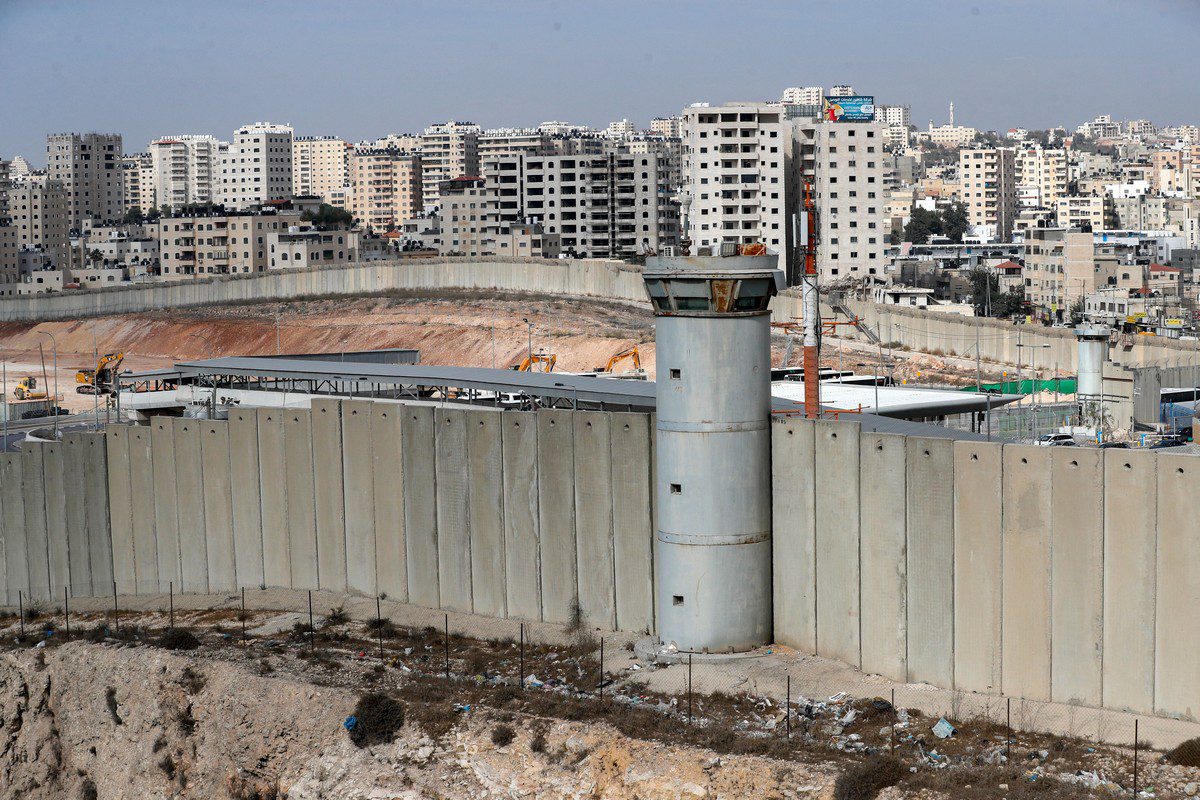
Ahmad Gharabli/AFP/Getty Images
It’s lunch time in the Occupied Territories of the West Bank, Israel. I sit on a white plastic chair outside the front door of the Palestinian family’s home I am visiting. I’ve been given freshly brewed cardamom coffee in a small espresso cup, a supplement to today’s lunch of couscous with Palestinian olives. In many ways, the scene before me is one of peace and tranquillity; I am in the Holy Land, the land of the bible, and a place of utmost importance to major religions. Yet in many regards, there is nothing peaceful about this land of contention and disharmony; I am in a graveyard of dreams and conflict.
Showing me around Jerusalem and the West Bank is Dr Jeff Halper, an Israeli author, activist, Nobel Peace Prize nominee and co-founder of ICAHD, the Israeli Committee Against House Demolitions. ICAHD, among many other things, aims to end Israeli violations of international law, including the demolition of houses and buildings in the occupied territories. Jeff introduced me to Atta Jaber, the Palestinian whose family I have spent every day with this week, and showed me their house which ICAHD built after the Israeli Defence Forces bulldozed it for the third time. Article 53 of the Geneva Convention states that the destruction of personal property by an occupying power is forbidden, yet ICAHD found that over 173,000 Palestinian homes in Israel and the Occupied Palestinian Territory have been demolished since 1947.
As I sit, I can see the blazing Middle Eastern sun stretching across metres of vines, ripening the grapes of Palestinian farms which they will be unable to sell this year. I see the sun ripening the discarded rubbish of Palestinians which scatters the land, uncollected by any authority and left to waste away. There is something strange about being in this place which I have grown up hearing stories of and singing about in Christmas carols – Nazareth, Bethlehem, Jerusalem – and then seeing it littered with bin bags, disused mattresses, and barbed wire. I can hear a donkey plodding as it ploughs the field, and the sound of a breeze making a pilgrimage across the Holy Land, just as many have before it.
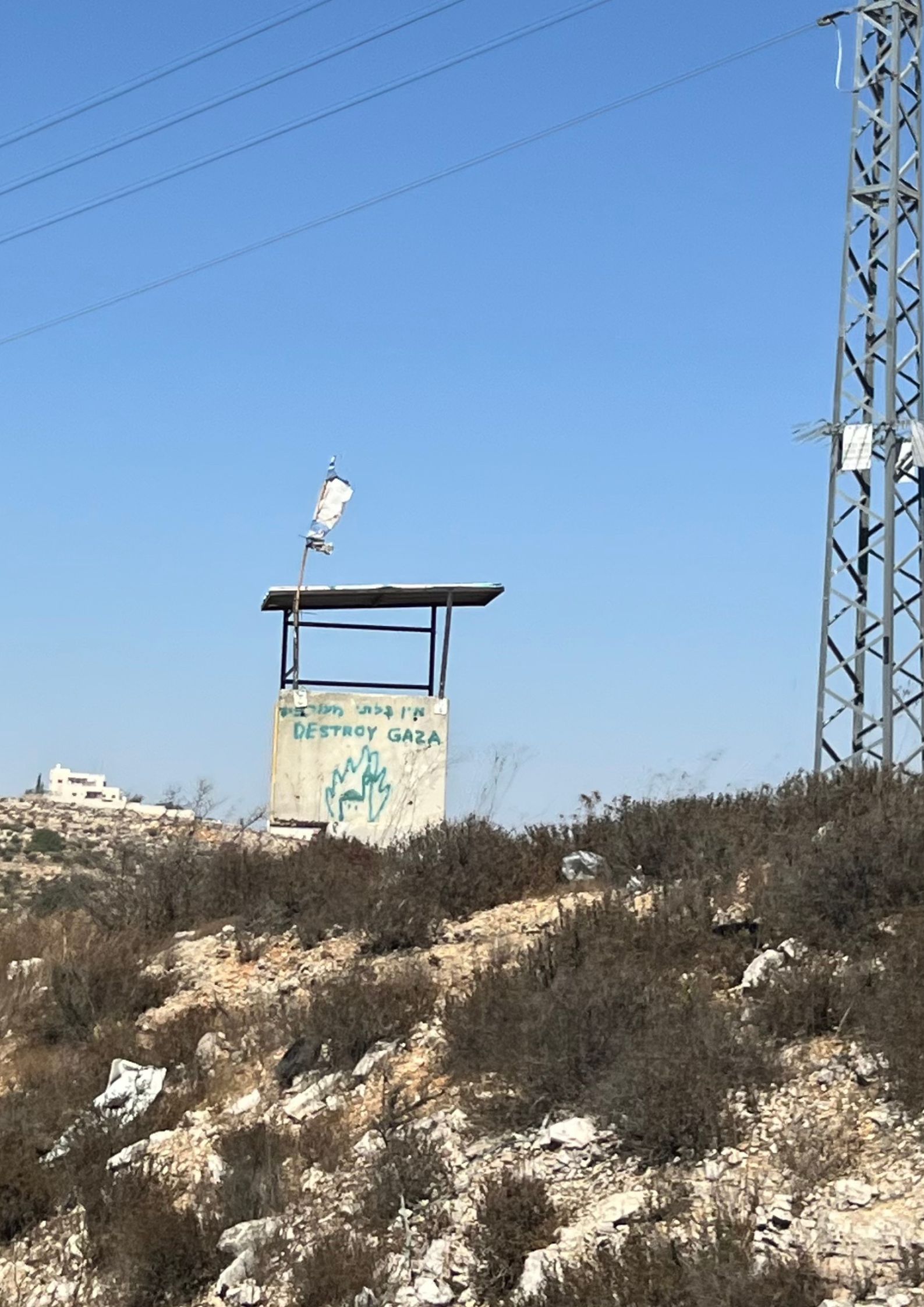
Yet, I can also hear the sounds of the illegal motorway about 50 yards away which split the farmland of this Palestinian family in half, rendering them unable to access the land of their ancestors. The highway is illegal under the Geneva Convention 1949 which forbids an occupying power from building a road in an occupied settlement unless for immediate military necessity. I watch the Israeli settlers journeying across this road to their newly built neighbourhoods. I know when I leave, using this highway to make the journey back to Jerusalem, I will pass the graffiti on the side of the road which reads ‘DESTROY GAZA’ with a drawing of a mosque inside of a flame. I know I will pass through an Israeli checkpoint where I will be blatantly ethnically profiled, partly by my obvious whiteness, and partly by the Israeli, yellow number plates on my car. I know if I were Palestinian, my car would have white and green number plates, meaning I would be interrogated at this point.
Cars are not the only thing which can be differentiated immediately; Palestinian houses are visibly so as they have large black barrels on the roofs which collect and store rainwater, so that on the not-so-infrequent occasion that Israel shuts off their water access, they can get by. My journey will then involve driving past a shopping mall which is no longer open to Palestinians. As the highway approaches Jerusalem, a high, curved wall made from corrugated metal appears which aggressively separates the Palestinian and Israeli areas. These flagrant mechanisms of society separation and oppression are shocking to witness as an outsider who has grown up learning that apartheid is a thing of the past.
Of course, walls and checkpoints are not the worst of life in the West Bank. Living under occupation has meant consistent hindrances for Atta and his family. House demolitions are a part of life for everyone in the extended family, as well as the demolition of water reservoirs for their farmland, repeated planning permission refusals, interrogations, and violence. Despite this, Atta maintains a strong desire for peace and unity, and a deep belief that it is possible for Palestinians and Jews to live harmoniously as his ancestors did for centuries. He has taught his children and grandchildren the importance of not allowing feelings of anger and frustration to develop into hate.
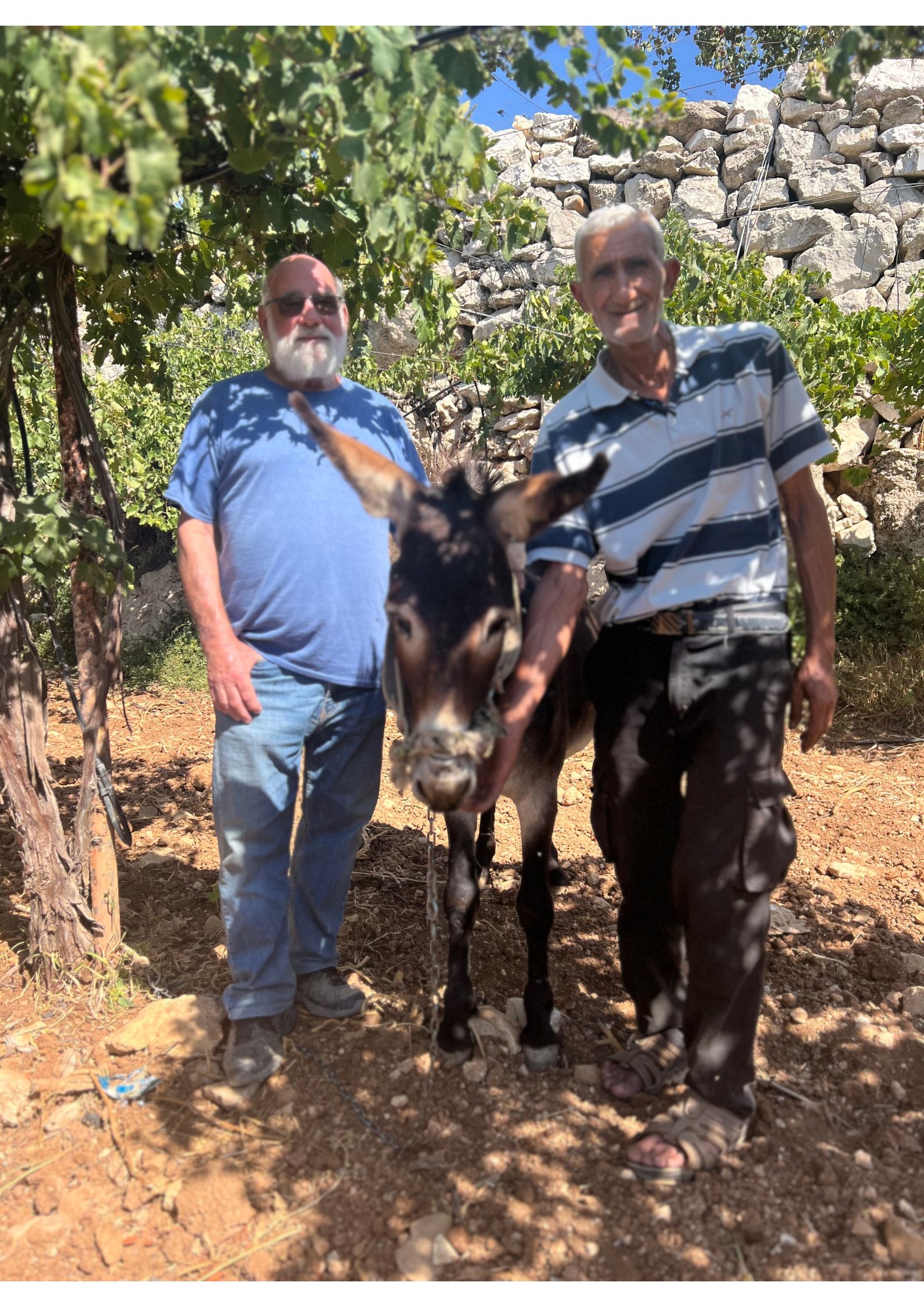
Jeff and Atta have sustained a thirty-year-long friendship, bound together through years of resistance against the illegal occupation of Palestinian land. Despite living a mere half an hour drive from one another, they reside in completely different worlds. Their friendship is a story of peace, and a symbol of hope that collaboration and a future of coexistence is possible. I wanted to come to Israel and the West Bank to learn, and imagined that I would discover something about the Middle East as a region and the political workings of an occupied territory, and whilst that has happened, I have also seen that the most powerful tool of resistance against oppression is our humanity. Recognising our common humanity, as Atta and Jeff have, is the only way to achieve peace in this region which so desperately craves it, amidst leaders who capitalise on divisive political strategy.
Words by Nina Sorrentino
Cover image credit: Ahmad Gharabli/AFP/Getty Images