
Through a new lens: the quiet rebellion of the digital camera
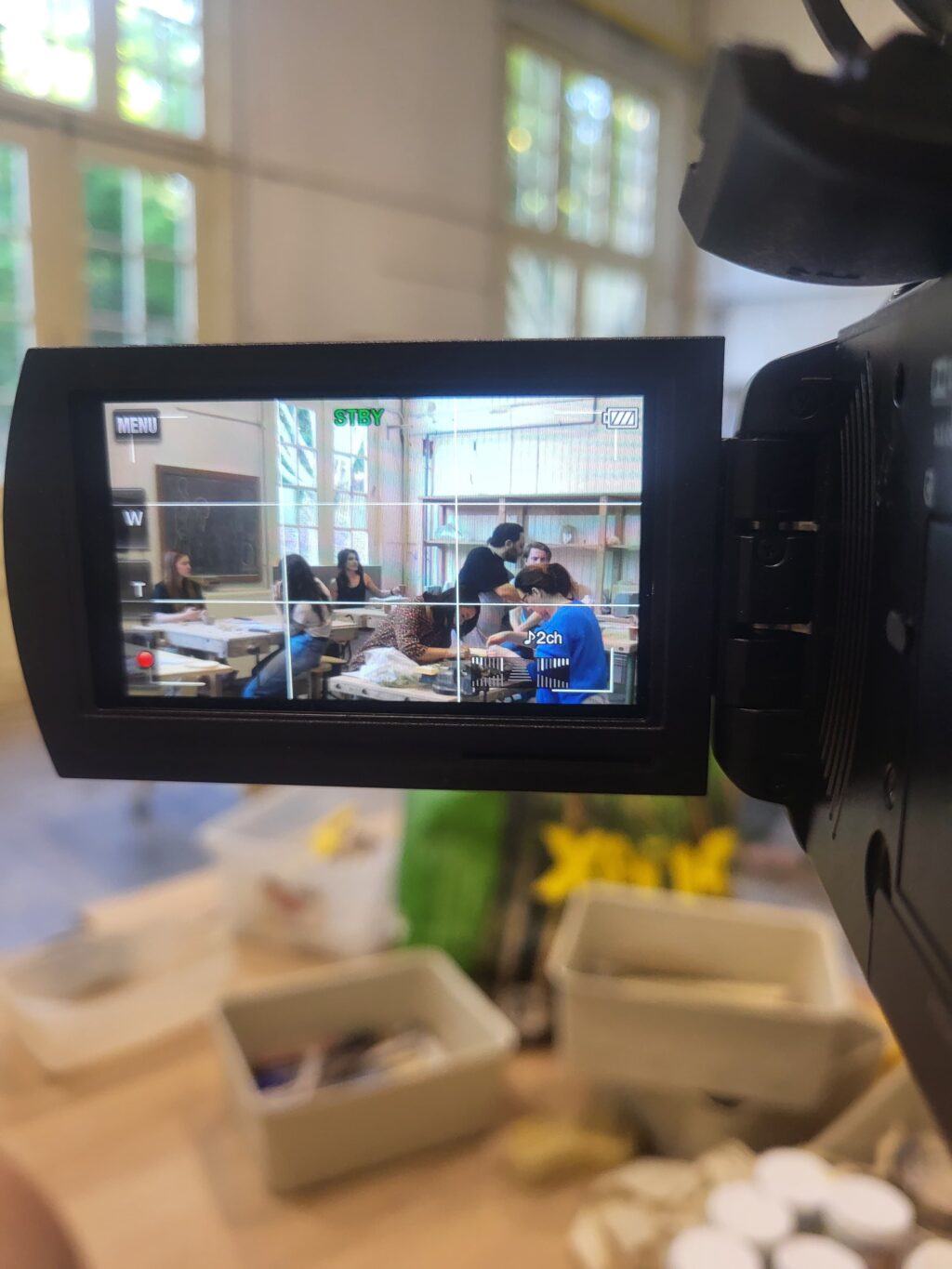
Image credit: Esmée Huizinga
Allow me to set the scene for you: me and my girlfriends are in a pub, a regular occurrence whilst we are studying here in Leeds for a semester. We ask the woman sitting next to us if she could take a picture of us. She looks at the vintage little camera that she is handed and chuckles. My friend starts explaining that she needs to press the round button on top, and to please do a half-click first to make sure it focuses right. “Don’t worry darling, I know how to handle one of these!” she tells us, still laughing. I think she finds us endearing, going out of our way to get a ‘retro’ look on our pictures by pulling out some ancient relic of the pre-smartphone era which she has consciously lived through and we have not. We are not unique though, not in the slightest. Just step one foot into the nearest pub or club and you will see it too: digital cameras being pulled out left and right by people who look like they weren’t even born yet when these things experienced their prime.
I personally became inspired on TikTok a few years ago to search through the boxes in my parents’ attic, on the hunt for some vintage device ready to take over the heavy picture-duty that my phone was carrying. I got lucky; what I found was an old and retro-looking silver Olympus camera, just waiting there to be discovered. It was a wedding gift my parents received in 2004 but apparently had not been able to stand the test of time, as it had seemingly been forgotten in a dusty old moving box somewhere. Getting it to work was a whole different challenge on its own; the TikToks had conveniently forgotten to remind me that an old camera also requires an old charger and whatnot. My parents were glad to be of service helping me figure it out, though. Although a bit confused about this sudden interest in a device with the photographic capacity of about 3 megapixels, my dad quickly started a speech about how this thing was the crème de la crème ‘back in the day’. Ultimately, getting it to work may have taken some scrambling around, but taking my first photo with this camera felt like I was quite literally seeing the world through a new lens.
Naturally, I carried it everywhere in the following months, snapping candid pictures of anything and anyone. What I quickly noticed, though, is that I was not even remotely ‘special’ for doing this. Every event I went to, every night out or Sunday afternoon walk was accompanied by the flash of at least one vintage camera. It made me wonder: why was this such a trend? And why now? What was it about the post-lockdown zeitgeist that required everything to be coated with an aura of nostalgia? There are many possible explanations for this sudden comeback of the digicam, and one could rightly point out that many other ‘retro’ things such as Y2K fashion or record players have come back in style too. However, I would argue that the resurgence in popularity of the digital camera stems from more than just the existence of trend cycles. Rather, it is the circumstances, characteristics and expectations of our current digital landscape which have given the final push to make specifically these types of cameras see an unprecedented popularity spike.
First of all, many people are simply fed up with being on their phone all day, every day. As more and more research shows the addictiveness of these devices, many have started to look at their own screen time and started to realize how many hours a day they are really losing to their smartphones. It is truly scary to count out, but if you were to spend an average of five hours a day on your phone from the age of 15 to the age of 75, you will have spent twelve and a half years of your life on that phone. More than twelve years of making scrolling-movements on a piece of metal… Now naturally, this idea is alarming to most. Although it is often difficult to implement any real change due to how ingrained these devices are in our daily lives, through baby steps, changes can actually be made. The digital camera is one of such baby steps. One of the biggest issues of the smartphone is the endless amount of functions it has: when you are done checking your mail, your texts and the weather, you can resort to a game, to LinkedIn or to TikTok. Conversely, the camera has only one function: to take pictures. Your mind won’t be tricked into spending more time on this device because there are no other ways in which this device can provide you with stimuli than to just take the picture and then put it away.
This also leads us to the following benefit: using an actual camera requires some sense of intentionality. Anyone who has ever been to a concert in the past few years must have noticed the amount of phones in the air, not recording one specific part of their favourite song, but rather filming half of the concert just to be able to watch it back. Well trust me, experience tells that you will never watch most of those videos back. They will just be eating up your storage space and gathering dust in the depths of your memory card, similar to how my parents’ camera was gathering dust in the depths of our attic. My point? It has become so easy to photograph and film anything that we are not constantly photographing and filming everything. There is zero intentionality involved; we just click a thousand times and hope that somewhere in there will be the perfect shot. Cameras don’t work like that. They need to be turned on, pointed, focused, clicked, processed and then you have one picture. You look at this one picture, consider whether it is good enough, and either move on with your day or take one more. To me, this seems not only healthier in terms of being present and enjoying the moment, but it also leads to more special pictures.
Speaking of special, it is a well-known fact that the age of social media has instilled into our generation’s collective mindset that everything needs to be perfect. I think this collective mindset is starting to crumble under the pressure of its own weight, and the rise of digital cameras is simply a symptom of that downfall. The endless filters, the content created in perfectly well-lit rooms, the curated backgrounds and the constant stream of symmetrical faces on our ‘for you’ pages have become tiring, they have become fake. It can be seen in many aspects of the digital sphere: take the TikTok ‘rat girl summer’ trend (a counter-movement to the clean girl aesthetic) or the popularity of posting ‘photo dumps’ on Instagram. People want to see personality, authenticity, realness now, and nothing captures that better than the digital camera. Its quality reminds us of a time where candid was chosen over curated. Many would love to see that come back, and though we still have a long way to go, the digicam girls are pioneering this movement.
I still carry a digital camera around here in Leeds, you will find it in my bag 9 out of 10 times you check. Funnily enough though, I don’t pull it out as often as I used to. At times, it has started to feel like deadweight, not because I have started to dislike the pictures it takes, but because I am trying to become less reliant on any device for making memories. Ultimately, whether you use your phone, your camera, or even live painting, these only represent fragments of the moment they depict. They can serve as keepsakes or be shared, but the real memories are yours and yours only. In other words: make sure to see them through your own eyes too!
Words by Esmée Huizinga