
Runway Retrospective: Westwood’s Revolutionary 1981 Pirate Collection and its Transformative Ongoing Impact
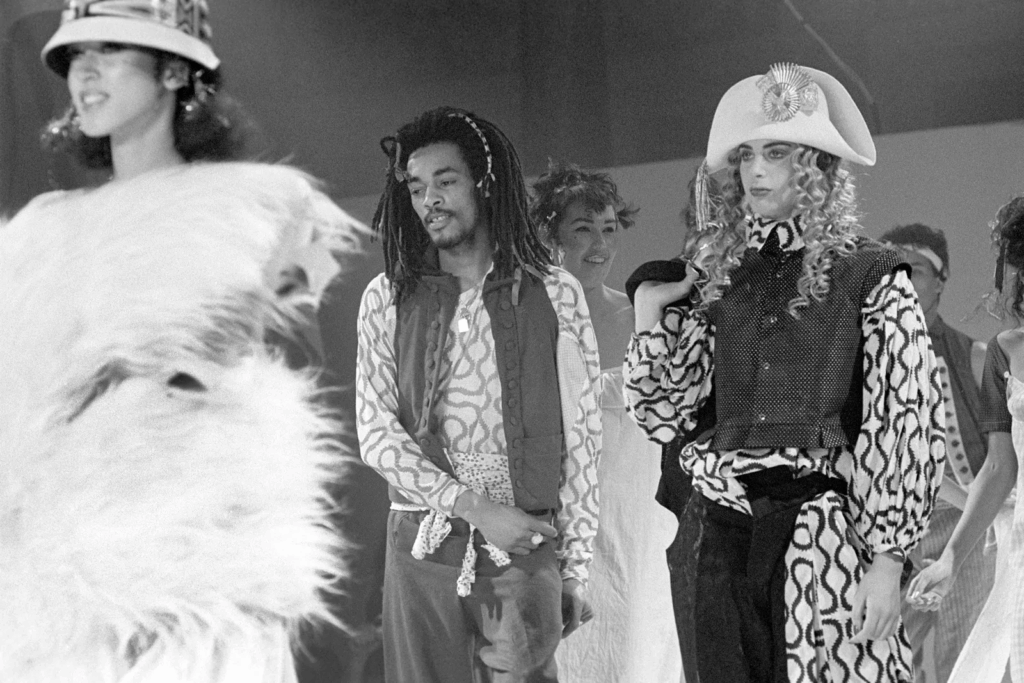
In 1981, Vivienne Westwood and Malcolm McLaren launched their first ever collaboration, ‘Pirates’, during London Fashion Week. Fearlessly rebellious and subversive, the collection established Westwood as a cultural provocateur, crying out for an end to the separation between culture and fashion. Westwood transcended time boundaries by celebrating historic pirate individuality and counter-culture, confronting the capitalistic greed of the 80s with the domination of extravagant pieces on the runway.
Satirically aligning 17th century baroque inspiration with rugged, punk sensibilities, Westwood dispelled the monotonic, capitalistic excess of wealth by deconstructing the elegance baroque embodied. Her mix of ruffled shirts, wide sashes and voluminous trousers with bold colors, graphic prints and an androgynous style blended English tradition with avant-garde design. Being the founding fathers of the Punk movement, Westwood and McLaren elevated the core of its rebellion by using Pirate as an unofficial scaffold to evolve Punk into New Romanticism.
This iconically unique look and the aesthetic it created became the style and persona of many 80s pop stars like Boy George and Adam Ant. They both showcased elements of the collection and made the aesthetic central in the music world, blurring the lines between art forms. The Pirate Frock Coat, a signature standout piece in the collection, was symbolic of its surreal aesthetic balancing old-world elegance with new-age subversion. Another cult item from the collection are Westwood’s Pirate Boots, still as popular in the fashion world today with Vintage collectors hailing Pirate as their holy grail. As a collection that continues to set trends today on the runway with its pirate-like silhouettes created through layering, baggy pants, asymmetrical collars and rectangular cuts, Pirate changed the mindset of future designers (such as Marc Jacobs who said its deconstruction-reconstruction principle became his design ethos) in its irresistible draw for inspiration.
Westwood said herself that fashion was “only interesting to me if it’s subversive,” and her determination to subvert the 20th century dismissal of history caused a cultural earthquake that exposed fashion to be unavoidably engrained in every aspect of society. Her strategy of “copying historical clothing,” had never been seen on the runway before and it was groundbreaking in its desire to disrupt a consumeristic brainwashing of history and culture, with fast fashion trends forcing conformity to a constant longing for the next newest and most modern item and a refusal to ever look backwards. The backdrop of the designers’ contemporary reality where consumerism thrived in parallel with counter cultural movements that rejected its emptiness enabled this celebration of Pirate figures reflecting resistance and freedom.
Inspiration was also taken from Native American aesthetics in the design form of sashes, stiffened felt hats trimmed with leather braiding and square-toed, flat boots. Westwood declared that “I was really attacking the status quo more than ever by this stance,” that status quo ultimately being American capitalism engrained with colonization heightened in the 80s with the popularized slogan “greed is good” from the film Wall Street. This attitude is ever relevant today where increasing awareness around the climate crisis calls for a questioning of fast fashion and consumerism, with American capitalism literally devaluing the environment it continues to colonize.

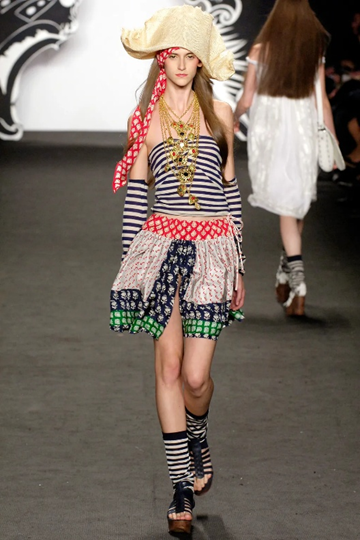
It is undeniably ironic that a collection calling for the subversion of mainstream culture and a transition to individuality today is incorporated into mainstream fashion. The Jaded London Enya backless mini dress echoing Pirate’s strips combined with effortless glam and Uber’s rendition on its timeless loose, Bucaneer stripped trousers are examples of Pirate’s ongoing stylistic success. Whilst these pieces are gorgeous staples, it’s important that the subversive rebellion behind this timelessly impactful collection is never forgotten.