
Steve: A Look at Men’s Mental Health Through a New Lens
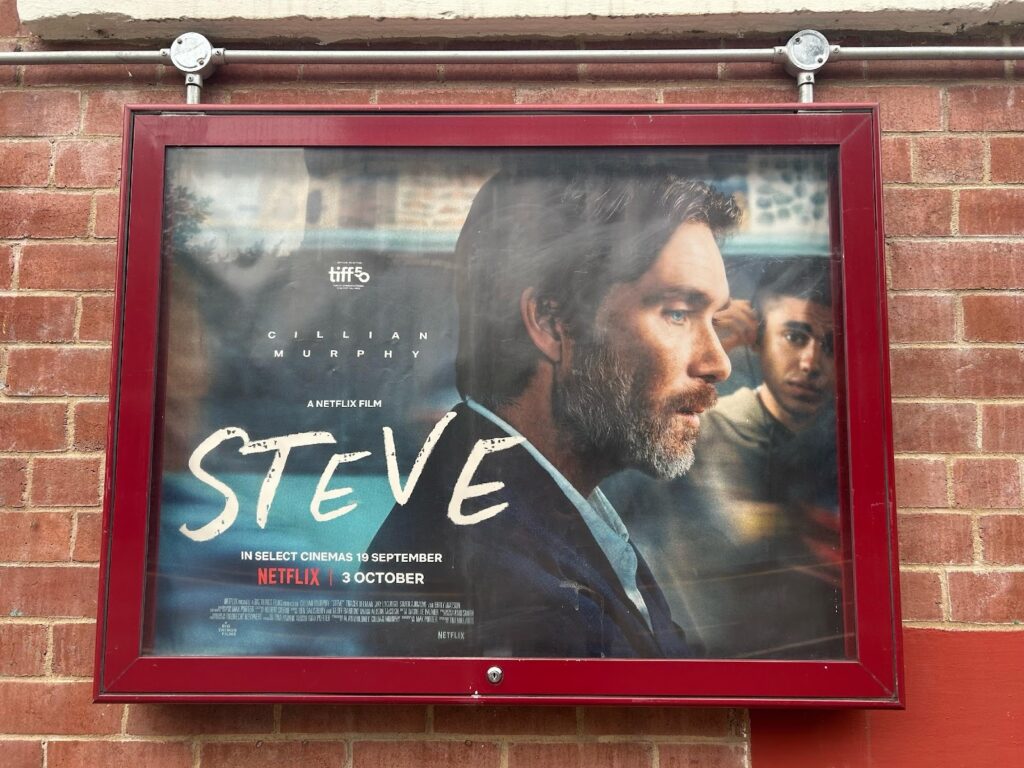
Image credit: Lydia Stephenson
Lydia Stephenson reviews Tim Mielants’ second collaboration with Cillian Murphy – Steve (2025)
It isn’t very often you walk away from a film, having held your breath through every minute of it, and wish you could press rewind to fully appreciate it all over again. Tim Mielants’ latest film, Steve, starring Cillian Murphy, is out now on Netflix and well-worth the watch.
Steve, our endearing yet troubled protagonist, dedicates every waking moment to the teenage boys in his reform school for behavioural issues. He faces head-spinning, mind-warping stress as he tries to provide what he can for the boys in his under-resourced, under-staffed and state-neglected institution. Murphy does an incredibly convincing job at conveying just how dishevelled and at the brink of his own mental health his character is. When his breaking point is imminent, it is heartbreaking to watch Steve give himself over to those under his care.
Steve employs the three Aristotelian unities of drama, which are used in literature and films to build tension over the course of a plot:
The film is set on a singular day, emphasising how long a day at the reform school can be, and how every minute feels like an uphill battle. The hours are marked by time stamps placed periodically throughout the film, and they work to keep viewers grounded in the action.
Almost the entirety of the film is set in one location– at the school- where noise levels vary from periods of silence to eruptions of shouting. These noise levels trace outbursts from both the students and the staff at the school.
All of the characters are involved in the reform school in some way, which positions the school as the ultimate source of action and, as a result, agitation.
This film’s approach to men’s mental health is what makes Steve feel so ahead of its time, which is ironic considering the present-day relevance of the movement. Tim Mielant has carved out a new approach to depicting men’s mental health by refusing to prioritise the viewer’s comfort over the portrayal of lived, stress-inducing experiences. The film digs deep into layers of men’s mental health, uncovering some of its triggers and many of its consequences on those suffering. It was refreshing, also, to watch a film that shoulders the responsibility of delivering raw stories and vulnerable voices. Cillian Murphy, in an interview with Variety Events, emphasised that ‘[the film] should be asking questions, not answering them’.
Steve undoubtedly draws parallels with Good Will Hunting (1997) when it comes to the portrayal of inner turmoil experienced by young men who both long for an outstretched hand and actively push it away. But, what defines Steve as a piece of art of the twenty-first century and allows it to really get into the nitty-gritty of men’s mental health is its unique cinematography. Every twist of the camera and every character close-up is done with intention and a level of urgency. The camera lens looks for the ‘tells’ in mental decline (through body language and environment, for example) and forces viewers to engage emotionally with the stories being told.
Steve is a reminder that men’s mental health will continue to fall short of being understood as long as society shies away from connecting with frank, unfiltered storytelling of real experiences and emotions. We can only hope that following the releases of Adolescence (March 2025) and now Steve (September 2025), more films which cover the complex emotional and physical experiences of young men in Britain and Ireland are to come.
Words by Lydia Stephenson