
Jonathan Anderson’s Dior: An Honest Review of the Most Awaited Collection for Fashion Week 2026
Ruby Tanner dives into the most anticipated creative director debut of the fashion calendar: Jonathan Anderson for Dior.
Dior
Ruby Tanner dives into the most anticipated creative director debut of the fashion calendar: Jonathan Anderson for Dior.
A clinically white tent encloses an upside-down pyramid, hovering over a small open shoe box. Paris, Tuileries Garden, beckons fashion, media, music and TV personalities to catch the first look at Dior as we’ve never seen it before. Will Anderson catapult the brand into haute couture headlines, or will it fade away into another fashion week past?
Since Dior appointed Jonathan Anderson as creative director for both men’s and women’s wear, marking the first time the brand has had just one director since its founder, fashion lovers have been left wondering what his interpretation of the new Dior will be. Known for his groundbreaking creativity at Loewe before opening his namesake ‘J.W. Anderson’, there’s no doubt the Northern Irish-born designer felt immense pressure to revive Dior whilst honouring its legendary history. Notorious for combining craftsmanship and fine art imitations with surrealism and experimental silhouettes, Anderson was surely expected to infuse this sense of tailored mischief into a classic brand like Dior. But did big expectations lead to big disappointment?
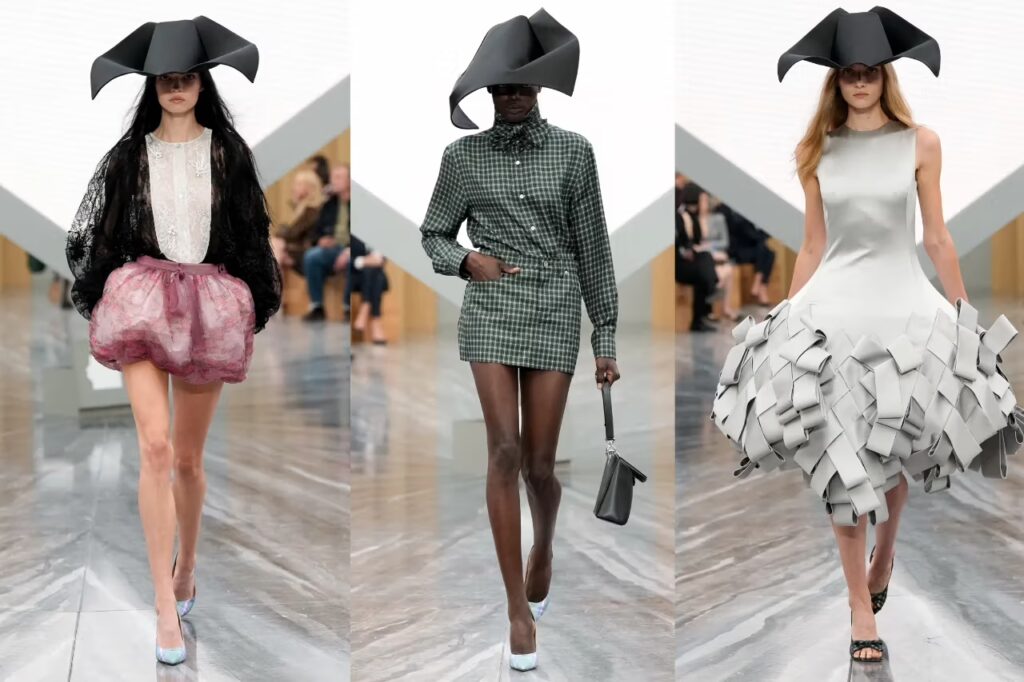
The collection undoubtedly had successes, featuring blossoming co-ords, floral bubble skirts, and a dropped-waist silk dress that hung in wonderful memory of early 1930s Dior, perhaps most notable. There was a definite floral motif across the collection, which, though it bloomed on some designs, perhaps died a brownish death on others. These hyper-feminine silhouettes and patterns were a homage to traditional womenswear trends: even pussy-bows made a comeback, which screamed ‘I’m classic, not old!’, and although some beautiful waist-focused designs hung, bounced and flowed well, the same cannot be said for the other half of the collection.
The vision of raw-hemmed denim skirts was one I wish I saw less of; maybe because I can catch a glimpse of them in any high street shop of my choosing between April to August. The use of grunge denim somewhat clashed with the alternate use of silks, cashmeres and lace, which worked so well. And yes, Anderson is known for his experimental attitude towards surrealist silhouettes, but the under-sized skirt/blazer combos were perhaps my least favourite of the entire collection; jacket arms above the wrist bone, hems bulging out at the in of the waist, skirts resting above the ribcage: they felt awkward. You know when you’re in the final year of school, and your parents refuse to buy a new blazer for the last few months, so you squeeze into it for the last picture day and parents evening, when you go to raise your arms and it’s almost ripped across the back imitating some kind of hulk transformation: yes, unfortunately, that’s what I’m reminded of.
But, I will admit, the looks which focused more on timeless luxury were quietly captivating. Dark wash jeans with knitted ponchos, dramatic neck bows just peeking from beneath, paired with leather goods that the everyday woman (or man) could just dream of owning. There’s something to be said for Anderson’s interpretation of classic female fashion, with looks such as this, suggesting he has an eye for emulating the everyday in an elevated manner. What we’re seeing here is a collection that maybe just lacks cohesion. Runway collections tell one story, every model a chapter which pieces together a curated message. And though there were undeniable triumphs for Anderson, found between lace gowns with wing-like structures and pleated trousers with cashmere sweatshirts, the inclusion of pieces that muddied the show’s thematic clarity left me checking the front cover of the book I thought I was reading. As for Dior’s future, there’s hope that Anderson will continue to draw from the brilliance of the house’s heritage whilst providing it a new surrealist aesthetic. All eyes remain firmly on the designer, whilst I remain curious to see how the next collection reads in the story of Jonathan Anderson’s Dior.
Words by Ruby Tanner.