
Dreaming of Freedom: The Quiet Power of Kukla’s Fantasy
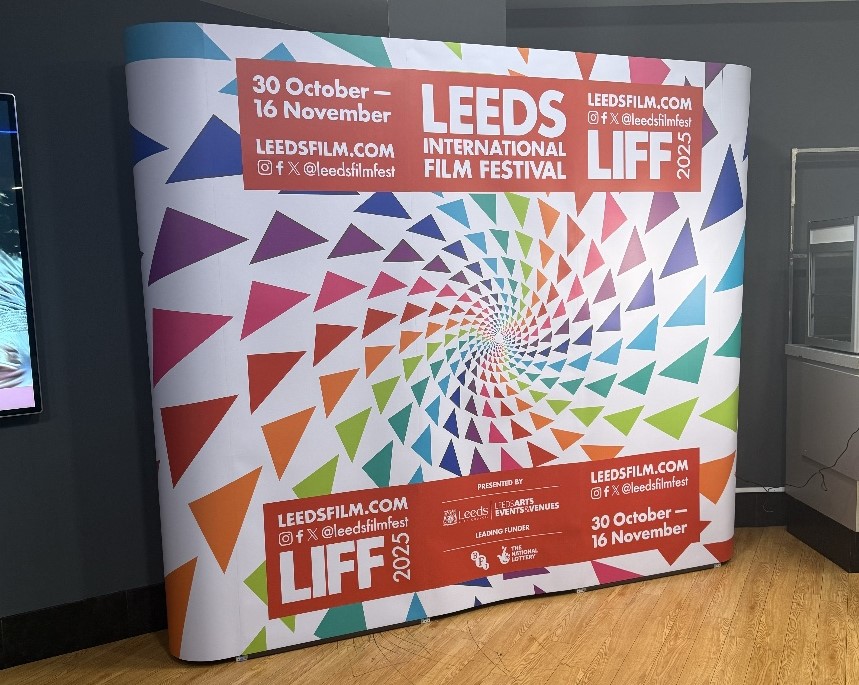
Image Credit: Lily Rodney
Lily Rodney reviews Kukla’s ‘Fantasy’, one of the movies which is part of the Leeds International Film Festival.
I had the pleasure of viewing Dir. Kukla’s film Fantasy as part of the Leeds Film Festival. I was unsure of what to expect from the North Macedonian director’s debut, yet this film has lingered in my mind ever since.
Set in the suburbs of Slovenia, Kukla paints a portrait of a repressive suburban town, following the lives of three boxing, baggy-trouser-wearing tomboys who seem to despise and resist the patriarchal ideals imposed upon them by their families. Mihijre, played by Sarah Al Saleh, though perhaps the least overtly resistant, becomes the central protagonist. Her family’s ridicule and dismissal – culminating in an attempt to arrange her marriage- render her both sympathetic and emblematic to some of the film’s central themes.
The girls’ lives change when they meet a mysterious newcomer in town — the eponymous Fantasy. At first glance, Fantasy appears to be a saviour from the monotonous oppression the women endure. The surreal, mystical soundscape that accompanies her slow-motion debut contributes to this perception, as Mihijre becomes utterly mesmerised by Fantasy’s aura and self-assurance. However, we soon learn this is far from the truth. Beneath her confidence lies her own struggle for acceptance, complicated further by her identity as a transgender woman. Whether due to the ambiguous time period or the socio-cultural setting of the South-Eastern European suburbs, Fantasy is cast as an outsider, both admired and alienated.
The cinematography in Fantasy is particularly striking. Lazar Bogdanovic’s camera work powerfully conveys the claustrophobic atmosphere of the town’s large, abandoned architecture. He uses symmetry beautifully, particularly in the opening scenes where the three girls gaze over their city. There’s even a touch of magical realism here, as the buildings appear to float or crumble, perhaps symbolic of the girls’ own sense of instability and identity in early adulthood, when it feels as though the world is collapsing around them. At times, though, the magical realism felt less convincing, sometimes bordering on overstatement in attempts to visualise the girls’ own dreams of freedom and escape.
The film’s use of colour is also beguiling. It often seems as if the town exists in a perpetual sunset, through the orange light seeping through blinds or between buildings, as though the women never quite reach the light of freedom or passion. They remain confined not only by society but also by the female body, which they so intensely try to conceal. The transition from Slovenia to North Macedonia was handled beautifully; it felt as if the entire colour palette shifted, with the bus journey acting as a liminal space — a moment between home truths and self-discovery.
Although Fantasy explores a feminist narrative that has been frequently examined in both art and cinema, Kukla’s treatment of femininity still warrants consideration. The three girls reject the constraints of womanhood as a construct that defines them, while for Fantasy, femininity is the essence of her identity. At times, however, Fantasy herself seems subdued by the oppressive environment she inhabits, and I found myself wishing her character had been allowed to express her defiance more vocally. Too often, female resistance in cinema is portrayed through silence or subdued rebellion; this film presented a rare opportunity to explore such defiance with greater directness and intensity. Nevertheless, Kukla’s exploration of these dynamics remains powerful. The interplay between resistance and identity is rendered with nuance and empathy, and the film ultimately succeeds in offering a poignant reflection on womanhood, individuality, and self-definition.
Words by Lily Rodney