
A Turning Point For Leeds United?
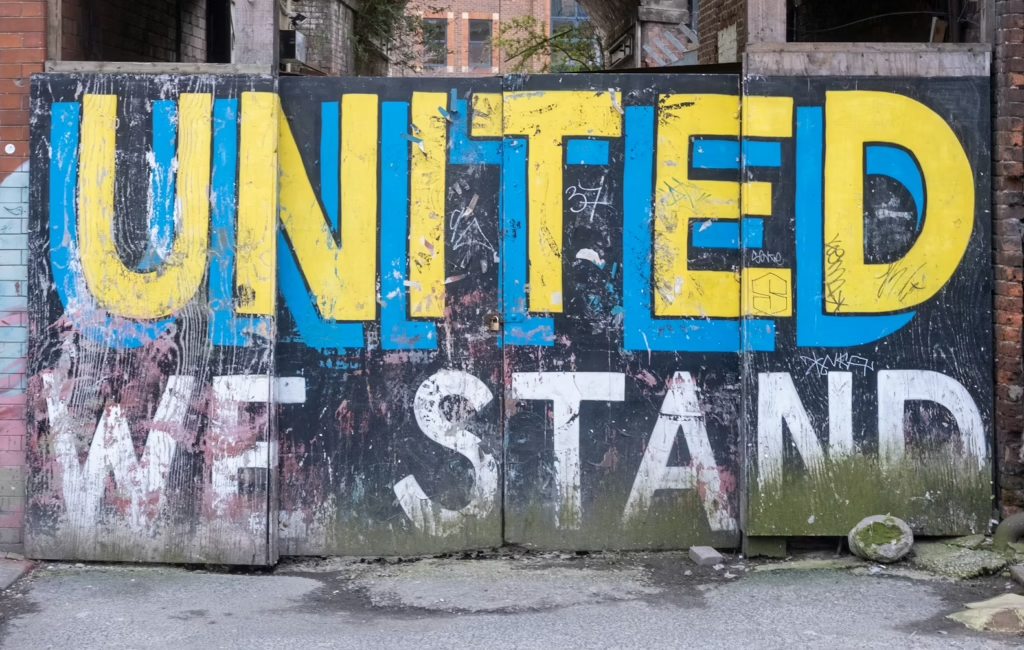
Image credits: Samuel Rhyde on Unsplash
Coming into their game on the 29th of November against Manchester City, Leeds had only won one game in eight. They had not beaten anyone other than the struggling West Ham, and relegation-bound Wolves since August. Pressure was mounting on manager Daniel Farke to avoid a potentially six or seven goal drubbing that would dent morale further going into the tricky fixtures against Chelsea and Liverpool – many thought that this would occur. Indeed, over a million managers (myself included) triple-captained City striker Erling Haaland on Fantasy Premier League: assuming that he would score against the struggling Leeds side.
Over a million managers were let down, as Haaland was kept quiet by a revolutionised Leeds defence in a second half performance heralded as a seismic turning point. The Whites showed gutsy spirit as they fought back from 2-0 down to level the scores, before Phil Foden’s 91st minute winner stole all three points – but something was brewing within that second half comeback. It was a typical Leeds performance: heart and soul, grit and determination, never knowing when they were beaten. Farke has admitted that they may not have the technical ability to compete in the top flight, but they can beat anyone when they come together and fight.
Four days later. Chelsea at home. 3-1 Leeds. A remarkable victory against a Chelsea side that was then second place in the Premier League, and who had only lost once in five Champions League games this season. Farke said after the game that he felt the ‘unity’ in the performance, and captain Ethan Ampadu said that ‘everyone is on board’. So, what caused this sudden upturn in form which appears to have removed any question marks surrounding a potential sacking?
Many commentators and Leeds fans have put this almost entirely down to the stubborn German manager finally changing the formation to a 3-5-2 halfway through the Manchester City game. Bringing on striker Dominic Calvert-Lewin and defender Jaka Bijol at halftime made an instant impact and allowed Leeds to utilise their height and physicality – bringing the fight to City. Summer signing Bijol started against Chelsea and contributed after only six minutes with a thunderous opening header to take the game to the Blues before goals from Calvert-Lewin and Ao Tanaka sealed the victory. This isn’t the first time that a simple change of tactics has brought a sudden up-turn in form for Farke and Leeds: the replacement of Ilan Meslier last season brought instant results too.
This fighting unity continued into a second consecutive home game against title-holders Liverpool on Saturday which finished three apiece after a stoppage-time equaliser from Tanaka. Coming from 2-nil down again, this result has left fans optimistic ahead of a busy Christmas run of fixtures. There was a real contrast between the final-whistle united jubilation of Leeds team, and the fractious comments made by Liverpool winger Mohamed Salah, which reflected upon internal unrest at the club.
These results have shown that, despite lurking just two points off the relegation zone, Leeds won’t go down without a fight. Securing a draw against a Liverpool side containing £180 million signing Florian Wirtz (who cost more than Leeds’ entire summer transfer budget) highlights a special power in the soul of the club to band together during hard time. Captain Ampadu noted how hard they’d worked to get back into the Premier League after two years in the Championship – the motivation to stay up couldn’t be stronger. While only time will tell if this is really a turning point or just an oasis of positive performances, it seems that, for now, Leeds will go ‘marching on together’.
Words by James Morgan