
A review of Beirut: a city of two halves
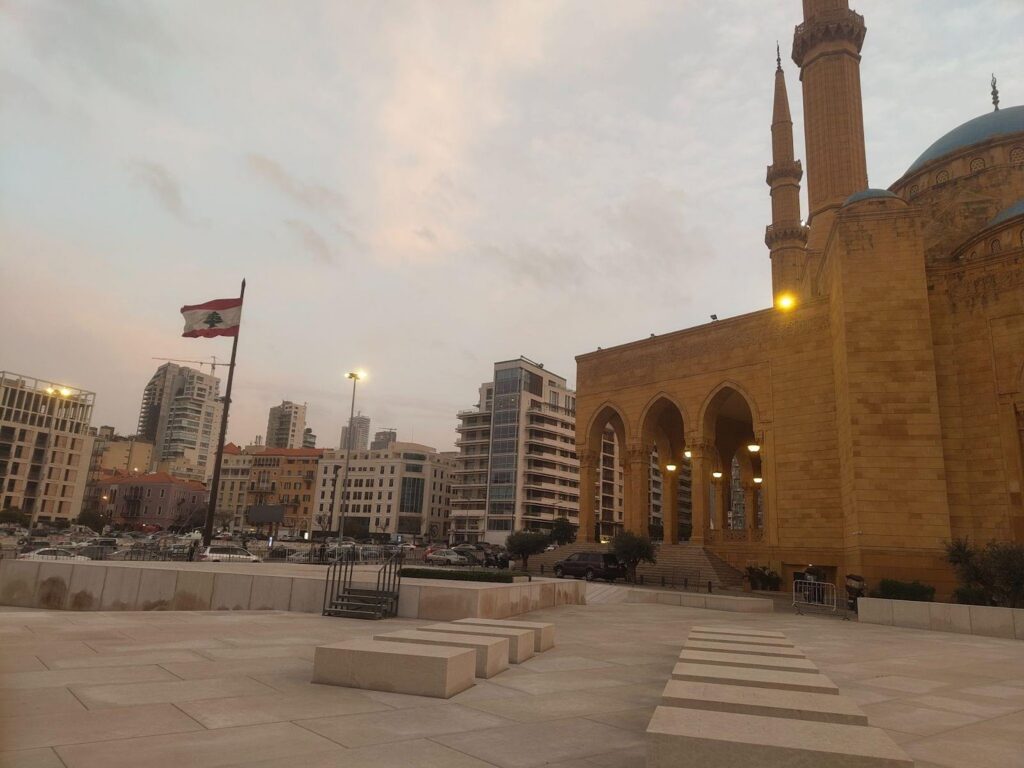
Image credit: Archie Sykes
Beirut and Lebanon often receive bad press as holiday destinations. People often respond to the idea of going there by raising incidents like the port explosion, the civil war, Hezbollah, or Israel.
But, this is all really quite unfair because whilst it’s a bit rough around the edges, Beirut is a beautiful and cheap getaway.
Beirut feels like a city of two halves. One that has been crammed into a very small space between the Mediterranean and Mount Lebanon. It is a city that houses luxury apartment blocks and renovated hotels next to derelict buildings that may not have been inhabited since the civil war. Whilst this contrast begins to feel more natural as you spend more time in the city, what these wrecks represent can suddenly be catapulted to the front of your mind when you find one with a well known history.
When walking down the seafront, you will find a yacht club and bay with lines of yachts worth 10s or 100s of millions of pounds (I must confess I know little about the price of yachts, but they must all be expensive). Along the shore are restaurants, cafes and shops (possibly the closest you’ll get to tourist tat, but which it really isn’t). Looking over this scene will be a collection of, what appears to be, half empty flats or offices. It’s a scene which would not be out of place in the south of France, bar one building. Amid this beauty is the shot out wreck of the old Holiday Inn, built just before the outbreak of the Civil War and used as a sniper position.
This contrast runs through the city. When walking around, you can start in an affluent area flanked by nice apartments, enter a supermarket and buy Vimto (its weirdly popular in the Middle East) and then enter a completely new city. You’ll suddenly be greeted by small posters plastered with the Hezbollah leader’s face on them overlooking an old Ottoman Palace, which had been used by many countries as diplomatic offices and which, of course, is littered with bullet holes. This scene will change very rapidly (and I would advise moving away from any area where there are Hezbollah posters) when you walk down the road and you will be greeted by a Maronite church, which from the inside is silent despite the manic, horn-honking, French-esque traffic outside.
Now, it is hardly surprising then that Beirut is not a massively touristy destination and although there is history littered throughout the city, it is not the easiest to uncover. But, this does not mean that there is nothing to do either in regards to the history or completely detached from it.
If you are into your museums, they are few and far between (and open at seemingly random times), but they do exist. The Beit Beirut Museum and Urban Cultural Centre is a must see. Although rarely discussed and there being few public historical sites dedicated to it, this museum seeks to engage with the thorny and live issue of the civil war. Through the history of the house and the people that lived in it during the civil war, you are guided through what it was like to live in a building that sat on the dividing line between East and West Beirut, on the frontline.
If food and drink are more your sort of thing, then Beirut is even better supplied. Thanks to the problems in the Lebanese economy, restaurant food is incredibly cheap. Restaurants that would cost £50 or more per person in Leeds cost 20 or 30 pounds.
The first night my brother (I’m still shocked he agreed to come) and I were there we visited the restaurant French Butter and were treated to some of the best French steak, or normal steak, I have ever had. The food was nothing fancy in terms of what they were making; it was a steak, in a lovely, rich and slightly spicy sauce, with chips and some salad. But, it was perfectly cooked to a nice, soft texture.
Meanwhile, the bars are plentiful and, in true Lebanese fashion, crazy. Inside the bars DJ music is playing and it is nearly impossible to tell who is a customer, who is a bartender and who is just friends with the bar staff.
While the beer is beer, but with a slightly different flavour coming from the slightly different company that made it, the drink to get is Arak, the national spirit. In the Olea and Fig bar/restaurant once I had ordered my Arak, the bartender pulled out from under the bar a massive glass moonshine bottle to pour out the shot. After this, he added water (strange I know) and ice to create a milky-looking cocktail to be sipped (a normal strength Arak is 50-70% abv) whilst you listen to electronic music and wait for the destined power cut (which is no bigger in Beirut).
Beirut is not the perfect place and it is still quite volatile. But, as I told my girlfriend, Lebanon is safe. You don’t go to the bad bits, you avoid the symbols of armed groups and the only time you go south is to go to the airport. If you follow these tips, you won’t be able to tell it sits on the precipice of war most of the time and instead you’ll have a nice, relaxed and cheap holiday.
Words by Archie Sykes