
‘Not broken, just begun” – Lucy Rose Live Review
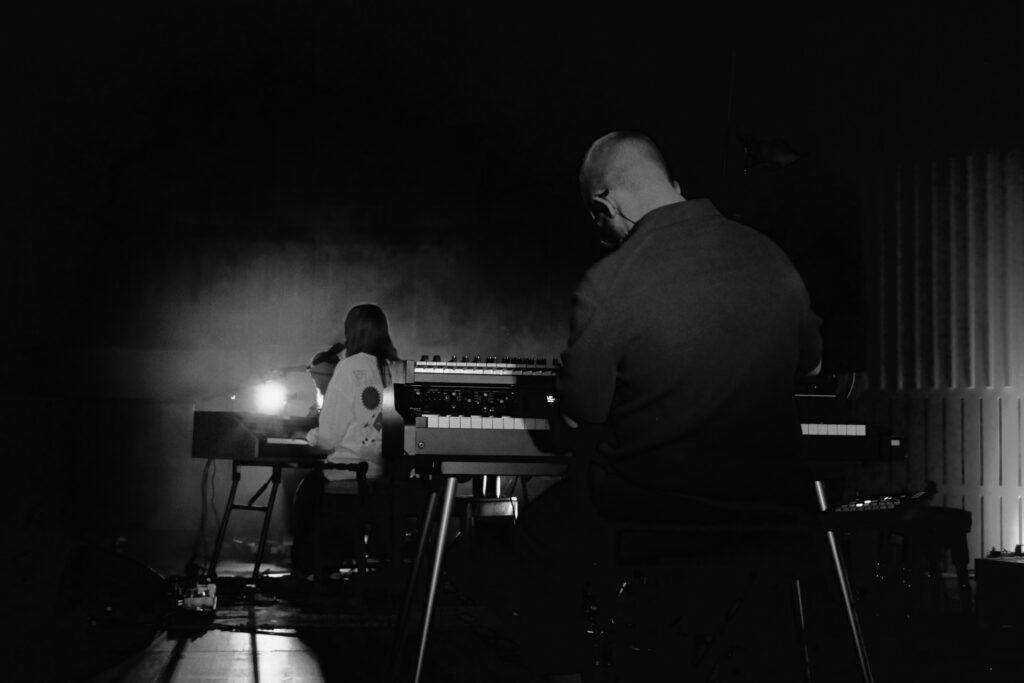
Lucy Rose performing at Howard Assembly Room. Image credit: Francesca Lynes
“Hate cannot drive out hate, only love can do that . . . darkness cannot drive out darkness, only light can do that”, Margaret Glaspy half-sings, half-prescribes to the crowd in Howard Assembly Room as they sit, waiting for the evening to commence. Through paraphrasing her “hero”, Martin Luther King Jr, Glaspy sets the tone: her smooth voice, lyrical storytelling, and witty remarks bathe the evening in an abundance of musical and emotional lightness. Expectancy turns into admiration. The crowd is at ease.: Glaspy is a triumph.
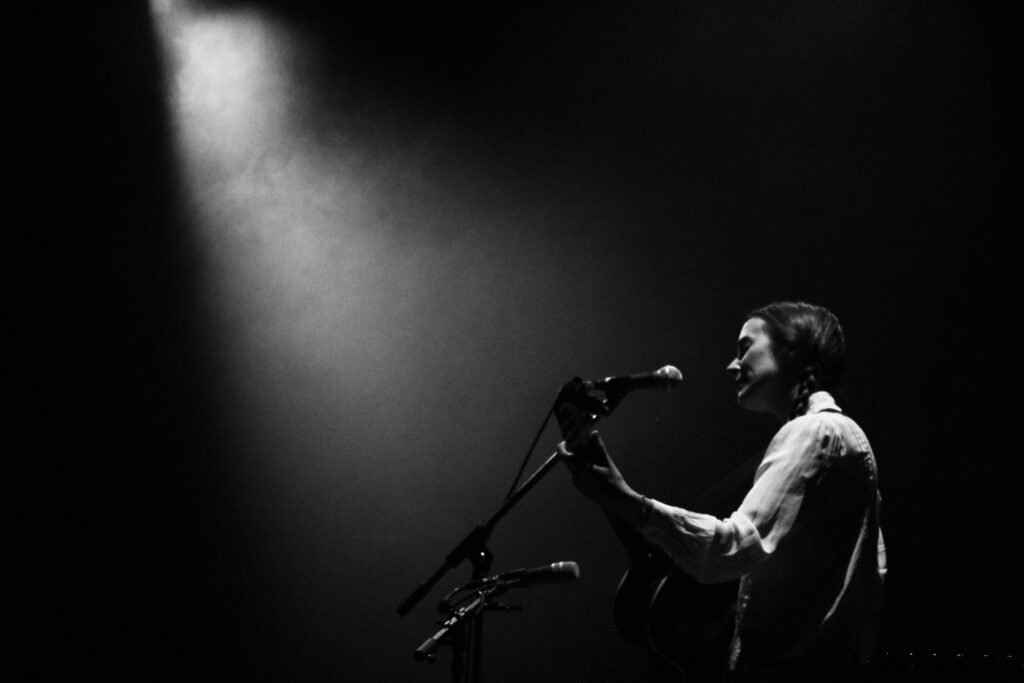
Image credit: Francesca Lynes
“It’s been 7 years since I last went on tour . . . I’m a bit nervous”, Lucy Rose gushes, after playing two explosive, polished, and charming tracks from This Ain’t The Way You Go Out (2024). Following a pristine set from Margaret Glaspy that featured only herself, a guitar and a harmonica, Lucy Rose’s ensemble is the perfect following act. Enriched with violin, drums, guitar, keys, and vocals, the venue is lifted into a louder, more upbeat atmosphere.
Known for her presence in the indie-folk scene of the 2010s, Lucy Rose took a break from performing live when, in 2022, she developed Pregnancy Associated Osteoporosis (PAO). Agonising pain from 8 broken bones in her back left Rose unable to cope with daily activities, let alone listening to, or creating music. It was only after several unfruitful visits to the GP and a privately paid MRI scan that Rose was believed, diagnosed and began recovering. “It was the darkest time”, she tells the crowd, softly playing piano riffs that echo the experimental sound of the newest album. As she sings “No, you can’t break me down/ I won’t let you bring me down” followed by the repetition of “Thank You”, in ‘The Racket’, I am moved by Rose’s resilience, her fight to feel grateful for, and at home in, her own body.
Rose introduces the next few tracks as, in comparison to many of her other songs, surprisingly optimistic. She explains that songwriting helped her recovery and jokes that these more hopeful tracks are undoubtedly her mum’s favourites. In all of her songs, Lucy Rose’s voice holds dualities. Both strong and playful, staccato and smooth, heavy themes played with nuance and always a lightness of touch, her well-known gentle melodiousness draws yet more visible enjoyment from the seated, but not static, audience. Lucy Rose also remains seated at the piano, though her presence onstage is vibrant. Her music is revolutionary in this way, any hint of being in pain or having to break from music is outshone by her bounciness and joyful style of performance. “I said life’s too short for this/ You gotta keep on, keep on keeping”, her lyrics resounding throughout the beautifully lit, wood-panelled space of Howard Assembly Room. Out of the darkness, Lucy Rose performs, an inspiration to drive out life’s challenges with music, an urgency to create, and lightness.
Her songs are a testament to her body, repeated references to its sensations, struggles and survival permeate the album and this live set. “It took my body, it took my soul”, she sings, grieving a loss of physical autonomy in the title track of the album. Yet, the lasting embodied feeling of the set is a hopeful energy, “But this brave body/ Is still carrying me”. Sustained for the whole gig, enjoyment comes up and out of the stage in waves. These are songs designed with hope, even if born out of pain.
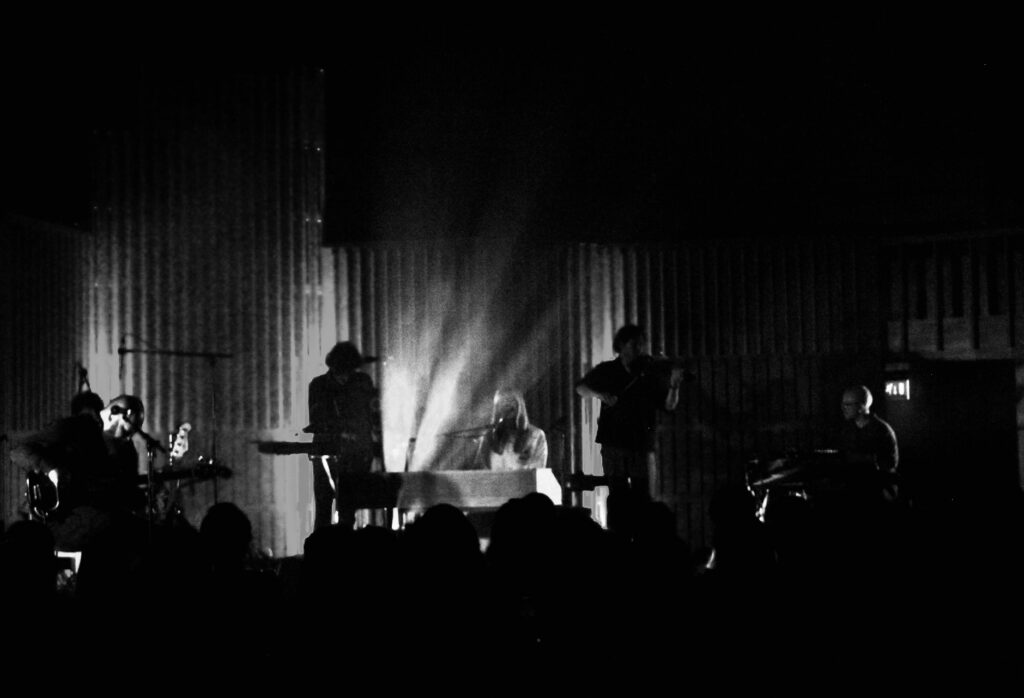
Image credit: Francesca Lynes
Lucy Rose is always moving, her feet and face following the ecstatic drums and complimenting piano. This Ain’t The Way You Go Out (2025) excels in the live setting, its powered drumbeats and subtly experimental production owing some of its style to the influence of co-producer kwes. A successful producer (Nubya Garcia, Virgil Abloh, Loyle Carner), as well as a recording artist in his own right (creating the original score for Rye Lane), kwes.’ characteristically playful, electronic, and often euphoric, production harmonises with Lucy Rose’s folk background. This is a jazzier direction for Rose, one that suits her well. It will be interesting to see what it may bring to future records.
The stage is wide, the lighting dark, and the most visible band members often being those at the side – the guitarist, drummer, violinist and second keyboardist. Lucy Rose is seated at the piano in the centre, circled by her fellow sitting bandmates. They play from the same level, but it is Lucy who commands the stage. Her presence is unignorable, all the while her camaraderie with her band is evident in their shared smiles and record-perfect imitation of the skittering beats and more unusual instrumentation of this latter record. Rose has said that the more funky beats were inspired by her newborn as she took lead of melody-creation by what most entertained him. “I’ve just been lying in a dark, dark room/ Holding my baby/ I think he just saved me”. The album is full of her experience of motherhood, albeit an atypical one, but it is also a playful result of finding your way back to music through the childish yearning to dance, to move. Rose is a triumph, her swaying and bobbing sometimes akin to that of an excited toddler, paired with the vocal maturity she is known for. A voice like airy butter, her newest track ‘Pale Blue Eyes’, also co-produced by kwes., is her jazziest output yet. The evening itself an affirmation of returning to living life.
Words by Francesca Lynes