
Identity in Isolation and Imprisonment: A Review of Open Theatre’s ‘What Remains?’
Jess Cooper reviews the newest Open Theatre play, ‘What Remains?’.
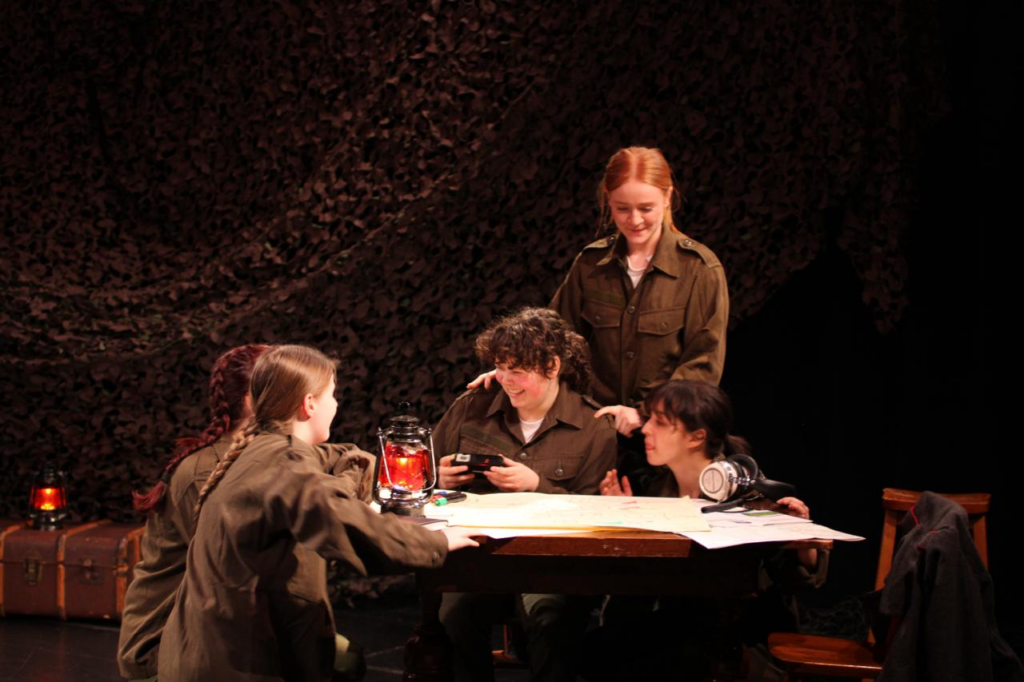
It seems incredibly ironic that as war and conflict surrounds us across the globe, simultaneously a student theatre group puts on a student-written play about war. But alas, what is student theatre without its fundamental need for irony?
‘What Remains?’ is written by Abner Goh and is co-directed by himself and Alyssa Cheong (with Molly Arthur assistant directing). On the surface, it appears to be simply what I just described: a play about war. You’d be well within your right before stepping foot into Pyramid Theatre that this will be a preachy performance about peace and the injustice of conflict (all reservations that I hate to admit I had myself).
However, ‘What Remains?’ instead artfully uses its chosen setting of war and conflict – and more specifically an underground bunker – and the roles of soldiers to tell a more nuanced story about identity, the importance of character and what defines us.
The show uses Pyramid Theatre as its venue, a notoriously difficult theatre to dress and design due to its in-the-round staging. Designed ingeniously by Emily Nix, with producers Ruby Baines and Poppy Haines serving alongside her, the set immediately encloses you in; dark curtains that turn into blackened walls reminding you that you can never escape. Every detail feels meticulously placed, and with draped camouflage greenery adorning the back wall, it may be one of the best uses of Pyramid yet.
Whilst Goh’s writing feels intentional and thoughtful, we learn about the story and most importantly the people it revolves around during the show’s silence, which notably there is much of. Glances between soldiers as they contemplate their next move, rabid stares as they start to lose their grip on reality, a gentle nudge to show companionship. The silence allows us as an audience to truly observe these characters, reflect on their choices and look for where our own sense of identity fits into the ones we see on stage.
You only need to look at Nina Casciari’s performance as Miller to see how impactful the physical performances are in this show. Every shift in posture, every eye roll, the repetitive cleaning of a gun, every punch thrown teaches us more about the hidden horrors that lie behind Miller’s eyes and the torment she faces when confronted with her decisions. Speaking of performances, Lilian Gleave gives a standout and quite frankly harrowing performance as Hunting. Her thousand-yard stare is haunting and at times I felt physically sick watching Hunting fight their way out or lose absolute control of her grip on sense of rationale.
Polly Brooks serves as our morbid narrator, and grounds the entire first act of the show with her despairing commentary. Waldron (Brooks’ character) struggles with her sense of responsibility, both in the bunker and to her wife at home; Brooks’ quietly anxious performance breathes life into this struggle and makes the frankly incomprehensible scenario of a soldier trapped in war feel deeply personal to every audience member.
Aoife McKinney’s Brierly feels sincere and almost is the heart of the squad trapped in this unforgiving situation. The way that McKinney is able to drive her character’s emotional journey from the start to the (no spoilers) heart-breaking end is masterful, and you’re able to see yourself and others in her journey. Tarja Madzarac leads the group as their captain Bateman, and her authoritative and stony-faced performance as a no-nonsense squadron leader contrasts beautifully to some of the more erratic characters. It shows the true range of reactions individuals can have to the same circumstances, and leaves the audience with the question: who is behaving the most ‘correct’ way?
What I personally find endearing and the most interesting about student-written theatre is that more often than not, it will give you a look into what thoughts and questions often take up the most space in a writer’s mind especially during some of their most formative years. ‘What Remains?’ is not just a play about war. ‘What Remains?’ demonstrates to its audience that Abner Goh has spent much of his time contemplating why people behave the way they behave, and the complex and messy lines that lie between right and wrong. And his characters, when faced with their mortality and confinement, embody this contemplation.
I’d go as far as to say that ‘What Remains?’ represents why student-written theatre will never go away. It may appear to outsiders as ironic, but hidden underneath that are beautiful stories which only the brave of us dare to tell.
Words by Jess Cooper.