
Femi Kuti and the Positive Force Bring the Best of Afrobeat to Leeds
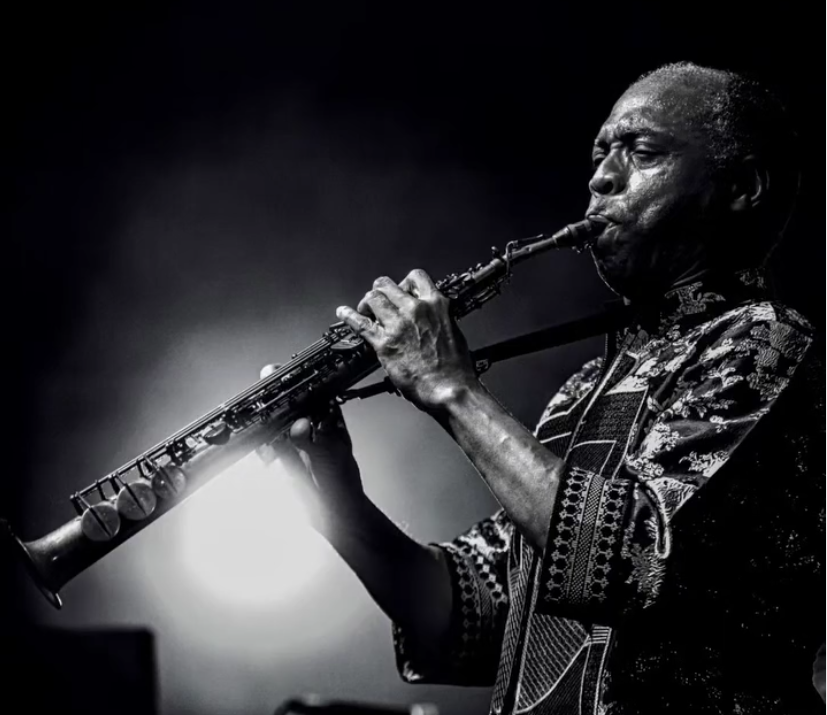
Image credit: @femiakuti on Instagram.
Wave after wave of Afro-groove crashed down upon the crowd: it was impossible to stay still, impossible to keep from dancing, and impossible to ignore the political statement. On an unusually warm Saturday evening in April, Femi Kuti performed with the energy and charged political emotion quintessential of great Afrobeat sets – a movement first pioneered over 50 years ago by his iconic father, Fela Kuti.
Continuing his father’s legacy, the now 63-year-old Femi and his Positive Force band performed for over two hours at a scintillating pace. The legendary opener, ‘Truth Don Die’, was a particular highlight on the self-styled ‘journey to Afrobeat’. There was no messing about: horns blasting, drums crashing, backing dancers’ bodies shaking left to right, up and down. Tempo turned ‘up to 11’. It was impossible to stay still. Femi waltzed onto stage with all the energy and gravitas of a serious political activist who’s also about to curate the most danceable groove this side of Lagos. A subtle, knowing smile to the crowd asked them if they were also ready for this dual mission. Of course, they obliged.
Track after track flew by at a breathless, breakneck pace filled with Femi’s legendary saxophone solos and political cries. Despite the hypnotic repetitiveness of many of the songs, these solos (which also included some of Femi’s sumptuous work on the keys, and other solos from the band) kept the crowd on their toes. As one song would slowly wind down, releasing the crowd from its spell, suddenly the shout of ‘1, 2, 1, 2, 3’ would ignite a new cascade of horns and drums. Femi’s powerful calls during these almost-walls-of-sound were penetrative both sonically and emotionally: ‘one Africa’, ‘sorry for Nigeria’, and ‘stop the hate’. In the style of his late pioneering father, Fela Kuti, these straightforward political shouts were extremely potent, and many a raised fist could be seen among the diverse crowd. It was almost spiritual at points.
The pinnacle of this political call was a speech made around halfway through the set. Femi called out corruption and raised awareness of the kidnapping of people, primarily women and girls, in Nigeria, Congo and Ukraine. He also called for African unity: the moment was charged with both melancholy and hope. Across any culture music is undoubtedly a powerful political tool and artists like Femi Kuti have a creative license to express what others cannot. Femi used this freedom to massive effect – the music and message was certainly inspiring.
The encore, ‘Water Get No Enemy’, and ‘Beng Beng Beng’ sent the crowd into raptures. The former, a famous nod to his father’s legendary 1975 track with Africa 70, was shorter than expected, but those iconic horns contained that ubiquitous groove of the great Afrobeat tunes. The latter, well, where to begin. ‘The time is 12 midnight my brother (beng beng beng)/ the girl lay on top my bed now (beng beng beng)’. And Femi does what Femi does, with that knowing look only a 63-year-old man would have singing about such an experience for the last three decades. It was a cheeky, joyful and energetic end to a polished and powerful set. For a gig so politically, and emotionally charged it was certainly a change of direction; however, the immense closer was without doubt written for that moment at the end of gigs, that final catharsis. Speaking for those who cannot speak up, Femi Kuti and the Positive Force band combined the kinetic ecstasy of Afrobeat groove with the all-important political messages (and that wry, knowing humour) in an exhilarating gig. If politics is the mind of Femi’s music, then love is surely the heart.
Words by James Morgan